

You're staring at a site full of graphic tees, caps, sneakers, and phone cases, and the question is simple: does all of this count as streetwear, or is it just casual clothes with louder prints? The answer is easier when you stop thinking about streetwear as one item and start seeing it as a system, a way of combining fit, graphics, and identity into everyday outfits that feel intentional.
That's why what is streetwear fashion is a better question than “what hoodie should I buy.” Streetwear isn't just a logo or a trend cycle. It's a wardrobe language built from sportswear, workwear, and sneaker culture, then shaped by the scenes and communities wearing it.
Table of Contents
- What Streetwear Really Means Today
- The Subcultures That Built Streetwear
- The Signature Elements of Streetwear Style
- How Music, Cars, and Cities Shape the Graphics
- Easy Outfit Formulas Anyone Can Wear
- Common Streetwear Mistakes and the Better Way
- How to Shop Streetwear on a Real Budget
- FAQs About Streetwear Style and Shopping
What Streetwear Really Means Today
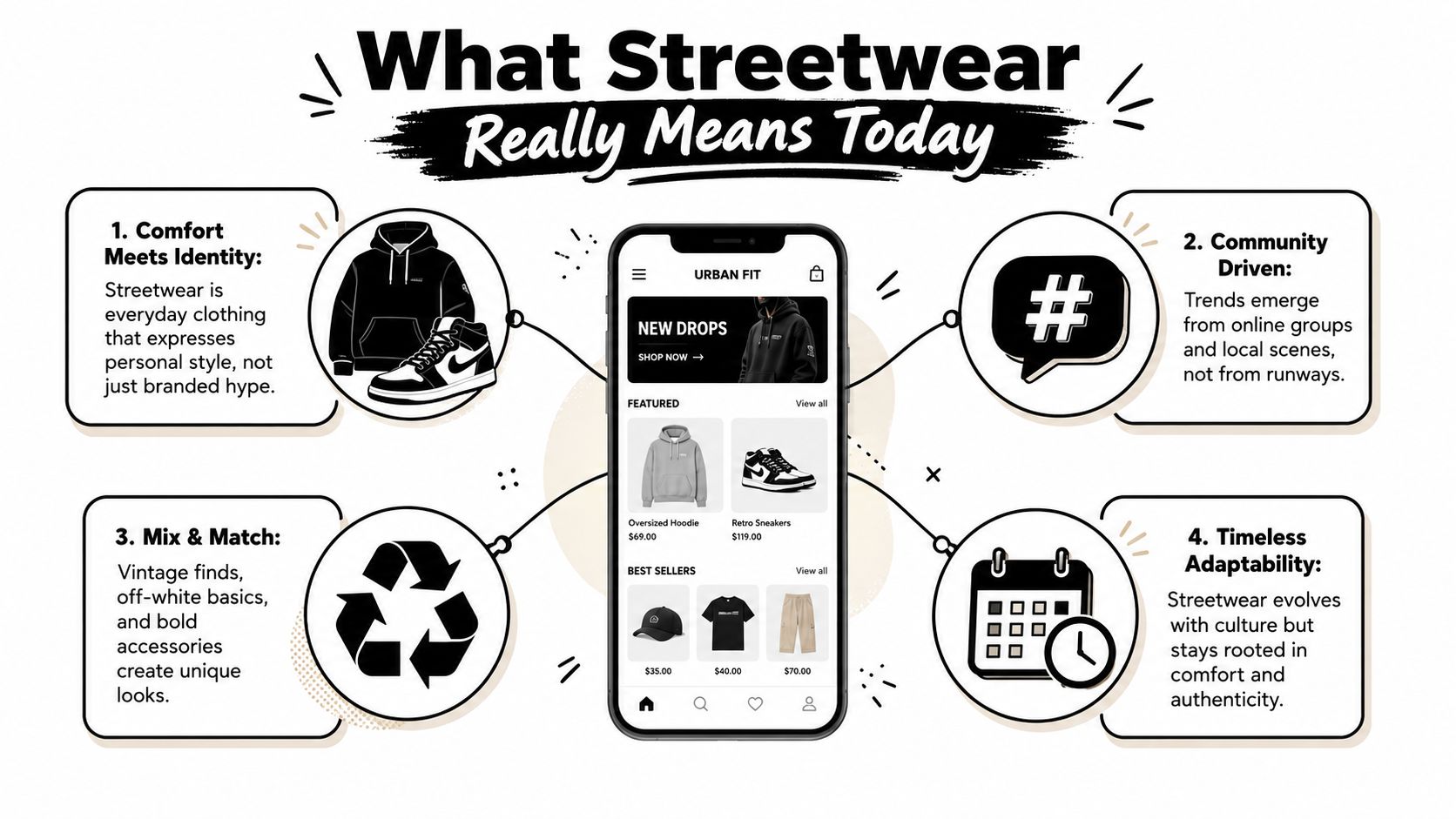
A lot of first-time buyers land on a storefront and see a Drake tour photo tee, a city-name cap, a phone case with dice on it, and a quarter-zip with a car graphic. The natural reaction is, “Is this all streetwear, or is it just random merch?” That confusion makes sense, because streetwear has grown beyond a narrow subculture and now sits inside mainstream fashion, luxury, and everyday basics.
A working definition you can actually use
Streetwear is everyday clothing that uses silhouette and graphics to signal identity. In plain English, that means relaxed fits, bold or readable visuals, and pieces that pull from sportswear, workwear, and sneaker culture. A tee with a strong front print, a cap with a city name, or a hoodie with a boxy shape can all fit the category if they speak the same visual language.
What separates streetwear from plain casualwear is the message. A plain sweatshirt keeps you warm. A streetwear sweatshirt keeps you warm and tells people something about taste, scene, or affiliation. That signal can be loud, like a tour graphic, or quieter, like a muted logo and a heavier fabric that holds its shape.
Why the category feels bigger now
Streetwear isn't stuck in one lane anymore. Recent coverage describes it as stretching across mainstream fashion, luxury, and everyday basics, while 2026 trend commentary points to oversized silhouettes, technical outdoor pieces, retro references, quiet branding, and gender-neutral design. That's why the same category can include a graphic tee, a minimal fleece, and a pair of sneakers without feeling inconsistent.
A helpful rule is simple. If a piece looks like something you'd wear often, but it still carries a recognizable style point of view, you're probably in streetwear territory.
Practical rule: if the clothing would still make sense without a runway context, but it wouldn't disappear into the background either, you're looking at streetwear, not plain basics.
The Subcultures That Built Streetwear
Streetwear didn't appear from one designer's sketchbook. It grew out of surf, skate, and hip-hop communities, each of which brought a different habit of dressing and a different reason for clothing to matter. Once you know what each scene contributed, the style stops feeling vague and starts looking like a blend of specific design choices.
Surf brought ease and branding
Surf culture gave streetwear its relaxed attitude. Loose fits, laid-back graphics, and logo-forward pieces made sense in a scene that valued comfort and easy movement. The clothes didn't need to feel formal, they needed to feel lived-in and direct.
That's also where early merchandise logic started to matter. A shirt could work as a practical garment and a marker of belonging. That basic idea still shapes how city-name caps, branded tees, and small-batch graphics work today.
Skate added durability and graphic bite
Skateboarding changed the material and visual side of the formula. Skate wear needed to take a beating, so sturdier fabrics and easy movement mattered. It also encouraged irreverent graphics, because skate culture has always liked clothes that feel defiant, funny, or anti-polished.
The result is still visible in modern streetwear. Boxier tees, tough hoodies, and graphics that look like they came from a zine or a DIY sticker pack all carry skate DNA. Even when the piece is cleaner now, the attitude often comes from that same place.
Hip-hop gave it scale and silhouette
Hip-hop pushed streetwear toward oversized silhouettes, athletic influence, and clothing that could carry identity from a distance. Tour merchandise, city references, and bold logo placement fit that world because the clothes had to read fast, whether someone saw them onstage, in a crowd, or online.
That history matters because it explains why streetwear often feels tied to performance, even when you're just wearing a tee. The point isn't just decoration. It's visibility, recognition, and belonging.
The easiest way to read a garment is to ask what scene it seems to come from. If it feels like a surfboard shop, a skate crew, or a concert hallway, you're probably looking at authentic streetwear language rather than generic casualwear.
The Signature Elements of Streetwear Style
Streetwear becomes much easier to shop when you judge it by construction, not just graphics. A good piece usually combines shape, fabric, color, and legibility in a way that looks intentional instead of accidental. That's where many shoppers get stuck, because a shirt can have a cool print and still look wrong if the cut or fabric feels off.
The five signals to check first
Start with the silhouette. Streetwear usually leans relaxed, boxy, or oversized, so the garment sits away from the body instead of clinging tightly. Drop shoulders, straight hems, and roomy sleeves often support that look.
Then check the fabric weight. Expert sources place standard graphic tees around 180–240 GSM, while premium streetwear tees often move to 240–300 GSM and hoodies to roughly 320–520 GSM (lekondo.com). Heavier fabric usually means more structure, better print clarity, and a piece that holds its shape instead of collapsing after a few wears.
Rule of thumb: if a tee feels thin enough to cling and wrinkle instantly, it's more likely to read like basic casualwear than a proper streetwear staple.
Color matters too. Streetwear often uses monochrome or muted palettes so the graphic can lead. That doesn't mean every piece has to be black, white, or grey, but the best items usually give the print enough room to breathe.
Graphics and logos should be readable from a normal viewing distance. Streetwear is often about instant recognition, so tiny artwork can work, but it has to be deliberate. A print that looks blurry, crowded, or randomly placed usually weakens the whole piece.
Streetwear Fabric Weight Reference
| Garment Type | Typical GSM Range | What It Tells You |
|---|---|---|
| Graphic tee | 180–240 GSM | Balanced everyday weight with enough structure for print clarity |
| Premium graphic tee | 240–300 GSM | Thicker drape, more body, and a more substantial feel |
| Hoodie or fleece | 320–520 GSM | Heavier construction that helps oversized fits keep shape |
Accessories finish the system. Caps, phone cases, and small add-ons often carry the same visual language as the clothing, which is why a simple look can still feel complete. When the accessories echo the tee's palette or theme, the outfit feels planned instead of pieced together at random.
How Music, Cars, and Cities Shape the Graphics
A strong streetwear graphic usually works like a shortcut. It tells people what you like before you say anything, and that's why music, cars, and cities show up so often. These themes already carry community, memory, and taste, so they translate naturally onto clothing.
A tee can behave like a conversation starter
A tour photo tee does more than show an artist. It points to a moment, a fandom, and a scene. A BMW E36 print does the same thing for car people, because the graphic signals a shared reference that outsiders may not catch immediately. A Brooklyn trucker cap works the same way for city identity.
That's the core appeal. The graphic isn't just decoration. It gives the wearer a built-in topic, and it tells other people where the wearer's interests live. If you already care about a band, a car platform, or your hometown, a graphic piece feels natural instead of borrowed.
Why specific motifs feel more authentic
The best streetwear graphics usually come from something the wearer knows. A music print feels better when you've listened to the artist. A car graphic feels stronger when it comes from a model you recognize on sight. A city cap feels more convincing when it connects to where you live, grew up, or visit often.
This is why streetwear can feel hollow when the graphic is chosen only because it's trendy. The clothing still fits the category, but it loses some of the identity signal that makes the category meaningful. If the piece says nothing about your own interests, it starts looking like a costume.
Pick a graphic that already makes sense to you, and the outfit gets easier. You won't need to force the rest of the look around it.
Keep the message readable
One strong motif is usually enough. A tee with a bold music print, a clean pair of denim, and understated sneakers lets the graphic do its job. If you add a second loud reference, the outfit can start competing with itself.
That's why the best streetwear wardrobes often feel focused. They don't try to say everything at once. They pick one clear cultural signal and let the rest of the outfit support it.
Easy Outfit Formulas Anyone Can Wear
Once you understand the pieces, styling gets much less mysterious. Streetwear works best when the outfit has one focal point, one supporting layer, and one or two quiet anchors. If you build that way, you can wear the same core items in different combinations without feeling repetitive.
Formula one, tee plus denim
Start with a graphic tee, add straight-leg denim, and finish with clean sneakers. This works because the tee carries the personality, while the denim keeps the outfit grounded. Straight-leg jeans are especially useful because they don't fight the shape of an oversized or boxy shirt.
Keep the rest simple. If the tee has a strong print, you don't need loud pants or busy shoes. The outfit looks more confident when only one item is asking for attention.
Formula two, tee under a jacket or quarter-zip
A second reliable option is a tee under a quarter-zip or worn jacket. That adds dimension without making the outfit feel overdressed. It also helps when the weather shifts, because you can show the graphic inside and still layer for warmth or structure.
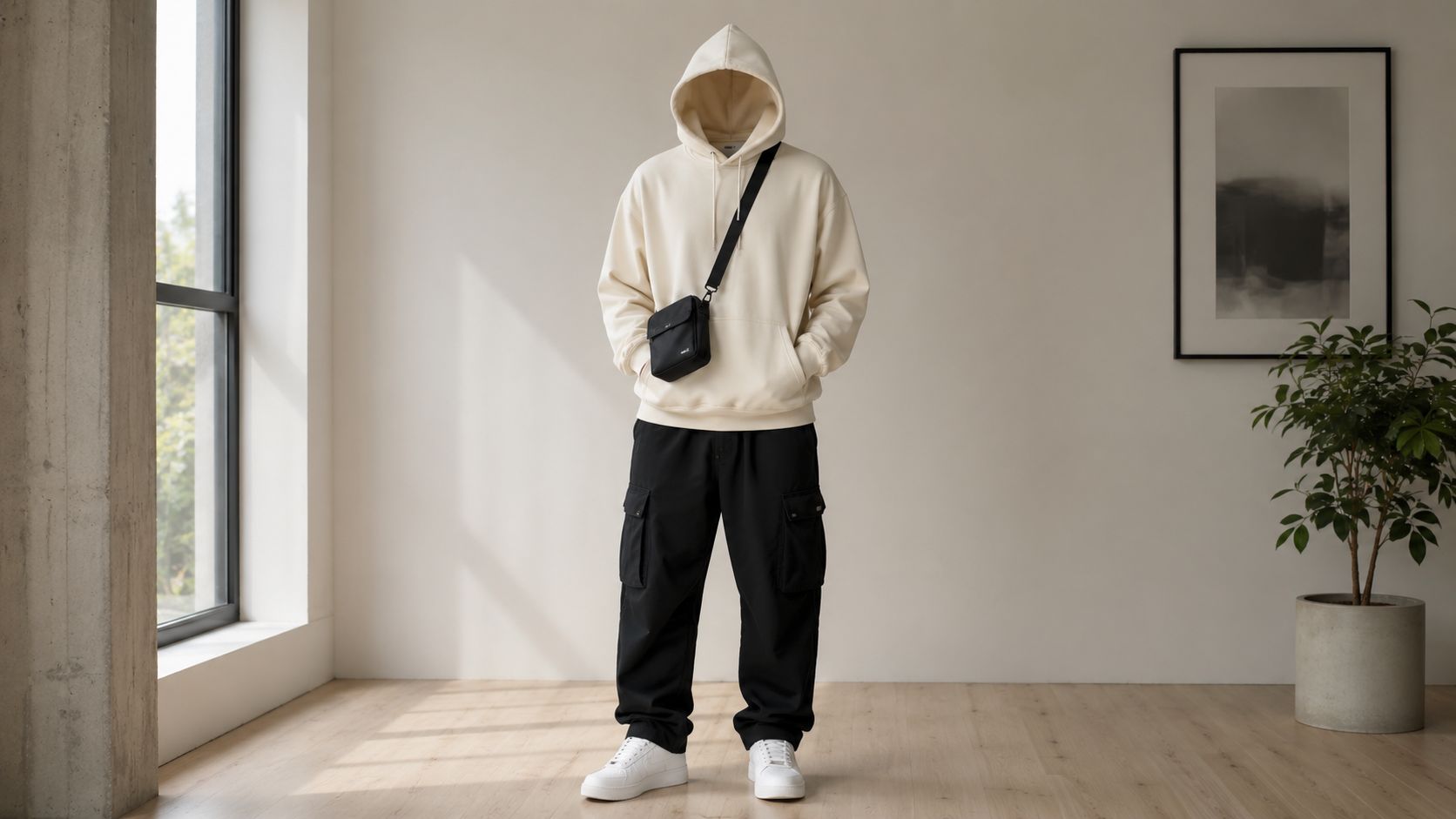
The key is proportion. If the jacket is loose, the tee can stay boxy. If the outer layer is more fitted, let the shirt provide the relaxed shape underneath. That balance keeps the look from feeling bulky.
Formula three, cap and accessory finish
A trucker cap or a small accessory can tie the whole look together when it matches the tee's palette or theme. A phone case with similar colors, a cap with a city reference, or a subtle bag with a related graphic can make the outfit feel considered.
The video below shows how easy it is to move from a simple base outfit to something that reads as streetwear without piling on extra pieces.
Start with one item that does the talking, then let the other pieces make space for it. That's usually the cleanest way to wear streetwear well.
Common Streetwear Mistakes and the Better Way
Most bad streetwear outfits fail for the same reason, they try too hard to prove they're streetwear. The pieces aren't the problem. The styling choice is. Once you can spot the mismatch, the fix is usually simple.
Loud on loud versus one focal point
Over-logoing happens when every piece competes for attention. A graphic tee, a bold cap, statement sneakers, and a busy accessory can all be fine on their own, but together they can turn the outfit into noise. The better move is to pick one graphic focal point and let everything else stay quiet.
Boxy and sloppy versus boxy and intentional
A boxy fit can look great, but only if the drape makes sense. A shirt that's too wide, too short, or made from flimsy fabric can read sloppy instead of relaxed. The better choice is to look for structure, not just size, because a shirt should fall cleanly rather than hang without shape.
Hype chasing versus personal relevance
A lot of beginners buy into drops because they're scarce, not because they like them. That can leave you with pieces that feel exciting in the cart and awkward in real life. The smarter approach is to ask whether you'd still want the item six months from now, when the hype has faded.
Costume energy versus real wardrobe use
Streetwear gets weakest when it looks borrowed from a trend moodboard instead of from the wearer's own interests. A graphic that reflects your music taste, hometown, car interest, or everyday routine will always feel more natural than a logo picked only for status. That doesn't make it less stylish, it makes it more believable.
The easiest filter is this. If the outfit feels like it's trying to perform streetwear, simplify it. If it feels like it's revealing something you already care about, you're on the right track.
How to Shop Streetwear on a Real Budget
Budget shopping gets easier when you know what gives the most visual return. For most first-time buyers, graphic tees, caps, and accessories are the best entry points because they're easy to style, easy to repeat, and usually less risky than buying a full outfit all at once. That's also why curated storefronts with a tighter selection can be less overwhelming than giant catalogs.
A practical checklist before you buy
Look at the fabric weight first if the product page gives it. Heavier tees usually hold shape better, which matters a lot in streetwear. Then inspect the print for clarity, because a strong graphic should look crisp rather than washed out or stretched.
Check whether the piece fits into at least three outfits you already own. If a cap only works with one shirt, or a tee only works with one pair of pants, it's not doing much for your wardrobe. Versatility matters more than novelty when you're trying to stay on budget.
A cheap piece is only cheap if you wear it. If it sits in the drawer, it was expensive in practice.
What to ignore
Skip anything that feels like it needs an entire new wardrobe to support it. Loud pieces can be fun, but they shouldn't require a total style reset. Also avoid buying multiples of the same visual idea just because the print changes slightly.
Streetwear shopping gets expensive when people buy for the cart instead of the outfit. A better habit is to slow down and ask whether the item strengthens your rotation or just fills a moment of curiosity.
Why curated shopping helps
A tighter assortment makes decisions easier because the pieces already share a visual direction. Instead of scrolling through unrelated categories, you can focus on whether a tee, cap, or accessory fits the same streetwear language. For a beginner, that reduces fatigue and makes it easier to build a small, wearable set of options.
FAQs About Streetwear Style and Shopping
Does streetwear have to include sneakers? No. Sneakers are common, but streetwear is really about the full combination of fit, graphics, and identity, so the look can work with boots, casual shoes, or even minimal footwear if the rest of the outfit makes sense.
How can I tell if a graphic tee is well made? Check the fabric feel, the shape, and the print quality. A good one usually has enough body to hold its silhouette and a print that looks clean rather than weak or blurry.
Is streetwear still authentic in 2026, or is it just hype now? It's still authentic when the clothing reflects real community, interest, and personal taste. The problem isn't streetwear itself, it's buying pieces only for status instead of for how they fit your life.
How many pieces do I need to start? Very few. One good tee, one cap, one solid pair of pants, and one clean pair of shoes can already give you a workable rotation if the colors and fits line up.
Streetwear works best when it feels like a language you already speak, not a costume you put on for approval. If the graphic tells the truth about your interests, the outfit usually takes care of itself.
If you want a simple place to start, Trending Market focuses on the exact kind of graphic tees, trucker caps, phone cases, and streetwear-inspired basics this guide talks about. Take a look at Trending Market if you want easy-to-style pieces that make building your first streetwear rotation feel straightforward instead of overwhelming.