

You're probably here because you keep seeing that perfect vintage streetwear style outfit online. The tee looks faded in the right way. The jeans hang loose without looking messy. The cap feels effortless. Then you try to copy it with random oversized pieces from your closet and somehow end up looking less “archived cool” and more “I got dressed in the dark.”
That gap is real. Vintage streetwear style looks relaxed, but it isn't accidental. It's built from fit, fabric, graphics, and a feel for how the clothes sit on the body. The good news is you don't need a rare grail tee from decades ago to get close to that energy. You just need to know what makes the look read as authentic.
Table of Contents
- What Is Vintage Streetwear Style Anyway
- The Core Elements of the Vintage Vibe
- Building Your Wardrobe with Core Pieces
- Styling Vintage Fits for the Modern Era
- Finding Authentic Style on a Budget
- Make the Vintage Streetwear Style Your Own
What Is Vintage Streetwear Style Anyway
If a seller calls something vintage, that word has a real meaning. Vintage streetwear refers to casual clothing that is at least 20 years old, which separates true vintage from retro reproductions, according to Vintage Bliss on vintage streetwear. That same source notes the style hit global popularity in the 1990s, shaped by African-American and Latino hip-hop fashion in New York and elements of Californian surf culture.
That history matters because the look didn't come from nowhere. It came from people dressing for movement, identity, comfort, rebellion, and community. That's why vintage streetwear style still feels alive. Even when the clothes are simple, the mood says something.
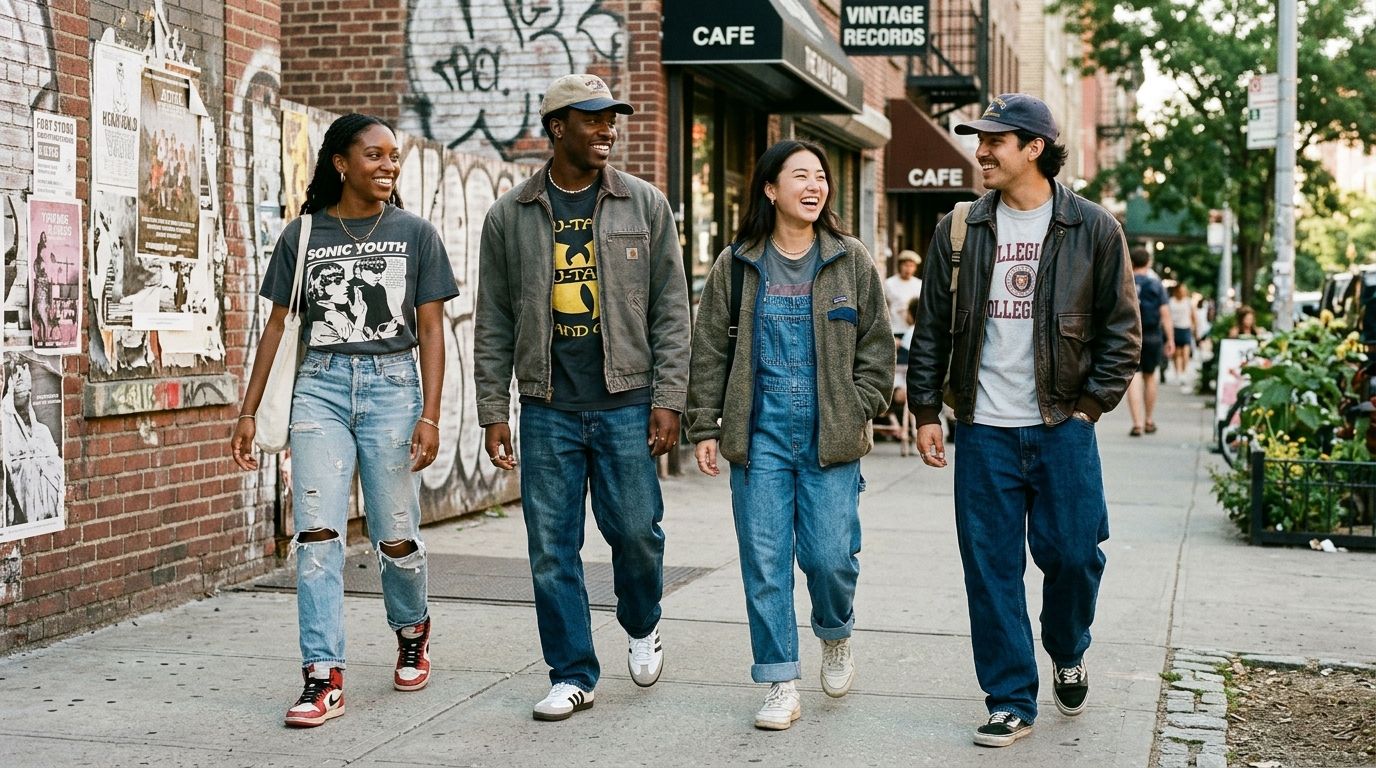
Here's where a lot of people get confused. True vintage is old enough to belong to its era. Vintage-inspired is newer clothing designed to capture that same spirit. Both can look great. Only one of them has the age.
Practical rule: If you want the vibe, chase the feeling first. If you want the artifact, chase the timestamp.
Outfit builders today don't need to start with collector pieces. They need clothes that nod to the same roots. A boxy tee, washed fabric, old-school graphics, relaxed denim, and a worn-in cap can do a lot of heavy lifting. You're not faking the culture by wearing inspired pieces. You're translating it into a wardrobe that fits your budget and your life.
True vintage versus vintage-inspired
A helpful way to think about it is this:
- True vintage means the piece itself is from the era.
- Vintage-inspired means the design borrows the silhouette, wash, print style, or attitude of older streetwear.
- Thrifted just means secondhand. It might be vintage. It might not.
That distinction saves you money and disappointment. If your goal is strong personal style, you can build an excellent vintage streetwear style wardrobe with affordable modern pieces, as long as they get the shape and texture right.
The Core Elements of the Vintage Vibe
You can spot the difference fast. One outfit looks like a real personal style choice. The other looks like a brand printed a retro graphic on a standard tee and called it a day.
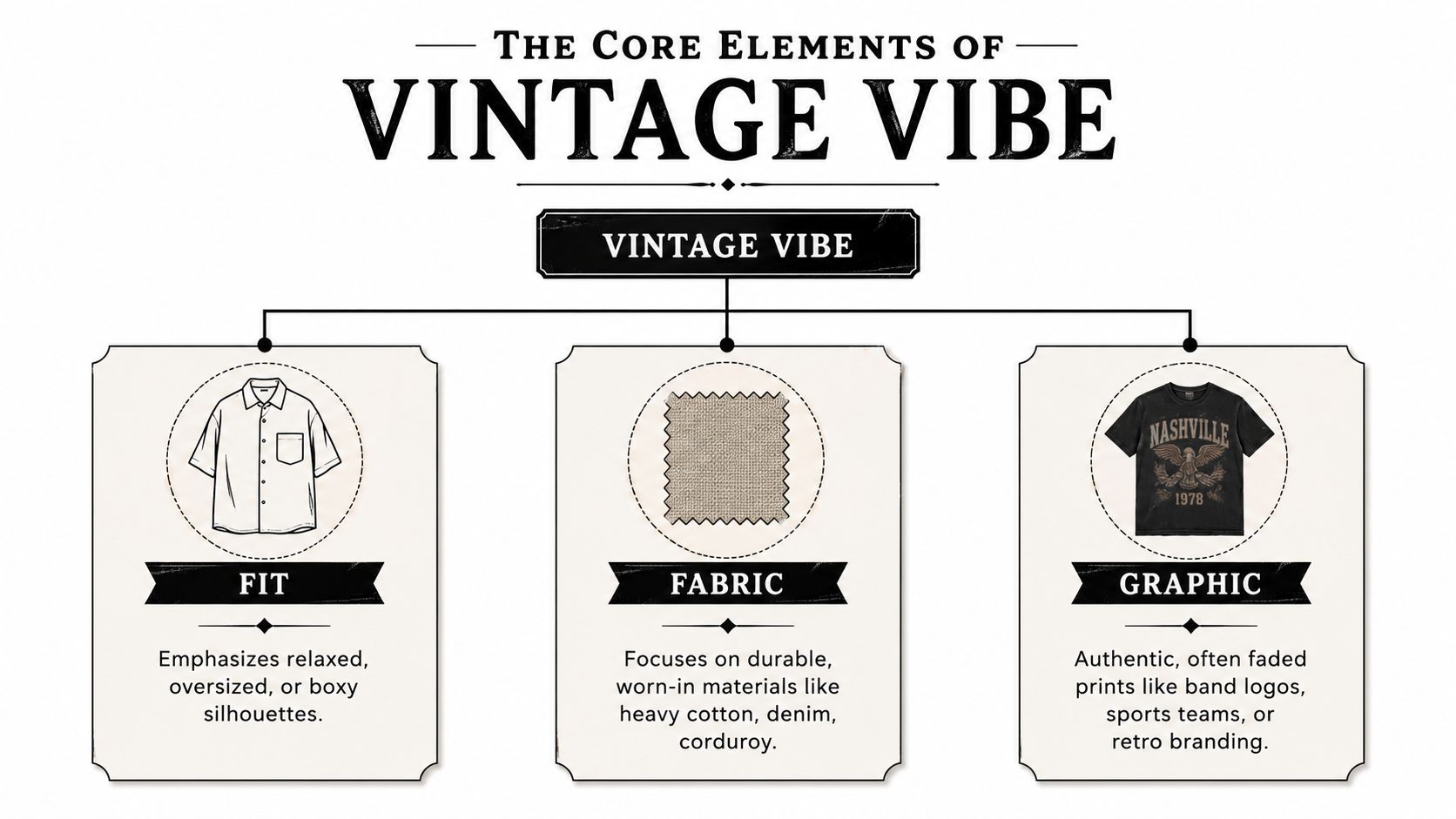
The vintage streetwear vibe usually comes down to three things: fit, fabric, and graphic. Get those working together, and even an affordable modern piece can carry the same energy as something older and harder to find.
Fit carries the attitude
The silhouette does a lot of the work first. As explained in Touch Dark's breakdown of vintage versus modern streetwear, older streetwear shapes often came from boxier, roomier cuts tied to skate and hip-hop style.
What matters for you is how that shape reads on the body.
A good vintage-style tee has space in the chest and sleeves, then falls in a clean, straight line instead of clinging. Boxy works like a well-framed poster. It gives the design structure. A long, thin tee usually loses that effect, even if the graphic is good.
If you're shopping on a budget, ignore the hype words for a second and check the shape:
- Shoulders should sit with a little width, not pull inward
- Sleeves should hang with room, not hug the arm
- Length should feel relaxed, but not turn the shirt into a tunic
You do not need an archive piece to get this right. Plenty of newer tees nail the shape.
Fabric creates the feeling
Fabric is what makes a shirt feel convincing up close. Collector talk can get technical fast, but the budget version is simpler. You are looking for a tee that feels sturdy enough to hold its own shape and soft enough to look lived in.
A lightweight shirt tends to collapse, twist, and make the print feel cheaper. A heavier shirt gives the whole outfit more presence. It works like better paper under a sketch. Same idea, stronger result.
Instead of chasing exact factory specs, use your hands and eyes:
- Pick it up. If it feels flimsy, it will probably wear flimsy.
- Look at the surface. Slightly dry, washed, or faded cotton usually reads more vintage than ultra-slick fabric.
- Check the drape. A better tee hangs with a little structure instead of melting against the body.
- Watch the color. Sun-faded tones, washed black, off-white, and muted prints usually feel more believable than loud, shiny color.
That is the budget shortcut. You are not trying to verify whether a shirt belongs in a collector forum. You are trying to see whether it gives the same visual weight.
Graphics tell the story
Graphics are the memory layer. They hint at a scene, a team, a city, a tour, or a subculture, even when the shirt is brand new.
Good vintage-inspired graphics usually feel a little less polished. The print may look faded, the colors may feel slightly dulled, and the artwork often references things with history behind them, like racing, local sports, old music culture, regional businesses, or tourist tees. Those details create mood.
You also do not need true vintage construction details for a shirt to work. Cracked ink, single-stitch hems, and old labels matter more to collectors than to someone building a strong outfit on a budget. For everyday styling, the better question is simple: does the graphic look like it came from a real world, or does it look like it was designed to copy a trend?
Why the vibe works
Vintage streetwear style feels good because it has texture, shape, and some sense of history. Even newer pieces can do that if they look worn in, fit with intention, and tell a believable story.
That is the sweet spot for budget shopping. You are not paying for age alone. You are choosing modern pieces that give you the same mood for a lot less money.
Building Your Wardrobe with Core Pieces
You are getting dressed for a weekend coffee run, maybe a thrift stop after, and you want the outfit to feel like vintage streetwear without looking like you spent collector money on every piece. That usually comes down to a small rotation of items that carry the right mood.
A strong wardrobe here works like a good playlist. A few repeatable favorites do more for your style than a pile of random pickups.
Start with the shirt that sets the tone
If you are building on a budget, start with the graphic tee. It gives you the biggest style payoff for the least money, and it teaches your eye what the vintage streetwear vibe looks like in real life.
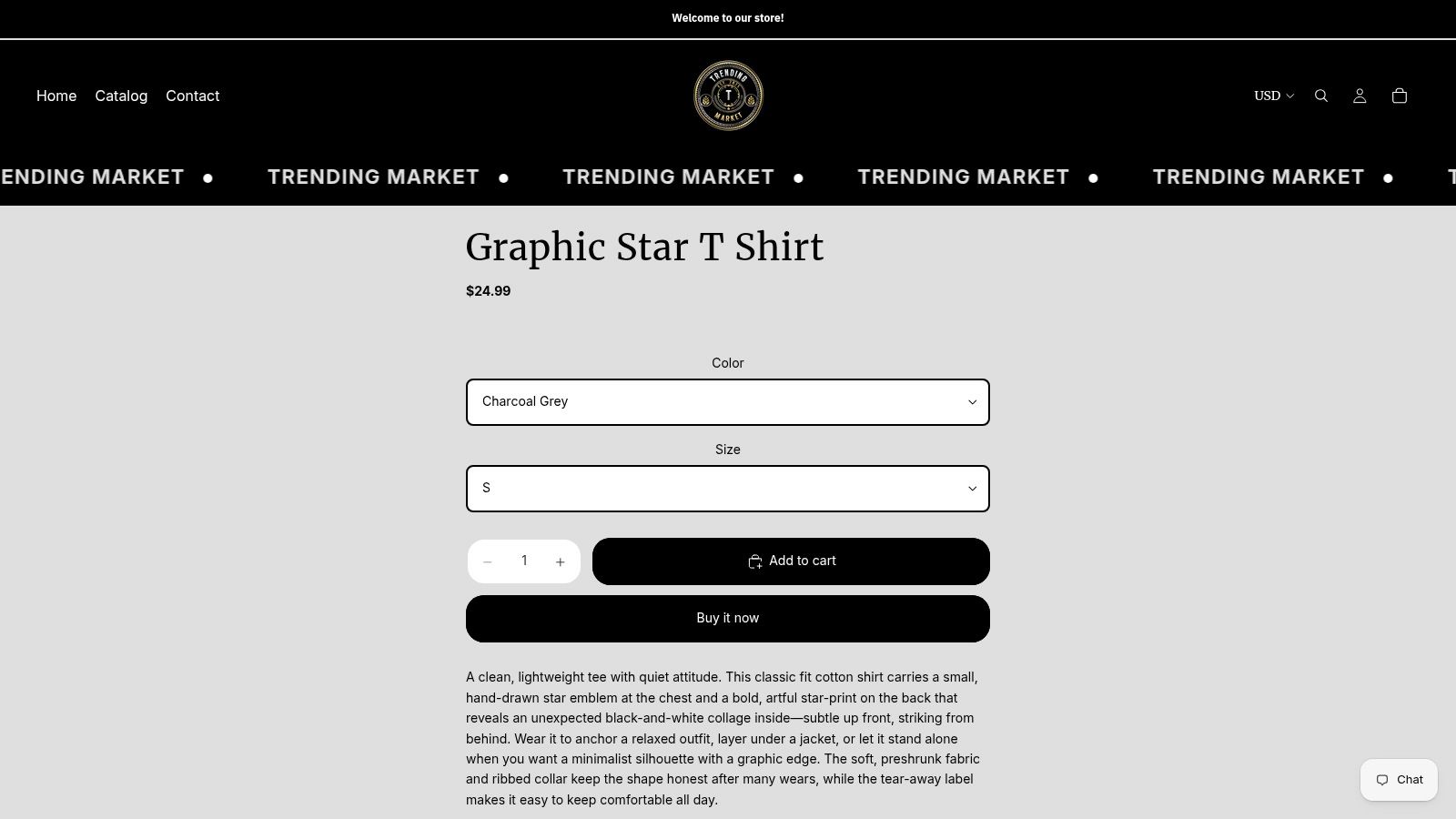
The Graphic Star T-shirt shown above is a useful example. Notice the boxy shape, the room through the sleeves, and the washed graphic. Those details make it feel closer to an older find, even though you do not need an actual 1990s tee to get that effect. That is the whole budget angle. You are buying the visual language, not chasing age for its own sake.
Good starter graphics usually point to a world outside the shirt itself. Music, racing, city references, local sports energy, tourist-shop graphics, and faded logo work all help. If the print feels too glossy, too sharp, or too obviously trend-chasing, it can break the illusion.
Add one piece that gives the outfit identity
Once the tee feels right, add one supporting piece with personality. One is enough.
A trucker cap, zip hoodie, quarter-zip, or light workwear jacket can all do the job. The trick is choosing something that adds story, not clutter. A cap can bring in that roadside, team-issue, or gas-station feel. A quarter-zip can pull the outfit toward motorsport or campus vintage. A faded hoodie makes everything feel more lived in.
For fit inspiration, the oversized fit video embedded below is useful if you are still figuring out proportion. It explains why roomy clothes only work when the shape still looks deliberate.
Choose bottoms that hold the shape
Bottoms are the frame. They decide whether the outfit feels balanced or whether the top looks like it landed on the wrong pair of pants.
Straight-leg or relaxed denim is usually the easiest place to start. Cargo pants work too, especially if the rest of the outfit stays simple. Relaxed shorts can make sense in warmer weather, especially with crew socks and clean everyday sneakers.
The main goal is shape control. If your top is boxy and substantial, your pants need enough weight and width to match it. Super-skinny jeans can make the whole outfit feel less like vintage streetwear and more like a costume built around one oversized shirt.
| Core Piece | Key Characteristic | How to Wear It |
|---|---|---|
| Graphic tee | Boxy cut, washed look, believable print | Pair with loose denim and simple sneakers |
| Trucker cap | Casual shape, easy retro energy | Use it to finish a plain tee-and-jeans outfit |
| Quarter-zip or light layer | Adds depth without bulk | Wear open over a tee for dimension |
| Loose denim | Straight or relaxed leg | Let it balance a wider top |
| Cargo pants | Utility feel, room through the leg | Keep the top simple so the silhouette stays clean |
Build the wardrobe like a playlist. Start with the tracks you will actually replay, then add a few that give the whole thing character.
Styling Vintage Fits for the Modern Era
You know the outfit. A faded tee, loose jeans, maybe a cap, and somehow it still looks flat instead of lived-in. The difference usually is not the individual pieces. It is the styling choices that make the whole thing feel current instead of costume-y.
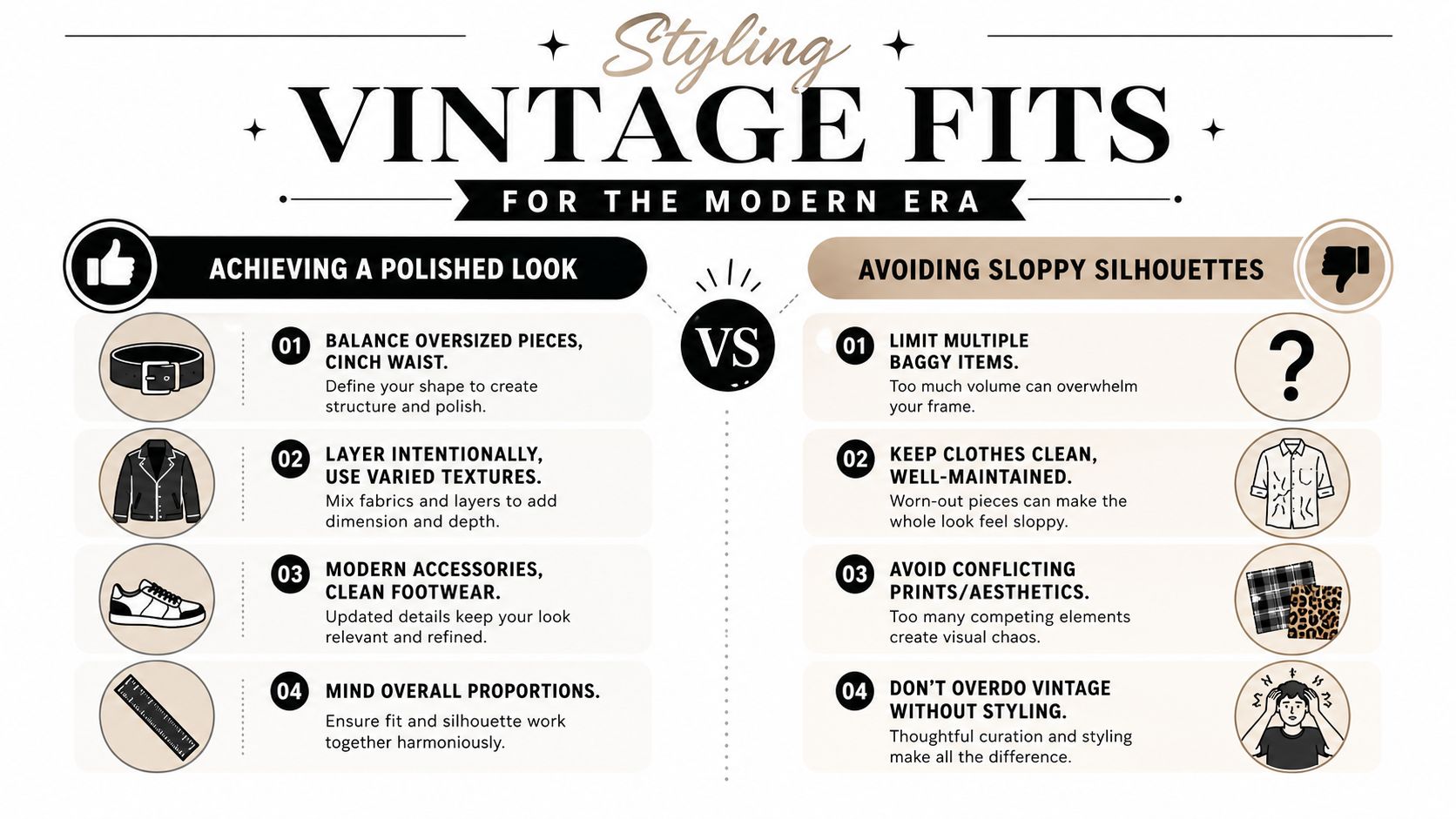
The last section covered what to buy. Styling is what happens after that. It is the part where a cheap modern tee can start giving vintage energy because of how you wear it, what you pair it with, and what you leave out.
Start with attitude, not more volume
A lot of people chasing vintage streetwear keep adding size, graphics, and layers, hoping the outfit will click. Usually the opposite works better. Strong vintage-inspired outfits have one clear idea. Maybe the tee has the personality. Maybe the wash on the jeans does the heavy lifting. Maybe the cap or shoes give the look its era.
That is why restraint matters.
If every piece is loud, the outfit stops telling a story. It starts looking like you bought “vintage” as a theme. Real vintage style usually feels edited. A faded graphic with plain denim. A sporty layer over a simple base. One worn-in detail that makes the whole fit feel believable.
Use contrast to keep the look modern
This is the biggest styling shift from building a wardrobe. You already own the pieces. Now you need tension between them.
Vintage streetwear looks better when one part feels throwback and another part feels clean and present. A washed tee with crisp sneakers. Loose cargos with a fitted ribbed tank. A retro cap with a plain modern hoodie underneath. That contrast keeps the outfit from reading like a full costume from one exact year.
An easy way to judge it is this. If everything looks equally old, the outfit can feel staged. If one or two elements feel fresh, the vintage references land better.
Focus on texture and wear
Vintage style is not only about shape. It is also about surface.
Soft cotton, sun-faded color, matte nylon, broken-in denim, slightly cracked print. Those details create the worn, real-life feeling people usually mean when they say a fit has character. You can get a lot of that effect from newer budget pieces if you choose fabrics and finishes carefully.
A brand-new shirt in a harsh, shiny fabric rarely gives the same mood as a modern tee with a washed finish and a heavier hand feel. The same goes for sneakers. Clean is good. Dead-stock stiff is not always better. Sometimes a little wear makes the whole outfit feel more natural.
Common mistakes that kill the vibe
A few styling errors show up all the time:
- Too many obvious vintage signals at once. A retro logo tee, vintage wash jeans, old-school basketball shoes, trucker cap, chain wallet, and tinted sunglasses can feel overbuilt.
- Distressing that looks fake. If the fading, rips, or print cracking seem too neat, the outfit loses credibility fast.
- Ignoring color temperature. Warm, faded tones usually work better together than a mix of icy brights and dusty neutrals.
- Over-accessorizing. Streetwear can handle details, but vintage-inspired outfits usually breathe better with fewer of them.
- Copying archive looks too closely. Reference photos help, but real style starts when you adapt the mood to what you can find and afford.
That last point matters if you are dressing on a budget. You do not need a rare tee from 1998. You need the same mood. That can come from a thrifted blank, a washed cap, and a pair of affordable straight-leg jeans styled with intention.
Small styling moves make cheap pieces look better
Budget dressing gets fun. Tiny adjustments can change how affordable clothes read.
Roll a sleeve once if the opening feels too long. Let a layer sit open instead of fully zipped. Tuck just the front edge of a tee if the shape needs definition. Show a bit of sock to connect the shoe to the pants. None of that requires expensive clothes. It just makes the outfit feel considered.
Styling vintage streetwear works like setting a room. The furniture matters, but lighting, spacing, and what you remove matter too.
Dress for the vibe, not the replica
The strongest modern vintage fits usually nod to the past without trying to reproduce it perfectly. That is the sweet spot. You keep the faded colors, the relaxed energy, the sporty or graphic references, but you wear them in a way that fits your life now.
That might mean vintage-inspired clothes with cleaner grooming. It might mean one thrifted piece mixed with basics from affordable stores. It might mean skipping the “grail” hunt entirely and getting the same feeling through texture, color, and attitude.
That is how the look stays personal. And that is usually what makes it look authentic.
Finding Authentic Style on a Budget
You don't need collector money to dress well. You need taste, patience, and a basic quality filter. That matters even more now because a lot of affordable clothing copies the look of old streetwear without getting the feel right.
One source on the current vintage conversation says 85% of consumers prioritize authenticity in vintage purchases, and it points to budget buyers shopping for $20–$40 graphic tees who still want credibility and quality, as discussed in Hard Life Apparel Co. on vintage culture and modern streetwear. That's exactly the sweet spot many consumers shop in.
What to check when thrifting
When you thrift, don't just scan the print. Touch the shirt. Turn it inside out. Look at the seams. Older-feeling pieces usually reveal themselves in the small stuff.
A few signs help:
- Single-stitch hems can be one clue on older tees, as noted earlier in the article.
- Cracked or softened prints often feel more natural than fake distressing.
- Tags and labels can give away whether the piece belongs to an older production era.
The trick is not to romanticize damage. Real wear usually looks uneven and specific. Fake wear often looks too neatly placed or too evenly “vintage.”
If the distressing looks designed for a product page instead of earned through use, trust your instincts.
What to check when buying new
A new shirt can still deliver a convincing vintage streetwear style feel if the brand gets the basics right. Focus less on whether it claims to be vintage and more on whether it behaves like a good vintage-inspired piece.
When shopping new, prioritize:
- Cut over hype. A clean boxy fit beats a loud print on a flimsy blank.
- Fabric over buzzwords. If the cotton feels thin and slippery, the shirt may not drape well.
- Print finish over graphic size. A smaller faded graphic can look more authentic than a huge glossy one.
- Wash over brightness. Slightly muted color usually reads better than ultra-saturated tones for this style.
Budget shopping gets easier when you stop asking “Is this a rare piece?” and start asking “Does this look and wear like something with history?” That shift saves time and money.
Make the Vintage Streetwear Style Your Own
You throw on a faded tee, roomy pants, and a cap before heading out. In the mirror, the fit finally clicks. It does not look like you copied a mood board or spent months hunting grails. It looks like you.
That is the goal.
Vintage streetwear style has always worked best when it feels lived-in and personal. The point is not to prove how old your clothes are. The point is to build an outfit with the same attitude old streetwear had in the first place. Easy shape, real character, and a little history in the styling, even if the pieces themselves are new and affordable.
Your version might start with washed graphics and loose denim. You might prefer cleaner layers, racing references, or a more muted palette. Both can feel authentic. Vintage streetwear works like a favorite playlist. The vibe stays recognizable, but your picks are what make it yours.
Start with a small base and let it grow.
One tee with the right shape can set the tone for everything else. One pair of pants with good drape can make budget pieces look more convincing. One cap, chain, or jacket can add enough personality to keep the outfit from feeling flat. Wear those pieces often, notice what you reach for, and build around that pattern.
Personal style usually comes from repetition. You learn what silhouettes feel natural, which graphics suit you, and where to keep things simple. That process matters more than owning rare items.
Putting that into practice is the next move. If you want affordable, vintage-inspired pieces that get the fit, graphics, and everyday wearability right, browse Trending Market's streetwear collection. Their tees, caps, and layered basics line up with the budget-friendly vintage vibe this guide is built around, so you can start creating the look without paying collector prices.