

You're standing in front of a rack of graphic tees, half of them look good on the hanger, and none of them come with a translator. One shirt has a band photo, one has a tiny chest logo, one hangs boxy and oversized, and another looks like it belongs in a vintage shop window. The hard part isn't noticing the graphics, it's figuring out which types of graphic tees fit your wardrobe, your budget, and the way you dress on a normal Tuesday.
Table of Contents
- What Counts as a Graphic Tee and Why the Category Matters
- Theme-Led Graphic Tees From Music to Automotive
- Fit and Silhouette Variants That Shape the Look
- Fabric, Print Method, and the Quality Trade-Offs That Decide Longevity
- Styling Graphic Tees for Occasion, Season, and Budget
- A Simple Decision Framework for Choosing the Right Graphic Tee
- Buying and Care Questions Real Shoppers Actually Ask
What Counts as a Graphic Tee and Why the Category Matters
A graphic tee is a T-shirt with visual content on it, but that simple label hides a lot of buying choices. For streetwear shoppers, the category usually gets sorted by neckline and silhouette first, then by print style, because those details change how the shirt sits on your body and how easily it works with the rest of an outfit. Industry segmentation commonly places the core styles into crewneck, V-neck, Henley, boatneck, and other cuts like cropped, oversized, and longline, with crewneck repeatedly described as the most common type and V-neck as a major alternative with broad appeal. A recent market summary also says crewneck holds 53.16% of market share in the category Business Research Insights.
The rack test most shoppers actually use
You're standing in front of a wall of tees, and the first question is rarely “Do I like the art?” It is usually “Will I wear this more than once?” A plain tee with a giant print behaves differently from a shirt with a small chest graphic, even if both count as graphic tees. Print size, placement, and collar shape decide whether the shirt reads like a statement piece, a layering piece, or an everyday staple.
Practical rule: start with the shape before you judge the artwork. A strong graphic on the wrong cut can still feel off, while a simple graphic on the right cut can slide into your rotation fast.
That matters in streetwear because the shirt has to carry the print and still work with jeans, cargos, jackets, and sneakers. A graphic tee is about more than decoration, it is about how easily the shirt carries a print while still fitting into real outfits. The main things to read on a product page are theme, fit, and fabric, and once you know those three pieces, the category gets much easier to sort through.
Plain tee, slogan shirt, merch shirt, and graphic tee
People use these labels loosely, but they do not always point to the same thing. A plain tee has no visual graphic at all. A slogan shirt centers text first, while a merch shirt usually ties to a band, event, brand, or franchise, which can make it feel more collectible than generic. A graphic tee sits in the middle of all that, because it can be artistic, minimal, loud, nostalgic, or merch-like depending on the print.
That difference matters when you compare options online. A shirt with a city skyline and one with a tour photo may both count as graphic tees, but they send different style signals and age differently in your closet. Once you can separate those ideas, it becomes easier to decide whether a piece is a repeat-wear basic or a mood-specific buy.
Theme-Led Graphic Tees From Music to Automotive
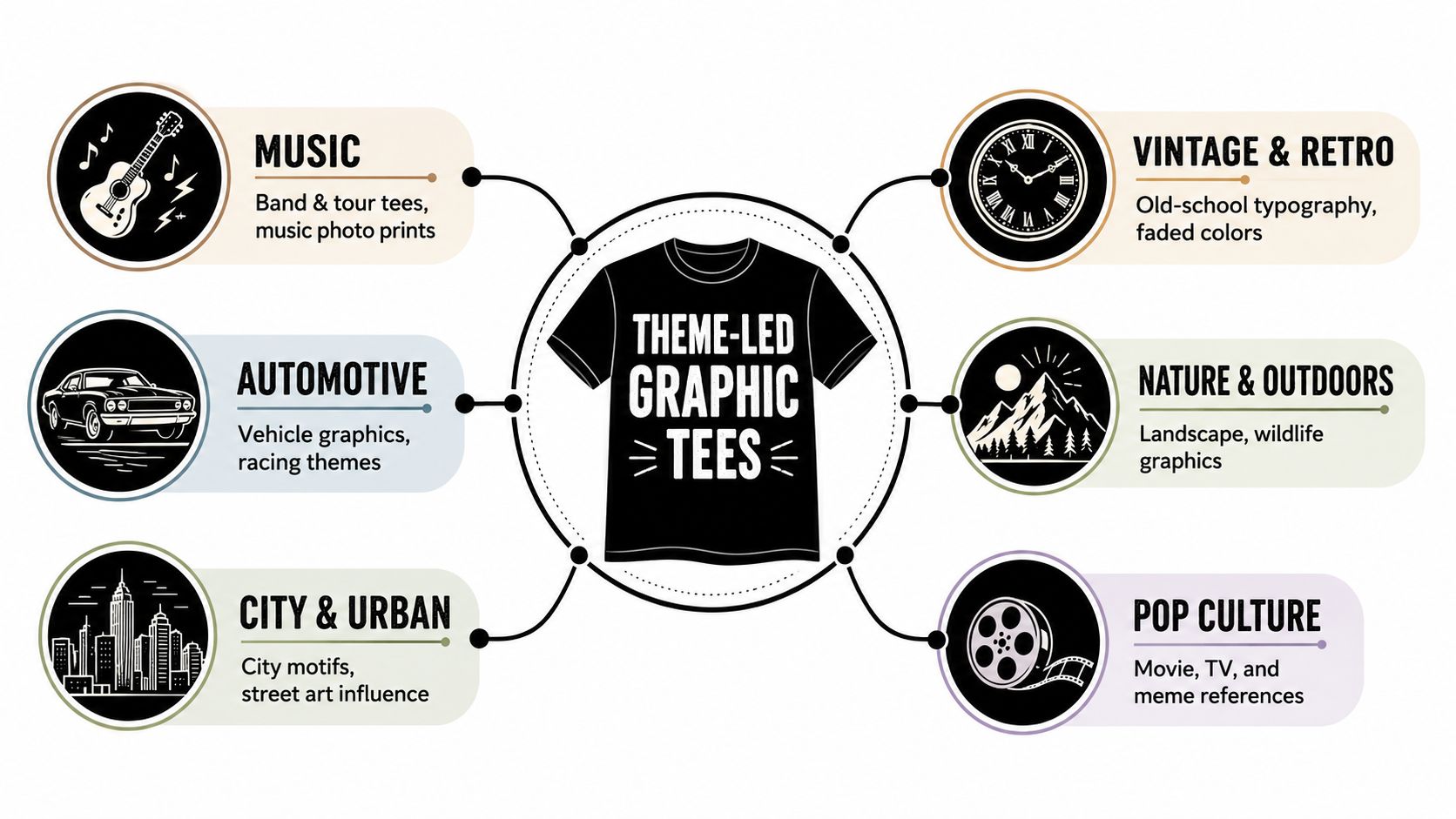
Theme is usually the quickest way to sort graphic tees because the print tells you the vibe before you even check the fabric tag. On a crowded rack, you can split most options into music, automotive, city and urban, vintage and retro, nature and outdoors, and pop culture. Those groups cover a lot of streetwear shelves, and they also help you decide whether a tee feels nostalgic, current, playful, or a little more grown-up.
Music and tour tees
Music tees are the version many recognize first. They can be band shirts, tour tees, or music photo prints, and they often use concert imagery, album art, or performer portraits to carry the design. A shirt like a Drake Scorpion Tour photo tee reads differently from a minimal logo tee because it points to a specific cultural moment, not just a name on cotton.
That makes these tees feel personal if you care about the artist, and they usually become instant conversation starters in an outfit. They stay casual, so they work best when the shirt gets the spotlight and the rest of the look stays simple.
Wearability verdict: strong if music is part of your identity. If you want a tee that says something about your taste without needing extra styling, this is one of the easiest picks. If you need something that blends subtly into a wide range of outfits, it can feel a little specific.
Automotive, city, and street references
Automotive graphics sit in a different lane. A shirt built around a BMW E36 or another recognizable vehicle usually feels sharper and more niche, especially for buyers who like car culture but do not want cartoonish novelty graphics. City tees work in a similar way, except the reference is place-based instead of machine-based. A Brooklyn or skyline graphic signals urban identity fast, which is why those shirts stay popular in streetwear.
A good automotive or city tee should feel like a reference, not a costume. If the design looks too busy, the shirt starts fighting the rest of the outfit.
Wearability verdict: good for buyers who want a streetwear edge without shouting. These tees work best when the rest of the fit is simple, like jeans, cargos, or clean sneakers. If your wardrobe already has a lot of loud graphics, this type can still work, but the design should stay readable at a glance.
Vintage and retro tees lean on faded inks, old-school typography, and throwback references. They usually feel more lived-in and less trend-chasing, which makes them easy to keep in rotation. If you want a graphic tee that wears like an old favorite, this is often the safest lane.
Wearability verdict: very strong for repeat wear. Vintage and retro styles usually fit into more outfits than highly specific pop references, so they are a smart choice if you want something you can wear often without feeling locked into one mood.
Nature and outdoors graphics shift the mood toward wildlife, scenic art, and other natural imagery. They tend to read calmer and a little more open-air, which works well if you want a graphic that does not compete too hard with the rest of your outfit. Pop culture tees pull from movies, TV, and meme culture, so they usually feel faster and more current. Recent trend coverage also points to anime and cartoon, humor, and religious or spiritual designs as current hot spots, while broader industry writeups keep pop-culture tees, slogans, and artistic or abstract prints in the mix TeePrints.
Wearability verdict: nature and outdoors tees are easygoing if you like a quieter graphic, while pop culture tees are better for people who want the shirt to carry the whole point of the outfit. The trade-off is simple. The more specific the reference, the more the tee acts like a statement piece. The more general the imagery, the easier it is to wear on repeat.
The cleanest way to choose is to match the theme to your closet, not just your taste. Music tees are the clearest “I'm into this” statement. Automotive and city tees give you a streetwear edge without going too loud. Vintage and minimalist graphics are the safest if you want something you can wear often without feeling boxed into one outfit.
Fit and Silhouette Variants That Shape the Look
The same print can read differently once the cut changes. A tight crewneck with a small chest graphic feels neat and centered. An oversized tee with a large back print feels more relaxed and more deliberate. Fit is part of the design language, and the silhouette helps decide whether the shirt reads as clean basics, streetwear, or a more fashion-forward piece.
Crewneck, V-neck, and Henley
The classic crewneck is the foundation. It keeps the eye centered and works with almost any graphic style. A V-neck opens the neckline a bit more and tends to feel less boxy, so it works when you want the graphic to feel a little lighter. A Henley adds a button placket and usually reads more structured, which makes it a good bridge between casual and slightly polished.
The wearability verdict is simple. Crewneck is the safest everyday pick, V-neck gives the print a softer frame, and Henley can make a graphic tee feel less like weekend-only clothing. If you want one shirt that slides into a lot of outfits without much thought, crewneck still does the most work.
Oversized, cropped, and longline
An oversized tee changes proportion first. It gives the graphic more breathing room and usually makes a design feel more streetwear-driven, especially with cargos or straight-leg denim. A cropped tee shifts the visual balance upward and tends to look more fashion-forward, especially with high-waisted bottoms. A longline cut extends the silhouette, which can make a print feel stretched and more vertical.
A small chest print on a fitted shirt works like a logo patch, neat and contained. Put that same print on an oversized blank, and the extra space around it changes the whole mood. If you like layering under jackets, the classic crewneck usually wins. If you want the shirt itself to carry the outfit, oversized and cropped cuts do more work.
Style check: match the silhouette to the bottom half of the outfit first. Straight-leg jeans, cargos, and shorts all react differently to a tee that's fitted, boxy, or extended.
The wearability verdict: oversized is the most streetwear-forward, cropped is the most fashion-specific, and longline is the most niche. If you want the least friction in your wardrobe, classic crewneck fits with clean proportions still make the easiest repeat wear.
Fabric, Print Method, and the Quality Trade-Offs That Decide Longevity
Quality isn't just about how the shirt feels on day one. It's about whether the print still looks intentional after washing, whether the fabric keeps its shape, and whether the shirt was built for a simple run or a more complicated design. For graphic tees, the print method-to-fabric match matters more than a lot of shoppers realize Alibaba B2B guide.
Screen printing versus heat transfer
Screen printing is usually the better choice for higher-volume orders because it's built for durability. The verified data says it can deliver 50+ wash cycles before noticeable fading, which is a big deal if you want a shirt to stay in rotation. By contrast, lower-quality heat transfers may crack or peel within 10–15 washes, which changes both the look and the replacement cost over time Alibaba B2B guide.
That difference affects more than lifespan. It also affects how a shirt feels against the skin, how confident you can be about rewearing it, and whether the graphic still looks crisp after repeated laundry cycles. If you're buying something you expect to wear often, print durability should be part of the decision, not an afterthought.
Fabric basics that actually matter
On product pages, look for language like 100% preshrunk cotton jersey, blended heathers, and fabric weight details such as 5.0 oz when they're listed. Those details tell you how the tee will drape, how much it may shrink, and whether the shirt is likely to feel soft, structured, or lightweight. A preshrunk cotton jersey tee is usually the easiest starting point because it's familiar and predictable. Heathers and blends can feel softer or more flexible, but the trade-off is that they may behave differently in wash and wear.
The production side also shapes what gets made in the first place. The same source notes that simple single-color screen prints can support MOQs as low as 50 pieces, while multi-color all-over sublimation often requires 500+ units Alibaba B2B guide. In practical terms, that means more ambitious graphics often need stronger demand before they make sense for a brand.
For buyers, the wearability verdict is practical. If you want a tee you'll wear hard, lean toward screen-printed graphics on straightforward cotton bases. If the shirt relies on a heavy photo effect or full-coverage art, treat it more carefully and expect the production method to matter even more.
Styling Graphic Tees for Occasion, Season, and Budget
A graphic tee works best when it looks intentional with the rest of the outfit. That doesn't mean you need a complicated fit. It means the shirt should match the setting, the weather, and how much of a statement you want to make. A music tee with loose denim and a jacket feels different from the same shirt worn under a blazer, even if the shirt doesn't change at all.
Everyday, going out, and colder weather
For everyday wear, the safest formula is simple, graphic tee, straight-leg jeans, and a jacket. A worn denim jacket makes the outfit feel easy, while a quarter-zip or light outer layer gives you a more structured shape when the weather turns. A city or automotive graphic usually fits cleanly into that kind of rotation because the print already gives the outfit identity.
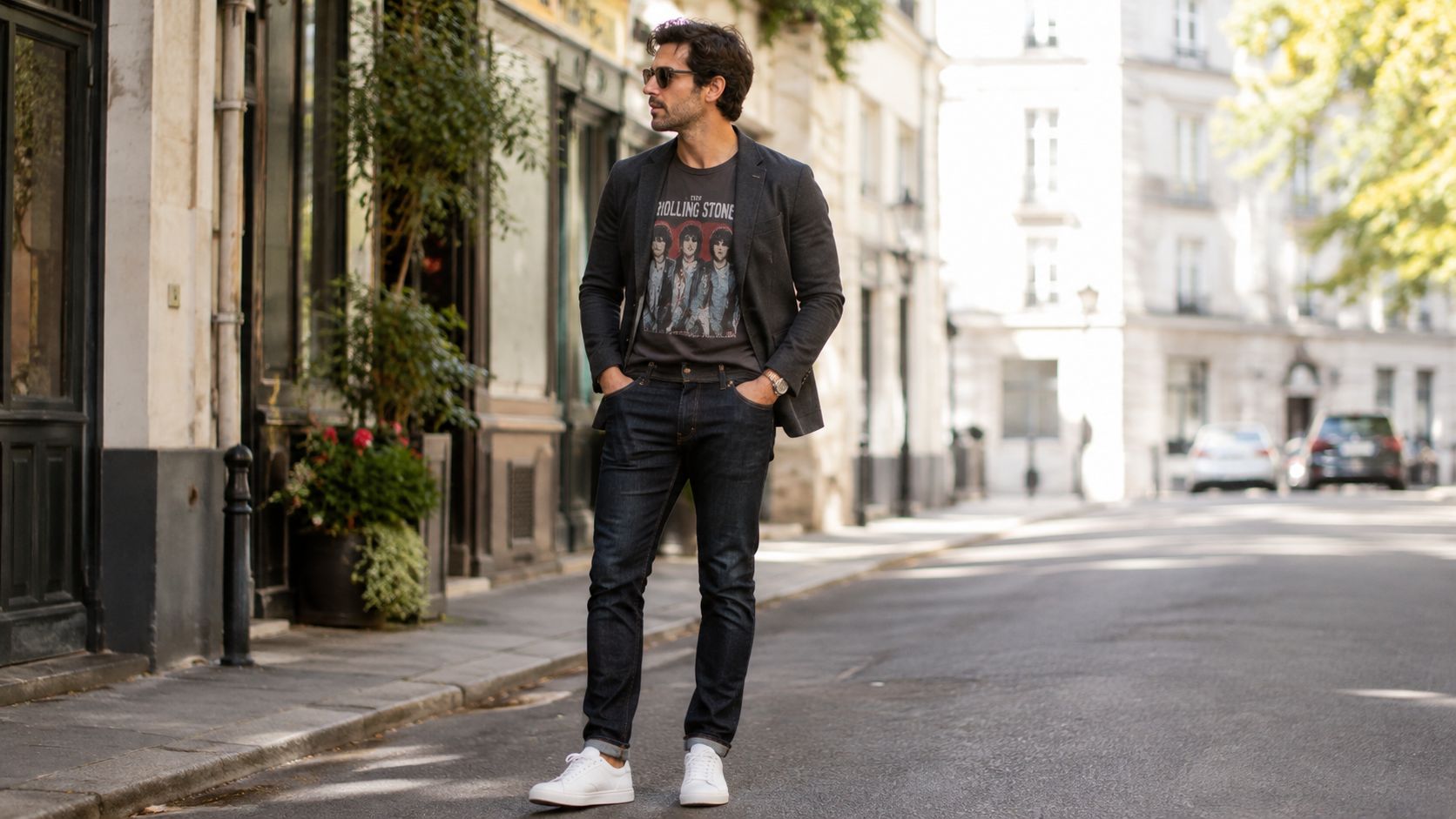
For going out, let the tee become the focal point. A bold music or pop-culture print works well under an open overshirt or a dark blazer if the rest of the outfit stays quiet. That's the easiest way to make a graphic tee feel more polished without pretending it's formal wear.
The image below shows how a vintage-style graphic can still sit inside a sharper outfit without losing its personality.
Budget matters too. Entry-level graphic tees often live in the $19.99 to $39.99 range in streetwear storefronts, which makes it easier to buy for theme and fit without treating every shirt like a collector's item. In that range, it's smart to prioritize print quality and silhouette first, then accept simpler fabric mixes if the shirt still feels good on body.
Outfit formulas you can repeat
- Clean streetwear look: graphic tee, straight-leg jeans, sneakers, and a denim jacket.
- Layered casual look: graphic tee, open overshirt, cargos, and low-profile shoes.
- Sharper night-out look: graphic tee, dark denim, and a structured blazer.
- Cold-weather version: graphic tee under a quarter-zip with relaxed trousers.
The wearability verdict by occasion is easy to remember. Minimal or vintage graphics fit more situations, loud statement prints work best when the tee is the centerpiece, and music or automotive graphics usually feel most natural when the rest of the outfit stays restrained.
A quick video walkthrough can also help you see how these outfit formulas translate in motion.
A Simple Decision Framework for Choosing the Right Graphic Tee
The easiest way to choose a graphic tee is to run it through four filters, in the same order every time. First, ask whether the theme fits your taste. If you won't still want the print in six months, it's probably a pass. Second, check the fit and silhouette. If you can't layer it, tuck it, or wear it with the bottoms you already own, it may not earn a spot in rotation.
The four questions to ask before you buy
Third, look at fabric and print quality. A tee with a better print method and a solid cotton base usually gives you more wear than a shirt built around a fast, fragile decoration. Fourth, judge price against occasion. If the shirt is meant to be a one-off statement piece, a cheaper option may make sense. If you want it in regular rotation, the better build is usually worth choosing.
A quick cheat code helps here. Theme decides whether you like it, fit decides whether you wear it, quality decides whether you keep it, and price decides whether you feel good about the purchase.
| Graphic Tee Archetype | Best Occasion | Typical Fit | Care Notes |
|---|---|---|---|
| Band or tour tee | Casual days, concerts, relaxed outings | Crewneck or oversized | Wash gently so the print keeps its look |
| Automotive graphic tee | Streetwear fits, casual weekends | Crewneck or relaxed fit | Turn inside out before washing |
| City or urban tee | Everyday wear, travel looks | Crewneck or boxy fit | Keep the print away from harsh heat |
| Vintage or retro tee | Casual hangs, layered outfits | Fitted or slightly relaxed | Treat faded graphics like a visual feature |
| Minimal graphic tee | Work-adjacent casual, repeat wear | Clean crewneck | Easiest to pair and rewear |
| Statement art tee | Going out, fashion-forward outfits | Oversized or longline | Let the tee stay the focal point |
| Pop culture or novelty tee | Casual social wear, trend-driven looks | Crewneck or relaxed fit | Best when the reference still feels current |
The wearability verdict is the same across the board. If a tee passes all four filters, it's probably a useful buy. If it only passes one, it may still be fun, but it's less likely to work hard in your wardrobe.
Buying and Care Questions Real Shoppers Actually Ask
A lot of first-time buyers get stuck on the same few questions. The good news is that you can usually answer them by looking closely at the product photos, the description, and the care notes before you hit checkout.
How do I tell a screen print from a cheaper transfer? Screen prints usually look more integrated with the shirt and tend to hold up better over time, while cheaper transfers can look smoother at first but may crack or peel sooner. If the listing talks about durability, washing, or heavy ink feel, that's usually a clue the seller expects the print to last longer. The most useful sign is not the marketing language, it's whether the shirt description gives real material and print details instead of vague hype.
How do I keep prints from cracking or fading? Wash the shirt gently, turn it inside out, and avoid rough heat whenever you can. That advice matters even more for shirts with large graphics, because more print area means more surface exposed to wear. If the tee already uses a lower-durability transfer method, careful washing becomes part of the purchase decision, not just the care routine.
What price should make me cautious? Entry-level pricing can still be fine, but a shirt that feels suspiciously cheap often cuts corners on print method, fabric feel, or construction. In the streetwear space, a reasonable budget range can still buy a solid casual tee, as long as the product page gives enough detail to justify the cost. If the listing is vague on fabric and decoration, that's a better warning sign than the price tag itself.
How do I avoid sizing surprises online? Look for shoulder width, chest width, and length, then compare those numbers to a shirt you already like. Graphic tees can run fitted, boxy, or oversized, and those differences matter more than the print. If the product page doesn't explain the silhouette clearly, assume nothing and size based on the cut you wear most.
If you want a focused place to browse streetwear-inspired graphic tees, accessories, and easy-to-wear city, music, and automotive pieces, take a look at Trending Market. It's a straightforward way to compare graphic-led styles without wading through a huge catalog, and it's especially useful if you already know whether you want a statement print, a cleaner everyday tee, or a giftable streetwear item.