
](http://trendingmarketofficial.myshopify.com/cdn/shop/articles/streetwear-outfit-graphic-tees_03ab46fc-1e51-46bb-b995-7d4b2ee15ada.jpg?v=1783555087&width=3840)
-Browse best streetwear outfits here: Trending Market store.
Table of Contents
The Foundation of Every Great Streetwear Outfit
The best streetwear outfit usually starts the same way. Not with five statement pieces fighting each other, but with one shirt that locks the mood in place. A black-and-white graphic tee does that better than almost anything else in the wardrobe.
It works because it gives you contrast before you even start layering. Black ink on white cotton feels sharp and exposed. White print on black feels heavier, moodier, more night-coded. Both are simple enough to wear often, but expressive enough to stop an outfit from feeling generic.
Why the tee carries so much weight
Streetwear has always treated the T-shirt like a billboard, diary, and uniform at the same time. A jacket can enhance the fit, and sneakers can sharpen it, but the tee is where the message usually lives. That's where the reference sits. The tour photo. The cryptic type. The old car graphic. The sketchy hand-drawn image that looks like it came from a zine table or a back-alley screen print shop.
When the graphic is right, the rest of the outfit can stay disciplined. Straight-leg denim, cargos, washed black pants, or relaxed trousers all start making sense around it.
Practical rule: If your tee has a strong identity, the rest of the outfit should support, not compete.
The black-and-white advantage
Colorful graphics can be great, but black and white gives you range. It moves from daytime to night without effort. It slides under overshirts, bomber jackets, leather, denim, and flannel without clashing. It also lets your accessories do more work. Silver jewelry, a trucker cap, or a clean sneaker stands out better against a restrained base.
That's why I think of the graphic tee as the engine of the look. Not the garnish. Not the afterthought. The engine.
If your wardrobe has one lane you want to get right first, start there. Choose a tee that feels like your taste in visible form, then build the pants, shoes, and outer layer around that pulse.
The Anatomy of a Perfect Graphic Tee
A graphic can pull you in fast. Quality decides whether the tee stays in rotation after the first few wears. The difference shows up in the hand feel, the drape, the collar, and how the shirt behaves after a wash.
Fabric first
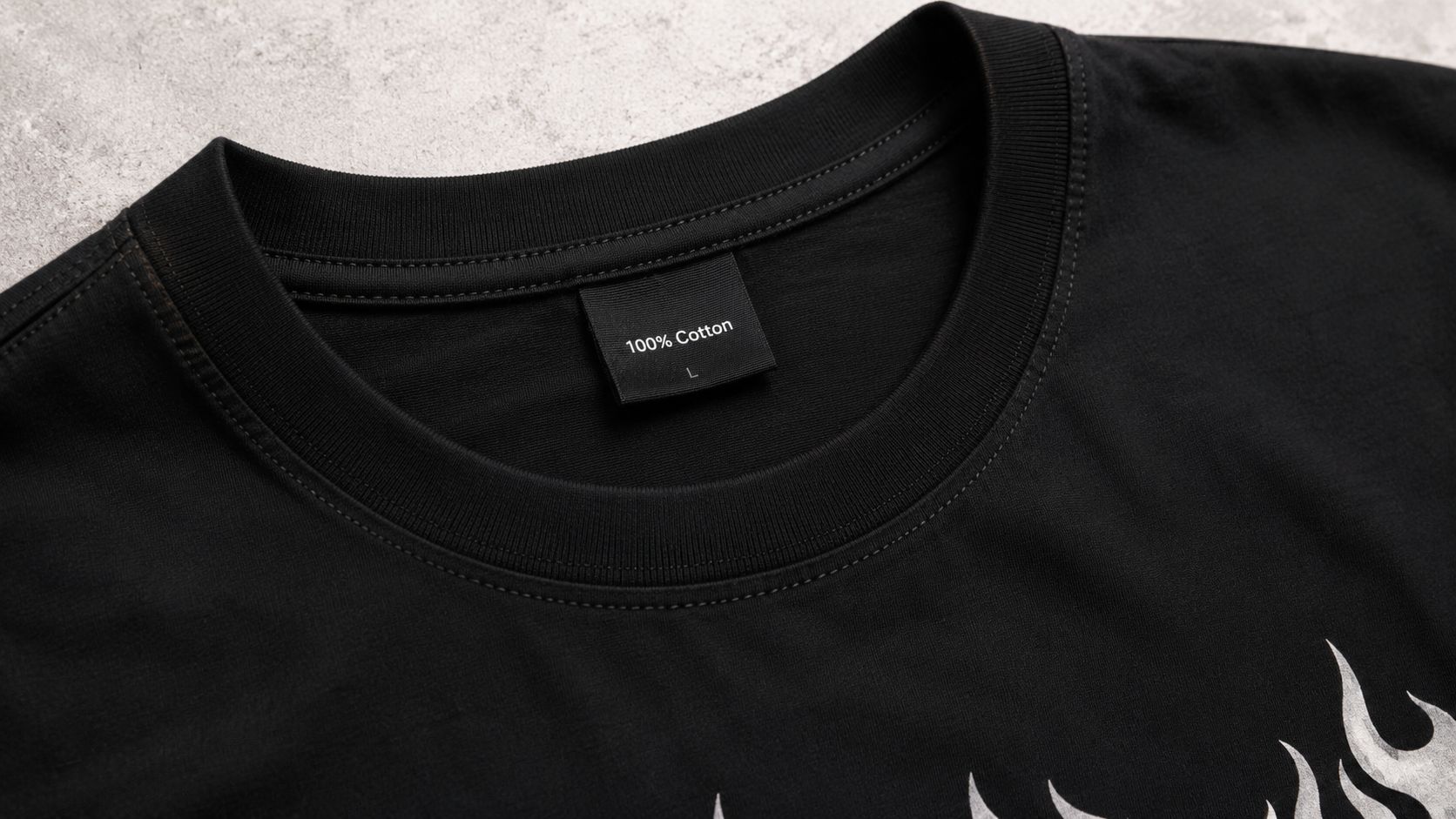
Start by touching the fabric if you can. If you're shopping online, read the material details closely. 100% cotton usually gives you that familiar dry, breathable hand that ages well and softens with wear. Cotton blends can feel smoother or stretchier, which some people prefer, but they often change the vibe of the tee. A pure cotton shirt tends to feel more classic and more substantial.
Preshrunk cotton matters because it reduces the surprise factor after laundry day. You don't want a tee that nails the fit once and then twists, tightens, or shortens the moment heat touches it.
Here's the simplest way to think about fabric:
| Fabric choice | What it feels like | Best for |
|---|---|---|
| 100% cotton | Crisp, breathable, classic | Everyday rotation, vintage feel |
| Cotton blend | Softer, smoother, sometimes stretchier | Closer fits, lighter casual wear |
| Heavier cotton | More structure, better drape | Boxy silhouettes, statement tees |
Fit changes the whole outfit
A lot of people focus on the print and ignore the cut. That's backwards. Fit decides the attitude before anyone even reads the graphic.
Classic fit sits closest to neutral. It's easy with denim, easy under jackets, and hard to mess up. If you want your streetwear outfit to feel balanced and wearable every day, this is the safest lane.
Oversized fit creates more presence. The sleeves fall longer, the body opens up, and the tee starts acting like a shape rather than just a layer. This works best when the pants have enough volume to match, or enough taper to create deliberate contrast.
Boxy fit is my favorite when the shirt has a strong front print or a clean typographic hit. The shorter, wider frame gives the tee a modern silhouette and makes the whole outfit feel more styled, even when the rest is simple.
The same graphic can read clean, sloppy, or expensive depending on fit alone.
Construction is what keeps it alive
Good tees also reveal themselves at the edges. A ribbed collar helps the neckline hold shape instead of turning wavy and tired. Double-needle hems usually mean the shirt handles repeat wear better because the stitching is more secure at stress points.
Look for these small signs when you're deciding if a tee is worth it:
- Collar recovery: After a light pull, the neckline should bounce back instead of sagging.
- Even stitching: Crooked seams usually show up again after washing.
- Print placement: A centered print feels intentional. A slightly off placement can throw off the whole chest line.
- Body drape: Hold the shirt by the shoulders. A better tee falls cleanly instead of collapsing into a limp tube.
A perfect graphic tee doesn't need to feel precious. It should feel ready. Ready to layer, ready to crease, ready to get worn until the graphic softens into the fabric and starts telling a better story than it did on day one.
Decoding the Designs 2026 Graphic Tee Trends
A graphic tee isn't just decoration. It's a signal. People read it before they read the rest of the outfit, which means the design you choose shapes your identity on sight.
In 2026, one of the sharpest tensions in streetwear sits between quiet minimal pieces and bold maximalist graphics. Both are moving strongly, and back-print tees are part of that momentum because advanced printing has made more complex retro designs easier to access, as noted by Printify's streetwear fashion trend overview. That's why the smartest black-and-white tees right now don't live at one extreme. They bridge.
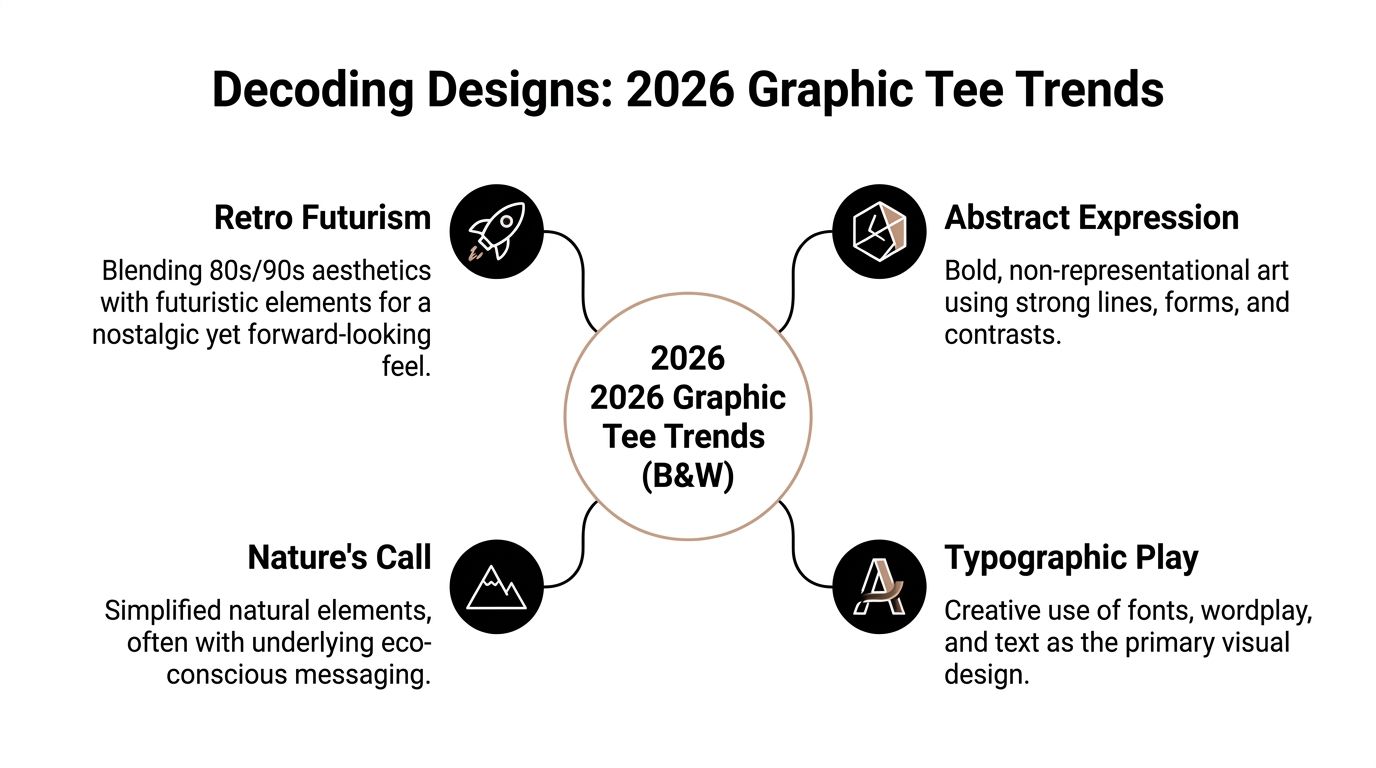
Four design languages worth understanding
Some graphics shout your references immediately. Others make people look twice. Both can work, but they don't tell the same story.
Nostalgic culture graphics
Tour-style photos, faded automotive references, old media textures, and vintage-feeling monochrome prints all land in this lane. They suggest taste with history. Even when the shirt is brand new, it can feel found rather than bought.
This is the right choice if your wardrobe leans worn-in. Washed denim, beat-up sneakers, distressed jackets, and silver jewelry all pair naturally with it.
Minimal typography
A black tee with restrained white type, or a white tee with a compact chest hit, gives you a quieter streetwear outfit. The energy is more controlled. More studio than festival.
This lane works best for people who want personality without visual noise. The message matters, but so does spacing, font weight, and restraint.
Abstract and art-forward graphics
These are the tees that feel less merch, more visual object. Sharp line work, distorted forms, collage-like imagery, and severe contrast push the outfit into a more curated direction.
Wear this style when the rest of the fit is stripped back. If the tee already looks like a gallery flyer, don't drown it in extra chaos.
Front print or back print
This isn't a small choice. It changes how your tee behaves in motion.
A front print gives you an immediate focal point. It's better when you want the shirt to lead the outfit from the first glance. It also works well under open layers because the design stays visible.
A back print is different. It makes the outfit unfold as you move. From the front, you can stay clean and almost minimal. From behind, the whole story appears. That contrast is why back-print tees work so well for anyone trying to blend quiet streetwear with bolder graphics.
If you want one tee to handle both low-key daytime wear and a louder evening look, back print is usually the smartest move.
Choose the design that matches your life
There's no point buying a graphic that looks great online but doesn't fit your actual rhythm. The best tee doesn't just match your taste. It matches your week.
- Music-heavy lifestyle: Go with photo prints, tour references, or moody text graphics.
- Automotive taste: Choose clean car imagery or technical line art, especially in monochrome.
- City uniform mindset: Look for compact type, strong placement, and a less-is-more layout.
- Creative dresser: Reach for distorted graphics, abstract compositions, or unusual negative space.
The right design should feel like a natural extension of your habits, not a costume. That's when a graphic tee becomes more than a trend piece. It becomes your signature.
How to Style Your Graphic Tee for Any Vibe
Styling a graphic tee well has less to do with “matching” and more to do with controlling tension. You want one thing to speak loudly and everything else to answer in the right tone.
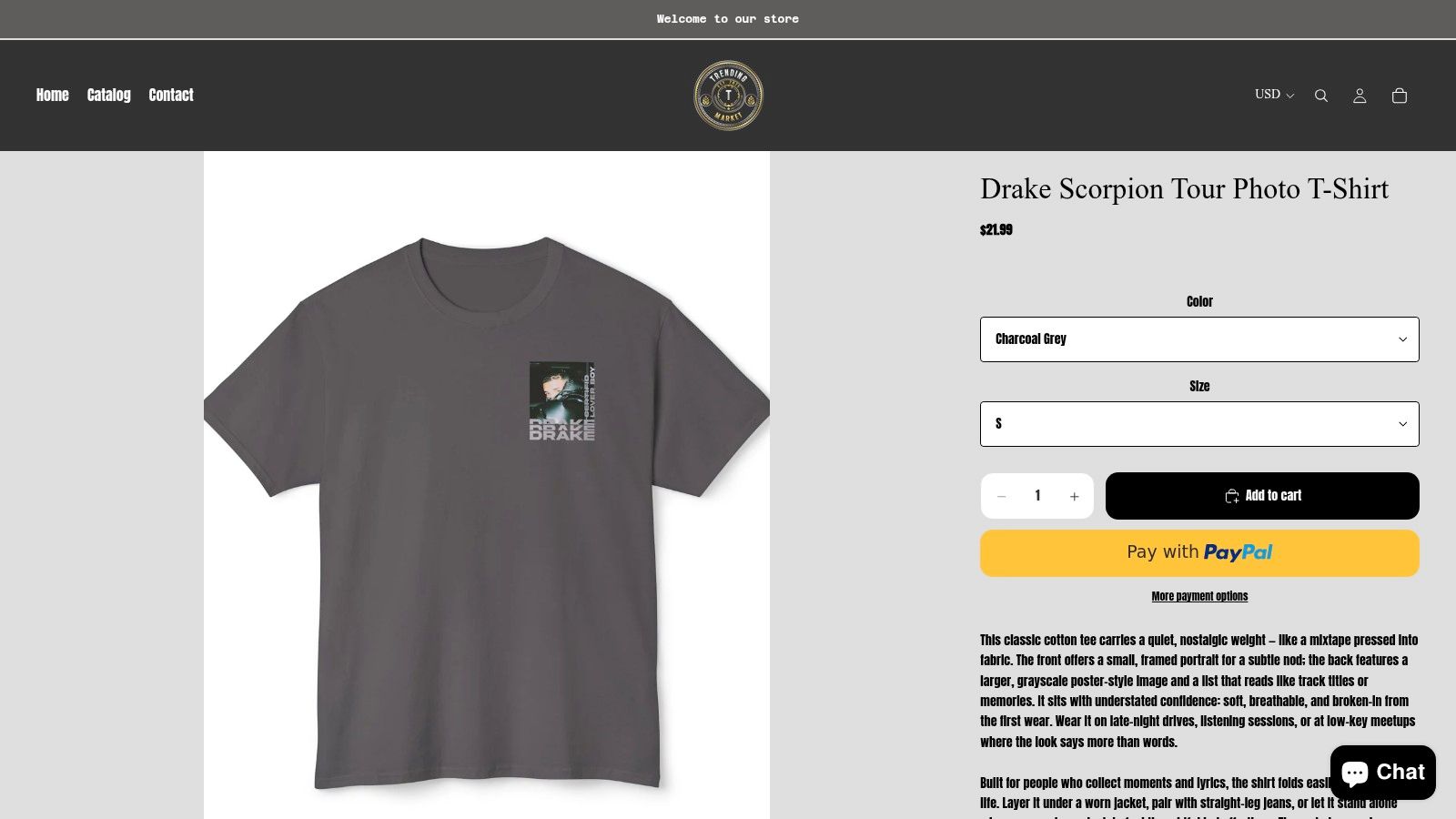
A tour-photo tee is a good example because it already carries mood, reference, and visual weight.
The everyday casual
This is the easiest formula, but it still needs intention. Start with a black-and-white graphic tee, then add straight or relaxed denim. Finish with low-profile sneakers or a classic bulkier pair, depending on whether you want the fit to read cleaner or more skate-adjacent.
What works here is contrast in texture, not complexity. A crisp white tee with dark jeans feels bright and direct. A black tee with faded blue denim feels more grounded.
Keep the accessories sparse:
- Cap: Good if the tee is simple and the hat color echoes the shirt.
- Chain or ring: Enough to sharpen the look without crowding it.
- Crossbody or tote: Best when the outfit is otherwise plain.
What doesn't work is stacking too many “casual” ideas at once. If the tee is oversized, the jeans are ultra-baggy, and the sneakers are huge, the outfit can lose structure fast.
The layered look
A graphic tee under an open layer gives the outfit depth and changes how much of the design people see. For this purpose, flannel, denim jackets, zip hoodies, workwear overshirts, and bombers earn their place.
The key is to let the outer layer frame the tee, not bury it. If the chest graphic is small, leave more room open. If the print is massive, use the jacket to crop and reveal it in sections.
This kind of fit works especially well in black, grey, cream, olive, and washed blue. Those tones let the print breathe.
A good layered streetwear outfit feels edited. You should see the tee, not search for it.
For movement and silhouette, this visual breakdown helps:
The smart-casual twist
Many people prematurely dismiss the idea, but a graphic tee can absolutely work with cleaner pants. The trick is choosing a graphic that doesn't fight the refinement of the trousers.
Go with monochrome prints, restrained typography, or a photo graphic with enough negative space. Pair it with chinos or relaxed-fit trousers. Then finish with cleaner sneakers, loafers if you're confident, or a sleek boot.
Here's a quick comparison:
| Tee style | Pant choice | Result |
|---|---|---|
| Compact chest print | Relaxed trousers | Sharp, understated |
| Large distressed tour graphic | Cropped chinos | Fashion-forward, slightly risky |
| Minimal type tee | Pleated pants | Clean with edge |
The mistake here is mixing a hyper-chaotic tee with overly formal trousers and expecting it to look effortless. The graphic still needs some discipline.
The night-out edit
At night, the graphic tee should become the center of gravity. The easiest route is a monochrome fit. Black tee, black jeans or cargos, dark outer layer if needed, and shoes with enough shape to keep the outfit from flattening out.
Silver accessories, a leather jacket, or a sharper boot can change the mood. The same tee that looked casual with denim in daylight can feel much more deliberate in an all-black frame.
If you want the outfit to hit harder, use one of these moves:
- Choose a back-print tee with a clean front so the outfit stays sleek from head-on.
- Add one hard texture like leather, nylon, or coated denim.
- Keep the shoe serious. Night fits collapse quickly when the footwear feels too soft or too athletic.
A graphic tee gives you range because its message changes with the supporting cast. Swap the pants, control the shoe, choose the right layer, and the same shirt starts telling a completely different story.
Ready to build your own fit? Shop graphic tees and streetwear pieces here: Trending Market.
Finding the Perfect Fit A Practical Sizing Guide
Buying tees online gets messy when people guess from habit instead of measuring. A medium in one brand can feel cropped and sharp, while a medium somewhere else can hang like an oversized dress. The cleanest fix is to stop thinking in labels and start thinking in dimensions.
Measure the tee you already love
Take your best-fitting shirt and lay it flat on a table. Smooth it out without stretching it. Then compare those measurements to the size chart of the shirt you want to buy.
Focus on these points:
- Chest width: This tells you how roomy the body will feel.
- Length: This decides whether the tee hits clean at the waist or drops lower.
- Shoulders: Important if you hate a seam that sits too high or too far down the arm.
- Sleeve length: A small change here can make the whole fit read classic, oversized, or boxy.
If you want accuracy, measure twice. One rushed measurement can easily push you into the wrong size.
Understand unisex sizing
A lot of streetwear tees use unisex cuts. That usually means a straighter body and a fit designed to work across different styling preferences, but it doesn't mean every brand fits the same. Some unisex tees feel trim. Others are built with extra room through the body and sleeves.
The label matters less than the silhouette you want.
Buy for the fit you're building, not the size you usually click without thinking.
When to stay true to size and when to size up
Stay with your usual size if you want a classic fit that works under jackets, over cargos, and with cleaner trousers. Size up if you want more sleeve drop, more body room, and that relaxed streetwear outfit shape that sits away from the torso.
A few signs you've gone too far with the size-up:
- The collar sits wide and loose instead of framing the neck.
- The hem drifts too low and interrupts the leg line.
- The sleeves swallow the arm without any structure.
The best oversized fit still looks chosen. Not accidental. If the shirt feels like it's wearing you, go back one size and let the graphic breathe on a stronger frame.
Making It Last Care and Durability Secrets
A strong graphic tee gets better with wear, but only if you treat the print and fabric like they're connected. It's common to damage one while trying to care for the other. The fix is simple. Wash for the graphic, dry for the shape.
The habits that protect the print
Turn the tee inside out before washing. That one move reduces abrasion on the printed surface, especially when shirts rub against zippers, buttons, and rougher fabrics in the machine.
Use cold water when possible. It's gentler on both dye and print, and it lowers the chance of unwanted shrinking or fading. Hot water can be harsh on a graphic, especially if the print sits thick on the fabric.
Here's the short version to remember:
- Inside out: Helps preserve the graphic face.
- Cold wash: Better for color retention and fabric stability.
- Mild detergent: Less aggressive on ink and cotton.
- Similar garments only: Heavy items can beat up lighter tees.
Drying is where most damage happens
A lot of shirts survive the wash and get wrecked in the dryer. High heat can stiffen prints, stress the fabric, and push collars out of shape over time. If you use a dryer, keep it on low heat. Better yet, air dry the tee flat or on a hanger away from harsh direct sun.
That approach keeps the shirt feeling like itself. The body stays cleaner, the print stays softer, and the collar lasts longer.
Wash gently, dry patiently, and your favorite tee won't age all at once.
Quick reset moves between washes
Not every tee needs a full wash after every wear. If the shirt is still fresh, airing it out can help preserve the fabric and print. Fold it cleanly or hang it with enough space so the graphic doesn't stick against another garment.
If the tee wrinkles, avoid pressing directly onto the graphic with high heat. If you need to iron, turn it inside out first or place a cloth between the print and the iron.
A good tee shouldn't feel fragile. It should feel lived in. The goal isn't to keep it frozen in brand-new condition. The goal is to let it age well, with the print softening and the cotton settling without the shirt falling apart.
Smart Shopping The Art of the Graphic Tee Haul
Buying graphic tees well is a skill. A lot of people shop by impulse, then wonder why half their haul never leaves the drawer. The problem usually isn't taste. It's a weak filter.
Streetwear shoppers do spend real money in this category. 61% of respondents in North America and Europe reported spending $100 to $300 per streetwear product, while Supreme graphic T-shirts often retail between $38 and $48, according to Strategy& and Hypebeast's streetwear market statistics and global trends report. That spread tells you something important. Expensive doesn't automatically mean smarter. Accessible staples still hold the category together.
What to inspect before you buy
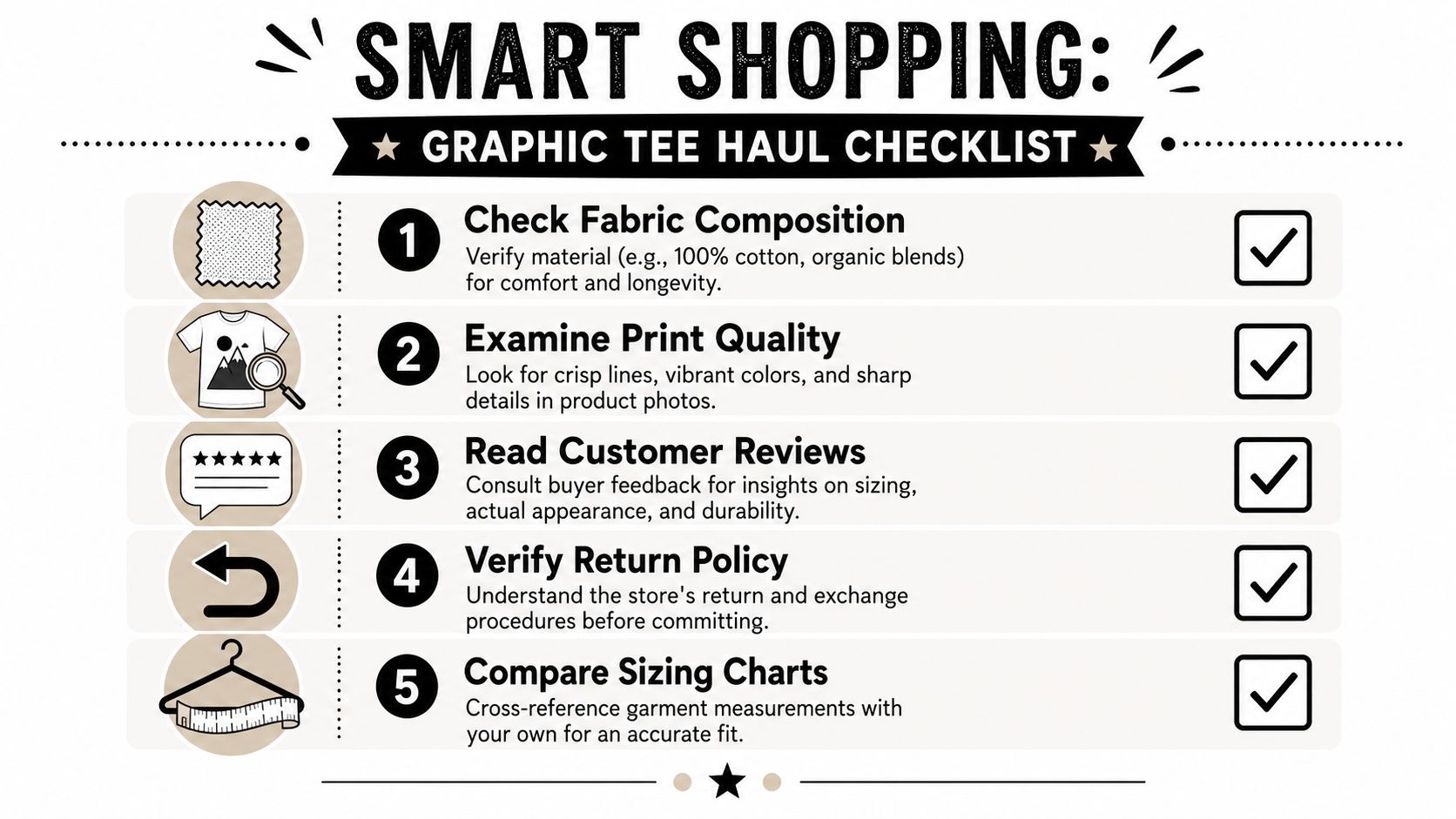
A product page can tell you a lot if you know where to look. Don't just stare at the graphic. Read the shirt around it.
- Fabric composition: Look for clear material details. If the listing is vague, that's already a signal.
- Print clarity in photos: Zoom in. Edges should look intentional, not muddy or overly softened by editing.
- Fit language: Words like oversized, boxy, classic, and relaxed should line up with the product photos.
- Return policy: If sizing is uncertain, a clear exchange path matters.
- Reviews: Buyers often reveal how the shirt drapes, fades, or fits after washing.
Value is more than the price tag
A cheap tee that loses shape fast is expensive in the long run because it exits your rotation early. A more affordable tee that keeps a good collar, lands the print placement, and fits your wardrobe earns repeat wear. That's value.
Think in terms of rotation strength. Ask yourself these questions:
| Question | Why it matters |
|---|---|
| Can I wear it with at least three pairs of pants I already own? | Prevents one-hit purchases |
| Does the graphic reflect my taste or just current hype? | Keeps the tee relevant longer |
| Is the fit usable in more than one setting? | Increases real wardrobe mileage |
How to buy for yourself and as a gift
For yourself, be honest about your actual lifestyle. If you mostly dress in neutral layers, don't buy a tee that needs a full personality transplant to wear well. If your wardrobe is already loud, one restrained monochrome tee might do more for you than another chaotic print.
For gifts, choose references the other person already lives with. Music, automotive culture, city motifs, vintage-style art, or cleaner typography all work when they connect to something familiar in their taste. The best gifted tee feels surprisingly accurate, not randomly “streetwear.”
A smart haul doesn't chase volume. It builds a rotation where every shirt has a job.
The strongest collections usually mix three kinds of tees: one easy daily option, one statement graphic, and one piece that sits between quiet and bold. That middle lane is the one people wear the most because it adapts. It can sit under a jacket, carry a fit on its own, or slide from afternoon to late night without needing a full outfit change.
If you want to put this into practice, Trending Market is a useful place to start. You can also shop directly here: Trending Market store. The store keeps things focused on graphic-led streetwear, with music, automotive, and city-inspired pieces at accessible entry-level prices, so it's easier to build a rotation without overthinking every purchase.
Built with Outrank