

You're probably standing in front of a mirror with the basics already on. Tee works. Pants work. Sneakers are fine. But the outfit still feels unfinished, like it doesn't say anything yet.
That's usually the moment a streetwear jacket matters. Not because it's the warmest layer in the closet, but because it changes the whole read of the fit in a second. The right one can pull a look toward late-night rap radio, JDM meet energy, downtown commuter grit, or clean everyday city uniform. The wrong one makes everything under it feel random.
A lot of people get stuck there. They know they want a jacket, but not what kind, not what fit, and not how to wear it without defaulting to a basic logo layer. That's where the code of streetwear really starts.
Table of Contents
- More Than a Layer - An Introduction to the Streetwear Jacket
- What Defines a Streetwear Jacket
- The Essential Streetwear Jacket Styles to Know
- Deconstructing the Details Materials and Build Quality
- Finding Your Fit How a Streetwear Jacket Should Feel
- The Art of the Outfit Styling Around Your Jacket
- How to Buy and Care for Your Next Favorite Jacket
More Than a Layer - An Introduction to the Streetwear Jacket
A streetwear jacket is rarely just the thing you throw on last. In a strong outfit, it's the piece that decides the tone. A hoodie underneath can lean skate, music merch, or city casual. Swap the outer layer and the same outfit can suddenly feel sharper, tougher, or more technical.
That matters because streetwear isn't some tiny niche anymore. The global streetwear market was valued at USD 218.3 billion in 2026, and clothing like jackets and hoodies accounted for over half of all sales, according to Mordor Intelligence's streetwear industry report. Jackets sit right in the center of that shift from subculture uniform to everyday fashion language.
What makes them hit so hard is simple. A tee can tell people what you like. A jacket tells people how you carry it.
Why jackets carry more identity than most pieces
A good streetwear jacket works like cover art. You read it before anything else. Shape, fabric, trim, graphics, patches, wash, and even the way it sits open or zipped all send a signal.
That signal usually lives in one of these zones:
- Music energy: tour-photo graphics, darker palettes, washed finishes, oversized layers
- Automotive influence: racing stripes, mechanical embroidery, utility pockets, tougher fabrics
- City language: transit-ready cuts, muted tones, weather-aware materials, practical layering
Practical rule: If your outfit feels flat, don't add more accessories first. Change the jacket, because the outer layer controls the mood faster than the small details do.
What separates a centerpiece from a filler layer
Some jackets only complete an outfit on paper. They match, but they don't lead. A real streetwear jacket has presence. It frames the shoulders, changes the proportion of the pants, and gives the look a point of view.
That's why people build repeat outfits around one jacket for months. It becomes the piece that works on a late drive, at a listening session, on a quick food run, or walking across the city when you want comfort without looking anonymous.
What Defines a Streetwear Jacket
The easiest mistake is thinking any casual jacket becomes streetwear if you wear it with sneakers. That's not how it works. A streetwear jacket has its own design language, and you can usually spot it before you notice the brand.
Silhouette comes first
The first thing that makes a jacket feel like streetwear is shape. Not logos. Not hype. Shape.
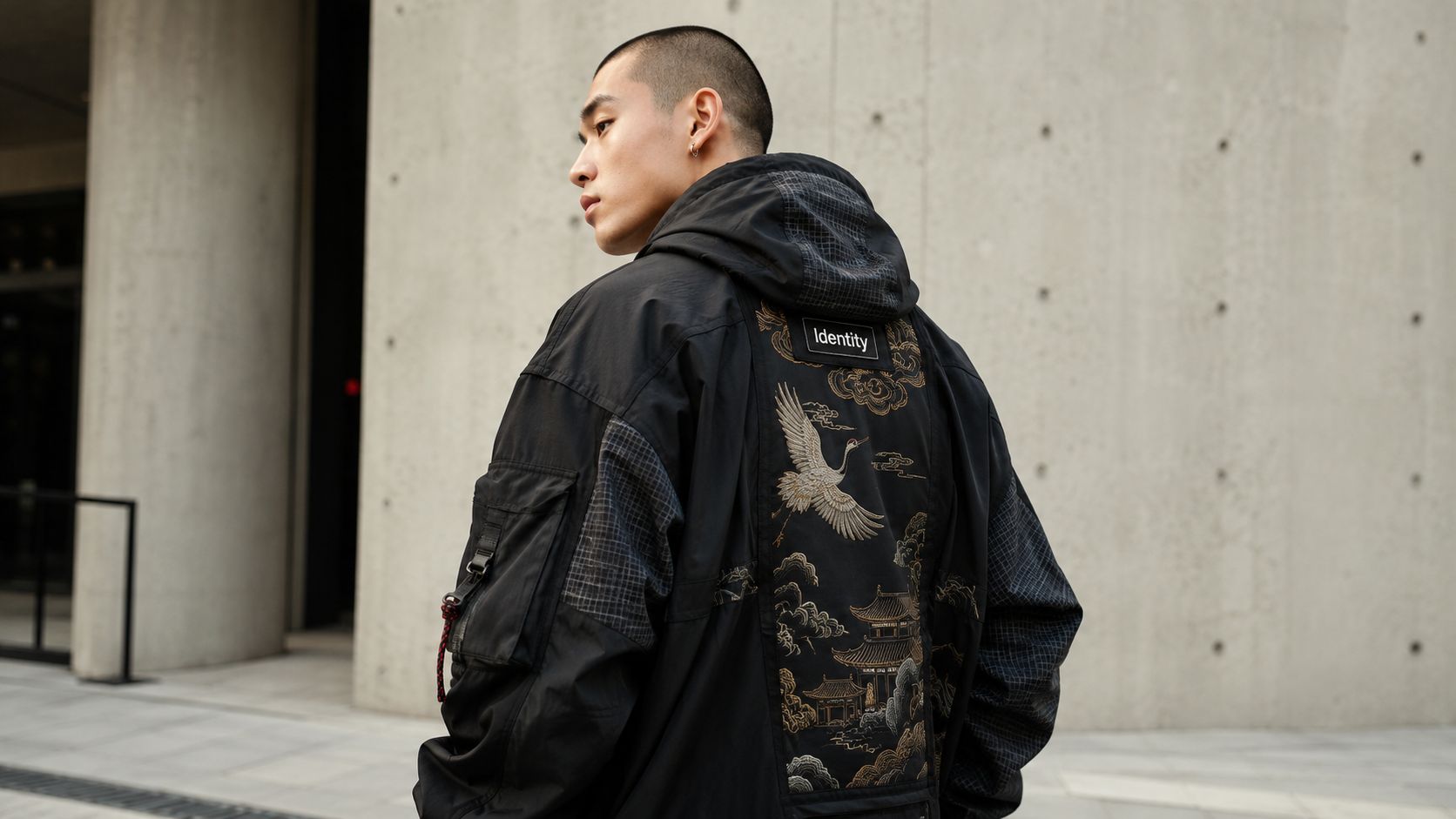
A streetwear jacket often sits boxier than traditional menswear outerwear. Shoulders may drop. The body may look wider. Sleeves can stack slightly at the wrist. Even cleaner styles usually avoid the sharply structured look that reads corporate or formal.
That's why the same black jacket can feel completely different depending on cut. One version says office commuter. Another says underground venue after midnight.
Here's the fast read:
| Element | Traditional casual jacket | Streetwear jacket read |
|---|---|---|
| Shoulder | Cleaner, set-in | Dropped or broader |
| Body | Follows torso | Boxy or relaxed |
| Length | Conventional hip length | Cropped, boxy, or intentionally oversized |
| Movement | Neat | More volume and attitude |
Reference gives it meaning
The second layer is reference. A streetwear jacket usually points somewhere outside fashion itself. It might pull from workwear, military gear, racing culture, varsity history, hiking equipment, rap visuals, or city uniforms.
That's why these jackets often feel personal even before they become rare. The appeal isn't only the garment. It's the world around it.
The idea is this:
- A varsity jacket can hint at college nostalgia, but in streetwear it often gets worn with irony, edge, or oversized proportions.
- A work jacket can nod to labor and durability, then get restyled with washed denim and chunky sneakers.
- A tech shell can borrow from mountain gear, then land in the city with cargos and headphones.
The best streetwear jackets feel less like clean retail products and more like artifacts from a scene.
Attitude is the last layer
A jacket can have the right cut and still miss if it's worn too safely. Streetwear needs some tension. Maybe that's a cleaner jacket with rough denim. Maybe it's a loud embroidered piece over a plain fit. Maybe it's a technical shell used casually instead of on a trail.
That tension is why a streetwear jacket often behaves like customized car culture. Factory base, personal tuning.
What doesn't work is overexplaining the look with too many signals at once. If the jacket already speaks loudly, let the rest of the outfit support it. If the jacket is understated, build mood through proportion and texture. Either way, the jacket should feel chosen, not just added because it's cold.
The Essential Streetwear Jacket Styles to Know
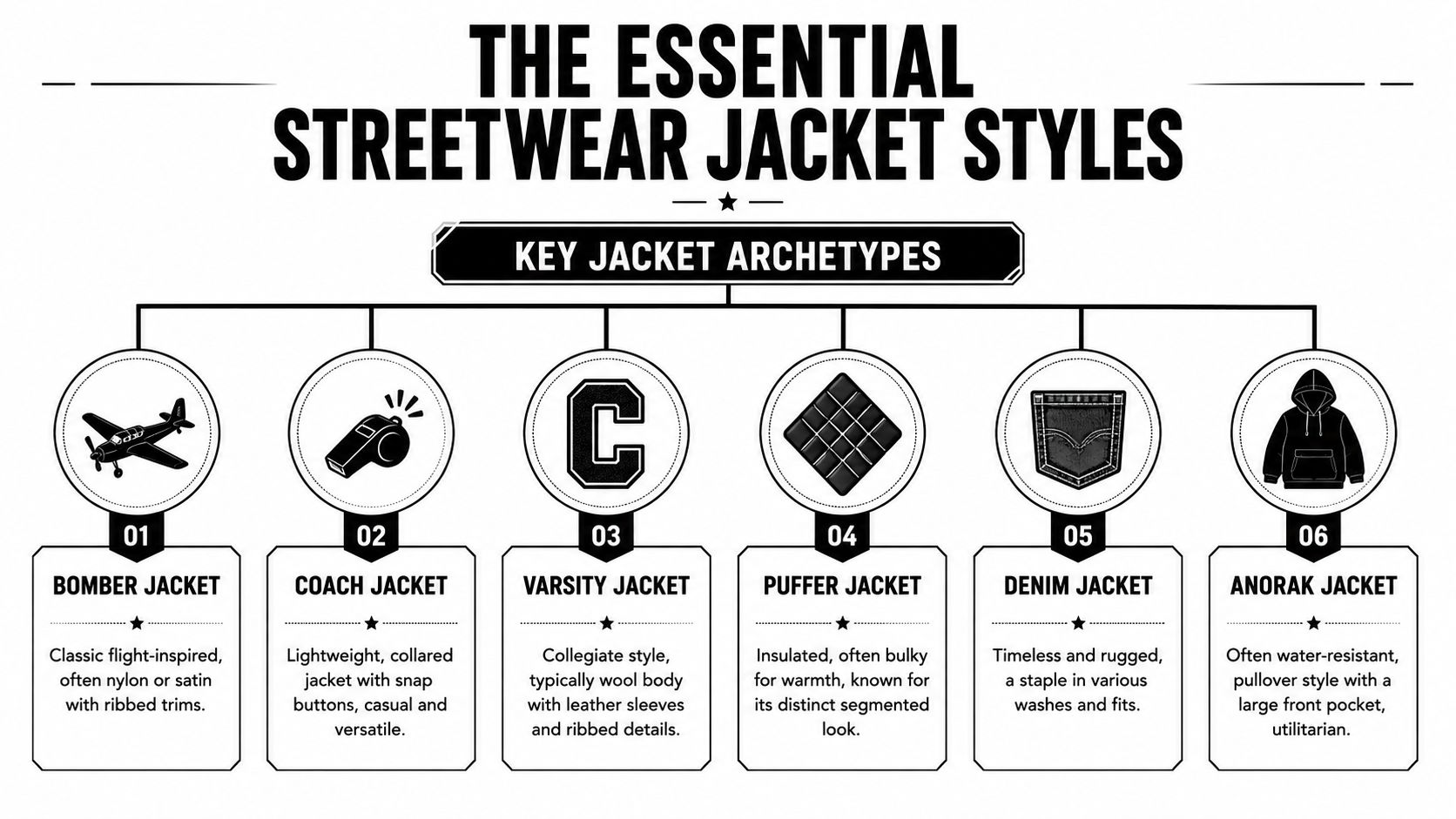
Most people don't need every jacket style. They need to know what each style says before buying one. That's what keeps your closet from filling with pieces that look cool online but don't work with your life.
The bomber
The bomber is the easiest entry point because it almost never feels out of place. Ribbed hem, ribbed cuffs, zip front, and a shape that can swing from clean to aggressive depending on fabric.
Nylon bombers feel sharper and more classic. Satin versions lean louder and more nightlife-coded. Heavier cotton or padded bombers can move into workwear or military territory.
Wear it when you want versatility with some edge. It works with baggy denim, cargos, or even straighter pants if the rest of the outfit stays grounded.
The coach jacket
The coach jacket is the quiet operator. Lightweight, collared, snap-front, and usually easy to throw over a hoodie or tee without much thought.
It doesn't demand attention through structure. It wins through ease. On a breezy night, over dark denim and a cap, it gives that low-pressure city look that feels intentional without trying too hard.
This one works best for people who like understated streetwear. If your wardrobe already has graphics, louder sneakers, or standout pants, a coach jacket helps calm the whole outfit down.
The varsity jacket
Varsity jackets carry history whether you want them to or not. Wool body, leather sleeves, striped ribbing, patches, chenille letters. Even stripped-down versions still carry that heritage feel.
The trick is keeping it from looking costume-like. If the jacket is loaded with patches and contrast sleeves, skip overly preppy styling. Pair it with looser denim, a washed hoodie, or heavier sneakers so it feels current.
Done right, it gives confidence. Done wrong, it looks like borrowed nostalgia.
The puffer
A puffer can dominate an outfit in the best way. It adds volume instantly, and that volume changes everything under it. Plain tee, plain pants, plain shoes. Add a strong puffer and suddenly the fit has shape.
This style works especially well in colder city settings where people want warmth without leaving streetwear behind. Cropped puffers feel more modern. Longer puffers feel more utilitarian.
The trade-off is bulk. If the puffer is oversized, keep your lower half cleaner or at least structured. Too much random volume can make the whole look feel swollen instead of composed.
The denim jacket
Denim jackets are reliable because they age with you. They take on wear, pick up personality, and rarely look worse after use unless the fit was wrong from the start.
Streetwear denim jackets usually work best in one of two lanes. Either go slightly boxy and clean, or go worn-in and rugged. Mid-blue washes feel classic. Black or faded charcoal pushes the jacket toward a more urban, music-heavy mood.
This style earns its place because it layers well and doesn't need hype. It's one of the few jackets that can look better after a year of regular use.
The anorak and tech lane
Anoraks and technical jackets belong to the Gorpcore side of streetwear. They bring outdoor design into city outfits, and they only work if the function is real enough to justify the look.
For technical streetwear jackets, breathability is measured by Moisture Vapor Transfer Rate, and 20,000 g/m² is the rating noted as needed to prevent sweat buildup during active use in Jans' explanation of technical clothing ratings. That matters if you move in the jacket. Without enough breathability, the shell traps heat and moisture, and the fit starts feeling sticky instead of sharp.
Here's the practical distinction:
- Anorak: more casual, often pullover, more visual personality
- Tech shell: more functional, usually zip-front, cleaner lines
- Hybrid street-tech jacket: the city version, where utility and styling split the job
If a jacket borrows hiking language but can't handle movement, weather, or layering, it's costume tech. That lane gets exposed fast in real wear.
The best use case for this category is simple. You want a jacket that looks right with cargos, trail-inspired sneakers, crossbody bags, and urban movement. Not mountain cosplay. City function.
Deconstructing the Details Materials and Build Quality
A jacket can look great on a product page and disappoint the second you touch it. That usually comes down to materials and build. In streetwear, texture and structure do a lot of the visual work, so quality isn't some hidden bonus. It's visible.
Why fabric changes the whole silhouette
The fastest way to tell whether a jacket will feel substantial or flimsy is how the fabric holds space. Premium streetwear jackets often use heavyweight fabrics in the 400G–520G/㎡ range to create a more rigid, structured silhouette, as explained in this breakdown of premium streetwear engineering. That structure is what keeps a quarter-zip, fleece outer layer, or heavier jacket from collapsing against the body.
When fabric is too soft for the intended shape, the jacket loses authority. A boxy design starts to droop. Sleeves twist. The hem doesn't sit clean. The whole outfit reads cheaper, even if the color and graphics are strong.
Common materials each do something different:
- Nylon: crisp, light, slightly technical. Great for bombers, windbreakers, and coach jackets.
- Denim: rugged, reliable, and best when the fit gives it room to break in naturally.
- Fleece: comfortable and warm, but it needs enough density to avoid looking sleepy.
- Poly blends: practical and common at lower prices, though results depend heavily on construction.
- Wool blends: richer texture and stronger varsity energy, but heavier and sometimes less casual.
What to inspect before you buy
Don't just read the front of the listing. Study the closure, cuffs, hem, collar, and seam photos if they're available. Those parts tell you whether the jacket was designed to survive regular wear or just photograph well.
Use this quick checklist:
- Check the hem: A weak hem ruins shape fast. Streetwear depends on the jacket ending cleanly, not fluttering or folding oddly.
- Look at the cuffs: Ribbing should recover after stretching. If cuffs go loose early, the whole jacket starts looking tired.
- Inspect zippers and snaps: Cheap hardware is often the first thing to fail, especially on daily-wear outerwear.
- Read the lining clues: A lined jacket usually feels more deliberate and stable. Unlined can still work, but the shell has to be good enough to carry itself.
- Study seam alignment: Crooked seams or puckering around the shoulders usually show up even more after a few wears.
Good build quality doesn't always look flashy. Usually it shows up as clean lines, stable shape, and hardware that doesn't fight you.
There's also a trade-off worth respecting. Some jackets should feel broken-in and easy. Others should feel sculpted and a little firm. Don't judge every style by the same standard. A washed work jacket can look better with some softness. A structured quarter-zip or tech fleece usually needs more body to look right.
Finding Your Fit How a Streetwear Jacket Should Feel
Fit is where people either make streetwear work or make it look accidental. A jacket can be high quality and still fail if the proportions don't match your build or the rest of the outfit.
True to size is not the default answer
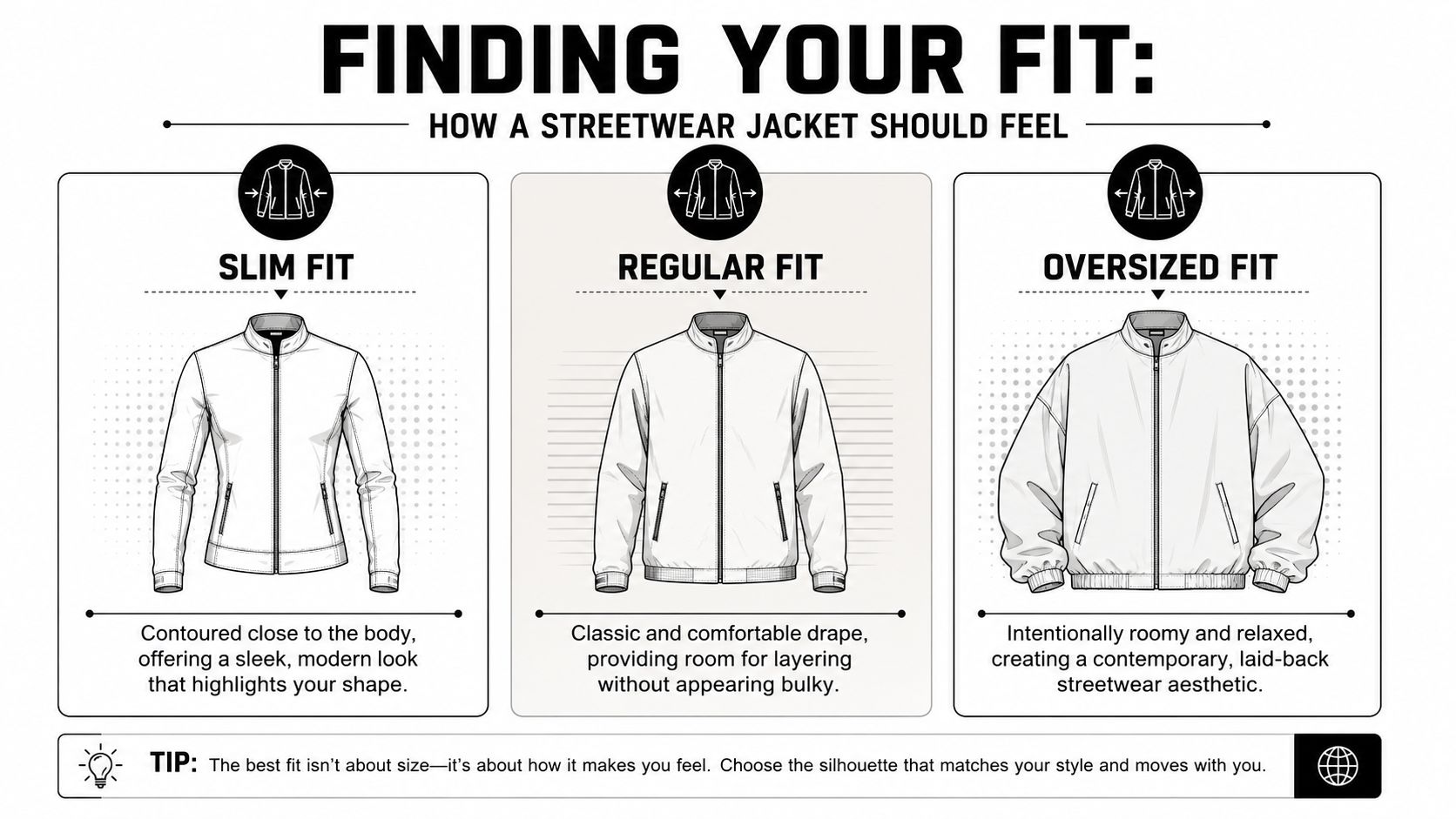
A lot of shoppers still ask, “Should I just get my normal size?” Sometimes yes. Often no. Streetwear sizing is less about the label and more about the intended silhouette.
Think in three lanes:
| Fit lane | How it should feel | Best with |
|---|---|---|
| True-to-size | Clean through the shoulders, room for a tee or light layer | Coach jackets, cleaner bombers, work jackets |
| Oversized | Extra width in body and sleeves, intentional volume | Puffers, bombers, varsity jackets, graphic-heavy looks |
| Cropped or boxy | Shorter body, broader visual frame | Wide-leg pants, cargos, higher-rise denim |
If the shoulder seam drops slightly and the jacket still looks balanced, that's often a good sign. If the body balloons but the fabric has no structure, it won't read oversized. It'll read sloppy.
A quick fit check that actually works
Try the jacket with the kind of layers you really wear. Not just over a thin tee if you know you live in hoodies. Zip it. Leave it open. Sit down. Reach forward like you're grabbing a steering wheel or train pole.
Look for these signs:
- Shoulders should match the intention. Clean if the jacket is meant to be neat. Dropped if the design asks for volume.
- Sleeves should stack, not swallow. A bit of bunching can look great. Hands disappearing usually doesn't.
- Hem placement should support the pants. Cropped jackets make wide pants look more deliberate. Longer jackets can flatten the whole outfit if the tee and jacket end at the same line.
- Layering should feel possible, not forced. If a hoodie underneath turns the jacket into armor, size or cut is off.
A good streetwear fit looks right in motion. If it only works while you're standing still in the mirror, keep looking.
The smartest fit choice is the one that makes your usual pants and shoes look better. That's the test. Not whether the size chart says your chest measurement fits perfectly.
The Art of the Outfit Styling Around Your Jacket
Styling is where individuals often find themselves stuck. They buy the jacket, throw it over whatever they already own, and wonder why it feels generic. That confusion is real. Many shoppers struggle to style jackets beyond basic logos, and projected 2026 trends like pastel gradients and pixel fonts moving from tees to jackets have only made the styling conversation more layered, according to Strategy& and Hypebeast's streetwear report.
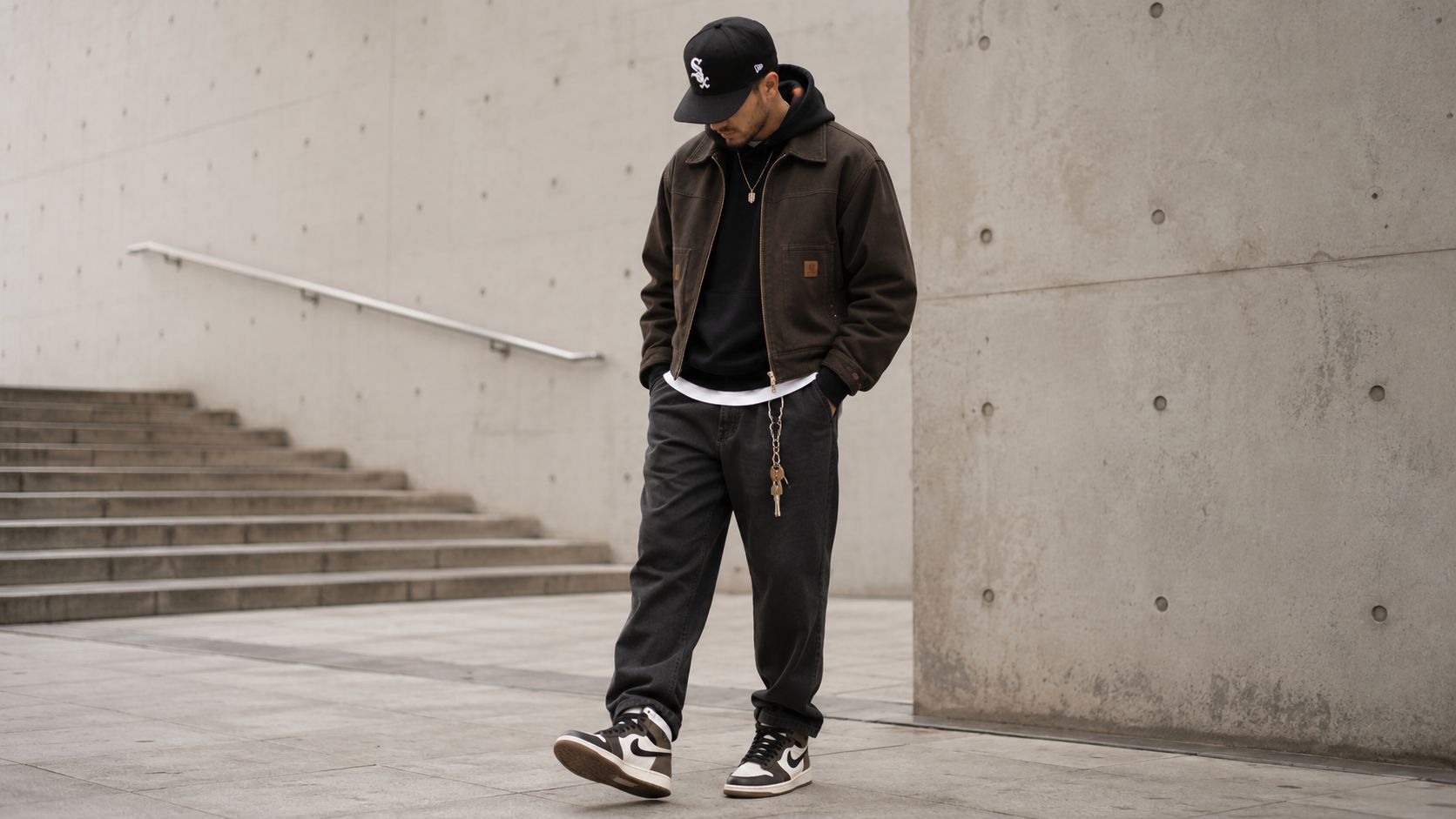
The easiest way to solve that is to style from a mood, not from a random pile of pieces. A jacket becomes much easier to wear when you know the world it belongs to.
Music inspired
Start with the feeling of a late-night album loop, parking lot conversations, and understated confidence. This lane usually works best with bombers, washed denim jackets, darker varsity jackets, or clean work jackets layered over hoodies.
The formula is simple. Let one layer carry the message, then support it with shape.
Try combinations like these:
- Washed bomber + faded graphic tee + relaxed black denim + low-profile sneakers
- Dark varsity jacket + plain hoodie + baggier jeans + heavier shoe
- Boxy work jacket + straight cargo pants + fitted cap
What works here is restraint. If the jacket already has tour energy, heavy graphics, or moody color, don't force a loud pant too. Music-driven outfits usually hit harder when the silhouette carries as much weight as the print.
A useful trick with newer pastel or pixel-led jackets is to anchor them with older-looking pieces. Soft retro colors can feel too sweet if everything else is polished. Add washed denim, slightly worn sneakers, or a duller cap and the jacket suddenly feels grounded.
Automotive inspired
Automotive streetwear has a different pulse. It wants speed, mechanics, hardware, and visual control. Think less polished luxury, more night meet under city lights.
The best jackets for this lane are racing-style bombers, technical shells, quarter-zips with strong chest graphics, and structured work jackets. You want something that feels engineered.
Build around details like:
- Sharp lines: panels, zips, contrast stitching, chest logos
- Tough textures: nylon, denser fleece, canvas-like shells
- Focused colors: black, grey, off-white, red accents, metallic tones
Try this kind of outfit logic. If the jacket has motorsport or car-club energy, keep the pants roomy but clean. Straight black cargos, charcoal denim, or wider carpenter styles all work. Footwear should feel planted, not delicate.
Here's a simple pairing table:
| Jacket mood | Pants move | Best finishing touch |
|---|---|---|
| Racing bomber | Black cargos or straight denim | Cap or beanie |
| Quarter-zip with chest graphic | Relaxed utility pants | Clean everyday sneaker |
| Tech shell | Tapered or straight cargo | Crossbody bag |
For a visual sense of how layering and proportion play together in real outfits, this styling video is worth a watch before you start pulling pieces from your closet.
City inspired
City styling is less about one scene and more about usefulness. You're building around movement, changing weather, public transit, quick stops, long walks, and wanting to look sharp without carrying too much visual noise.
Coach jackets, anoraks, work jackets, and lighter puffers really earn their place. They layer easily, they don't ask for too much maintenance during the day, and they look natural in motion.
A city outfit usually needs three things:
- A stable outer shape: the jacket should frame the fit cleanly
- One relaxed piece: maybe the pants, maybe the hoodie
- One practical finish: cap, bag, or shoe that can handle the day
When a jacket matches your daily route, your outfit starts looking lived-in instead of assembled.
One of the strongest city formulas is a neutral jacket over a black or grey hoodie, looser trousers or denim, and a sneaker that can take miles. Another is a cropped work jacket with a longer tee and straight jeans. That staggered length gives the outfit rhythm without needing a loud graphic.
The main thing that doesn't work is copying every trend at once. A tech shell, giant logo tee, ultra-baggy pants, bright sneakers, and stacked accessories can feel like five playlists playing together. Pick a lane. Let the jacket lead. Then the outfit makes sense.
How to Buy and Care for Your Next Favorite Jacket
A lot of shoppers want a good streetwear jacket without moving into luxury pricing. That's reasonable. It's also where a lot of bad buys happen, because cheaper jackets often sell the image of function before they deliver true performance.
A real content gap exists around whether entry-level streetwear jackets in the $20–$40 range can handle daily urban wear, especially as Gorpcore pushes technical-looking designs into lower price points, as noted in Global Growth Insights' streetwear market report. That doesn't mean budget jackets are a bad idea. It means you have to shop with your eyes open.
What to look for on a budget
At this level, don't chase complicated promises. Prioritize shape, construction, and styling value over marketing language.
Focus on these buying filters:
- Choose believable function: If a cheap tech jacket claims the whole mountain-kit fantasy, be skeptical. Clean city use is more realistic than extreme performance.
- Favor simple silhouettes: Bombers, coach jackets, work jackets, and straightforward quarter-zips usually offer better value than overly complex builds.
- Inspect photos hard: Look for clean hems, tidy cuffs, consistent panels, and hardware that doesn't seem toy-like.
- Buy for rotation: A jacket that works with your black denim, blue denim, cargos, and hoodies gives you more mileage than a one-outfit novelty piece.
- Respect your real climate: Don't buy a bulky puffer if most of your wear is indoors and in transit. Don't buy a paper-thin shell if you need warmth.
Care that keeps the jacket in rotation
Good care is mostly about preserving shape. Streetwear dies when the piece loses its silhouette.
Keep it simple:
- Read the label first: Different shells, linings, and trims react differently to washing.
- Wash less when possible: Spot clean small marks and air the jacket out between wears if it isn't dirty.
- Zip and fasten before washing: That reduces distortion and helps protect the structure.
- Avoid heat when drying: High heat can warp shape, stress prints, and weaken some synthetic materials.
- Store on a proper hanger: Especially for structured jackets, because bad storage can wreck the shoulder line.
If a jacket has become your go-to layer, treat it like a go-to pair of sneakers. Regular care keeps the fit looking intentional instead of worn down.
If you want budget-friendly streetwear pieces that lean into music, automotive, and city motifs, take a look at Trending Market's collection. Their catalog keeps the focus tight, which makes it easier to find graphic layers, caps, and outerwear that can slide into the kind of outfits covered here without overcomplicating your rotation.