

You're putting together a clean streetwear fit, and the outfit still feels unfinished. The tee works, the hoodie works, even the sneakers work, but the top of the look is doing nothing for you. That's usually where streetwear dad hats step in, not as a loud statement, but as the piece that makes the whole outfit feel deliberate.
What makes the style interesting is that it looks simple while carrying a lot of design logic. The cap shape comes from old baseball headwear, then gets remade for casual wear, comfort, and easy styling, which is why it sits comfortably between sports heritage and streetwear. That mix is also why fit matters more than most guides admit, because the same soft, relaxed construction that makes the hat easy to wear can also make it feel awkward on the wrong head shape or hair type.
Table of Contents
- Why Streetwear Dad Hats Dominate Casual Style
- Understanding Dad Hat Construction and Design Elements
- Material Choices and Performance Trade-Offs
- Solving Real Fit Problems Across Head Shapes and Sizes
- Styling Dad Hats with Streetwear Essentials
- Care and Maintenance for Long-Lasting Wear
- Making Your Selection and Finding the Right Fit
Why Streetwear Dad Hats Dominate Casual Style
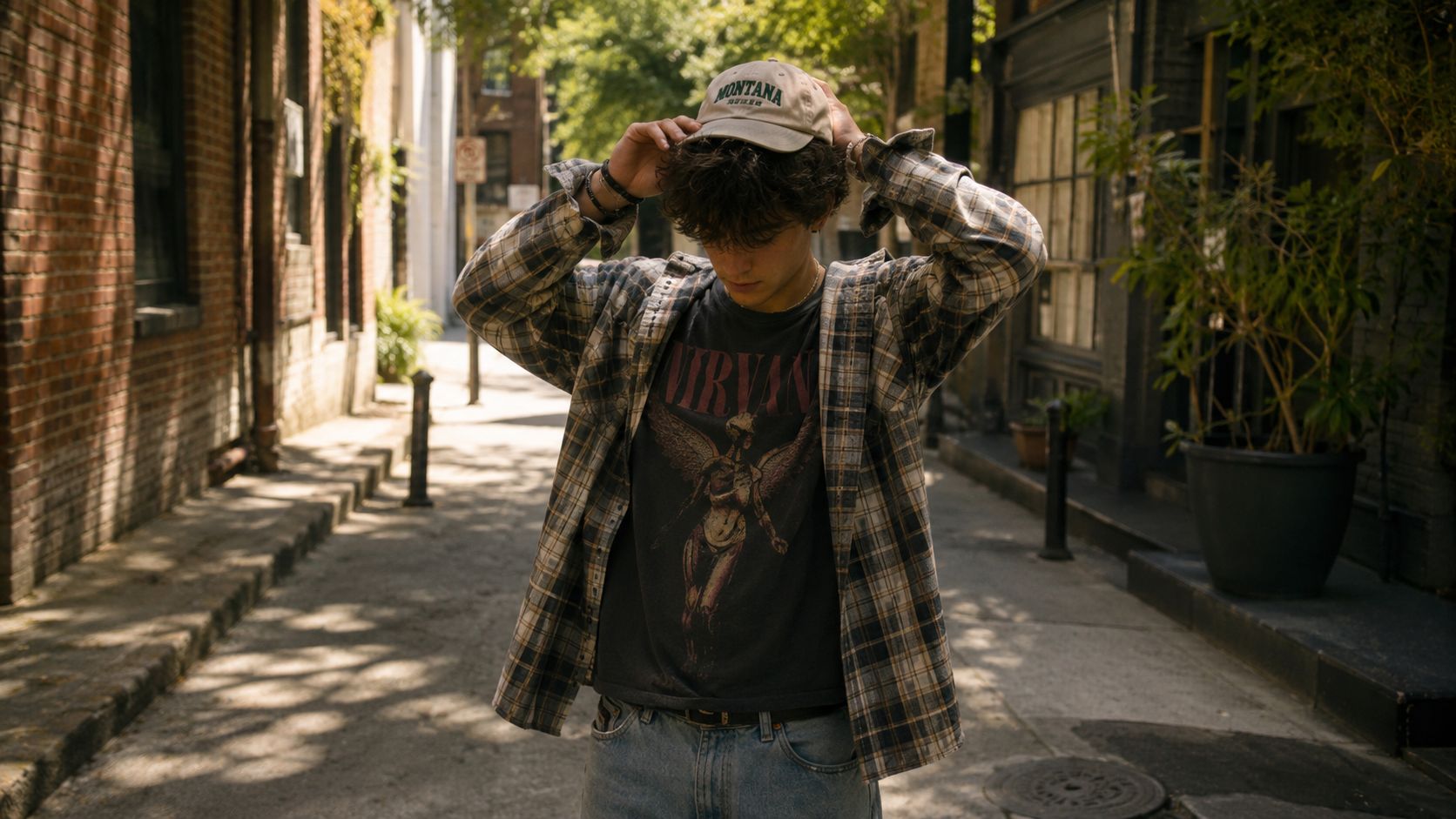
You've got a graphic tee on, maybe an open flannel, maybe a hoodie that feels a little too bare around the face, and the outfit still looks unfinished. A dad hat fixes that fast because it sits low, feels relaxed, and doesn't fight the rest of the clothes. The look lands especially well in casual streetwear, where you want the outfit to feel easy without looking careless.
From sports cap to streetwear staple
The cap form goes back to the earliest baseball caps in the 1840s–1850s, when teams such as the Brooklyn Excelsiors used rounded caps with a visor to cut sun glare, and by 1905 the Cincinnati Reds had officially adopted the baseball cap as part of their uniform, helping standardize the silhouette that later became the dad hat NSS Mag. The style kept evolving, and in the 1920s New Era began making adjustable caps with logos, which made caps easier to wear and more visible to fans NSS Mag.
That history matters because the dad hat isn't a random trend invention. It's a modern fashion reinterpretation of a shape that had already lived in sports for decades before streetwear adopted it. In the 1990s, the style picked up speed in hip-hop and leisure fashion, then surged again in the mid-2010s as celebrities and streetwear brands pushed it back into mainstream use Lift Down.
Why it works with so many outfits
The reason the hat keeps showing up is simple. It doesn't demand a specific outfit language the way a fitted cap or a sharper snapback sometimes does. It can sit next to a vintage band tee, an oversized hoodie, a work jacket, or clean jeans without making the rest of the look feel overstyled.
A useful way to think about it is balance. The hat gives you a soft top line, so the outfit reads more relaxed overall, which is exactly why it pairs so well with the worn-in, layered pieces people already reach for in streetwear. One specific milestone that shows the shift from team identity to personal style came in 1996, when Spike Lee asked New Era to make a red New York Yankees cap to match his jacket Lift Down. That moment says a lot about where the style went next, from uniform to expression.
The dad hat works best when it looks like part of the outfit, not an afterthought.
Understanding Dad Hat Construction and Design Elements
A dad hat starts with the parts you can see and the parts you only feel after wearing it for a while. The shape is usually low and relaxed, with a curved bill and an unstructured 6-panel crown that does not rely on a stiff internal frame Crowns Forge. That soft build is why the cap settles around the head instead of standing tall like a more rigid style.
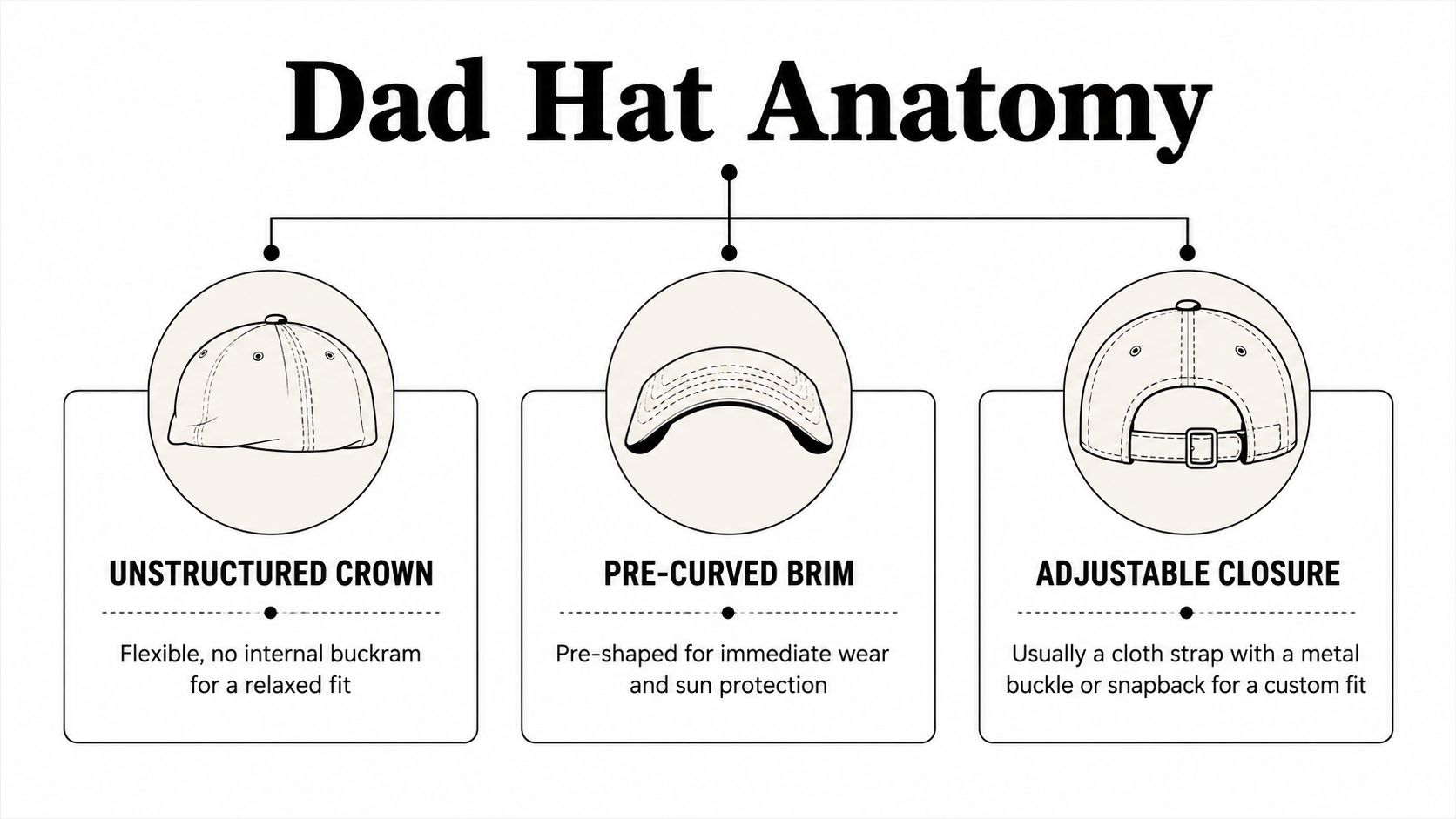
The soft crown does more than make the hat comfortable. With no buckram in the front panels, the cap bends with the wearer's head shape and folds down more easily into a bag or backpack. That flexibility also helps front embroidery sit in a more natural way, because the panel is not pushing against the design with a rigid surface Crowns Forge.
Crown, brim, and closure
The brim is usually pre-curved, which gives the hat its relaxed look the moment you put it on. There is no need to shape it first, and that curve keeps the silhouette casual instead of sharp or sporty. The closure is usually adjustable, often a cloth strap with a buckle or a snapback style, which makes the fit less exact than a fitted cap but easier to share or move between outfits Crowns Forge.
A better fit starts with the front seam and the way the panels meet the bill. Clean stitching usually points to better construction, while a brim that sits unevenly or panels that do not line up well can make the cap twist once it is on your head. The goal is not a cap that holds itself upright on a shelf, it is a cap that follows the head cleanly without looking sloppy.
That matters more than a lot of guides admit. A dad hat can look relaxed and easy on one person, then sit too shallow, too deep, or slightly off-balance on someone else. Head shape changes how the same construction reads, so the hat and the wearer need to be considered together.
Structured versus unstructured
A structured cap keeps its form even when nobody is wearing it. A dad hat works more like a soft tee, it takes the shape of what is underneath it.
Practical rule: if the front of the cap feels like it is pushing back against your forehead, it is probably too structured for the relaxed look most streetwear dad hats are trying to deliver.
That softness is the main appeal, but it also explains many fit problems. A hat that looks easygoing on one person can seem oversized, shallow, or oddly compressed on another, especially if the crown depth does not match the head shape. That is why construction and fit should be read together, not as separate details.
The cultural analysis on dad hats also points to a gap in common coverage. A lot of guides stop at “unstructured, curved-bill, adjustable” and leave out the questions people ask before buying, like crown depth and strap comfort Places Moments. That gap matters because the build is simple, but the way it wears on different heads is not.
Material Choices and Performance Trade-Offs
Material changes how a dad hat feels on day one and how it behaves after months of wear. The most common builds are cotton twill, polyester blends, and recycled nylon, and each one pushes the hat toward a different use case. If you only judge by color or logo, you can easily end up with a cap that looks right but wears wrong for your routine. For waterproof construction details, B Gear Apparel's waterproof dad hat specifications show how a different fabric choice changes the way a casual cap performs.
Cotton, polyester, and nylon compared
Cotton twill is the easiest place to start if you want a softer hand feel and better breathability. It suits laid-back daily wear, especially when comfort matters more than weather resistance. The trade-off is simple. It will not hold its shape as aggressively as synthetic-heavy builds, and it usually asks for a bit more care. On a soft dad hat, that matters because the crown has to sit comfortably without feeling stiff against the forehead.
Polyester blend caps focus more on shape retention and wrinkle resistance. Some versions use 35% cotton / 65% polyester or 60% cotton / 40% polyester, and those mixes shift the balance between softness and structure. A higher polyester share usually helps the hat stay cleaner-looking and more travel-friendly. That can be helpful if you wear your cap with layered streetwear, since a hat that keeps its outline tends to look sharper with boxy tees, hoodies, and work pants.
Nylon versions are the most useful when weather matters. They are commonly chosen for water repellency and packability, which makes them easier to toss into a bag for travel or unpredictable days. The trade-off is that they can feel less breathable than cotton-rich caps, so they make more sense for commuters, festival days, or quick errands than for all-day wear in warm conditions.
Matching fabric to the way you wear it
If you wear a dad hat mostly for city walks, errands, or casual meetups, cotton twill is usually the most natural choice. If you want a hat that keeps its shape through repeated wear and does not wrinkle much in a backpack, polyester blends make more sense. If you are outdoors often or you want a cap that can handle changing conditions, nylon is the practical pick.
Fit still changes the decision. A softer cotton crown can sit lower and feel easier on a rounder head shape, while a firmer synthetic blend may keep its front panel from collapsing on a flatter or longer head shape. That difference shows up fast in the mirror, especially if you already know that some hats sit too shallow or press too hard across the temples.
A quick label check provides valuable insight. You are looking for the fiber content, the closure style, and whether the front panel is lined or reinforced. Then do a simple touch test. Softer usually means more comfort, while a slicker hand often points to more synthetic content and better shape retention.
Buying shortcut: choose the fabric first for your climate and schedule, then choose the color and graphic after that.
Solving Real Fit Problems Across Head Shapes and Sizes
A lot of dad hat advice falls apart here. “One size fits most” sounds convenient, but it doesn't tell you whether the crown will sit too shallow, whether the strap will dig in after an hour, or whether the soft shape will flatter your proportions Places Moments. The hat might technically fit, and still feel off.
Crown depth matters more than people think
Crown depth changes how the hat lands on your head. If the cap rides too high, it can look perched. If it sits too low, it can crowd the ears or feel heavy in front. That's why two hats with the same listed style can still wear completely differently.
People with larger heads often run into shallow crowns first. The hat may close at the back but still feel tight across the forehead. People with very small heads can get the opposite problem, where the adjustable range leaves extra bulk at the back and makes the cap look loose. Protective hairstyles can add another layer, because the soft adjustable build doesn't always leave enough room without changing the way the hat sits.
If the strap is on the last hole and the front panels still press into your forehead, don't assume the break-in will solve it.
What to check before you buy
Look for these fit signals before you commit:
- Crown depth: Make sure the front panel doesn't touch your forehead too aggressively when you lower the brim.
- Back adjustment range: Check whether the strap has enough room to tighten or loosen without looking awkward.
- Strap comfort: A rough closure can become irritating during long wear, especially at the back of the neck.
- Hair compatibility: Test whether the opening leaves enough room for braids, curls, locs, or tied-up hair.
- Profile on your face: A lower crown usually looks cleaner on longer faces, while a slightly fuller shape can help balance wider face shapes.
For shopping online, the biggest warning sign is vague sizing language with no mention of crown depth or closure type. In-store, try the hat on, look straight ahead, then down at your phone. If it shifts, pinches, or floats above your head, it's not the right cut for you.
Styling Dad Hats with Streetwear Essentials
A dad hat looks best when it repeats the tone of the outfit instead of competing with it. A faded black cap with a black graphic tee reads calm and cohesive. A tan cap with a white tee and light-wash denim reads softer and more casual. The hat can either finish the outfit or drag it down, depending on how intentionally you match the rest of the pieces.
Three outfit formulas that work
Start with the easiest pairing, a graphic tee, straight-leg jeans, and a neutral dad hat. That combination works because the hat breaks up the top half without pulling attention away from the print. If the tee already has a strong image, keep the hat plain and let the shirt do the talking.
For layered weather, try a hoodie under a denim jacket or overshirt with the cap kept low and slightly curved. The relaxed crown keeps the top half from feeling bulky, especially when the hoodie adds volume around the neck. This is one of the cleanest ways to make the hat feel part of the silhouette instead of a random accessory.
For a more polished casual look, pair the cap with a crisp sweatshirt, clean sneakers, and minimal accessories. Avoid stacking too many loud graphics at once. A patterned hat, a busy tee, and a logo-heavy jacket can all work separately, but together they usually turn the outfit into noise.
Brim angle and visual balance
The way you wear the brim changes the whole read of the outfit. Pulled straight down, the hat feels more classic and grounded. Tilted a little higher, it gives the face more openness and makes the style feel slightly more relaxed.
The hat also works as a linking piece. If your sneakers have a cream accent, a cream or beige cap can echo that tone and make the outfit feel planned. If your tee has a bright graphic, a hat in one of the graphic's secondary colors can subtly pull the look together without becoming matchy.
Care and Maintenance for Long-Lasting Wear
A dad hat keeps its shape longer when you treat it like a soft construction item, not just a throw-on accessory. Sweat, sun, and storage habits all change the way it wears, and different fabrics ask for slightly different care. The good news is that the routine is simple if you stay ahead of the damage.
Clean it by fabric, not by habit
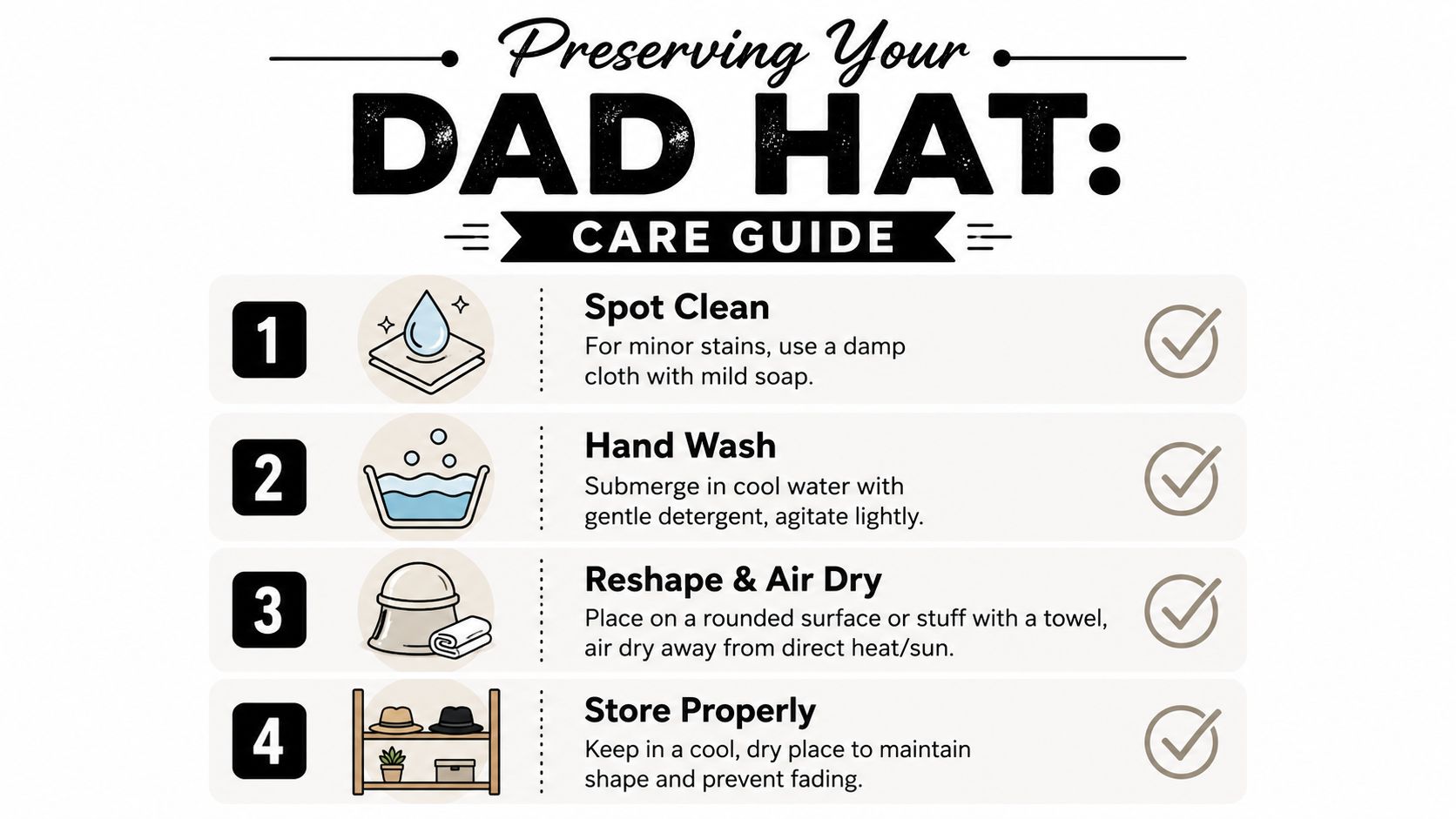
For cotton twill, hand-washing is usually the safest route. Use cool water and a gentle detergent, then work on the dirty spots first instead of soaking the hat aggressively. That helps preserve the soft finish and reduces the risk of warping the brim.
For polyester blends, spot-cleaning often does enough for day-to-day upkeep. These hats tend to hold their shape better, so you usually don't need to over-wash them. For nylon, the same logic applies, but pay close attention to drying, because heat can change the look and feel of the fabric faster than people expect B Gear Apparel.
Drying and storage habits
Reshape the crown while the hat is still damp. A towel stuffed inside the cap or a rounded surface helps the crown dry in the right form. Keep it away from direct heat and bright sun, because both can fade color and warp the brim over time.
Storage is just as important. Don't crush the hat under heavier items in a drawer or bag. A simple shelf, hook, or hat rack keeps the bill curved and the front panel from flattening into a weird shape.
Maintenance rule: if the hat starts smelling before it looks dirty, clean it sooner rather than later. Sweat buildup is easier to manage early.
If the strap starts to fail, don't keep yanking on it. That usually makes the closure worse. For graphics or embroidery, avoid harsh bleach or aggressive scrubbing, because the finish can break down fast even when the fabric still looks fine.
Making Your Selection and Finding the Right Fit
The best streetwear dad hats usually get three things right at once, shape, material, and fit. If the crown feels relaxed, the brim sits naturally, and the closure adjusts without irritation, the hat will be easier to wear with everything else in your closet. If one of those pieces is off, the style stops feeling effortless.
A simple buying checklist helps. Look for an unstructured crown if you want the classic low-profile look, choose the fabric based on climate and daily use, and check whether the adjustment range works for your head shape and hair. In practice, that means you're shopping for how the cap behaves on your head, not just how it looks on the hanger.
The best pairs are the ones that match your wardrobe habits. If you wear a lot of graphic tees and laid-back layers, a neutral dad hat will probably get more use than a loud one. If your style leans minimal, a subtle embroidered cap can add texture without making the outfit louder.
If you're comparing options, think in this order, fit first, then fabric, then color, then graphic. That sequence keeps you from buying a cap that looks right on a product page and feels wrong the second you put it on.
Trending Market carries streetwear-minded pieces that fit naturally with the kind of outfits this guide focuses on, especially graphic tees, caps, and other casual layers. If you want to build looks around relaxed headwear and everyday streetwear basics, visit Trending Market and use these fit and styling principles to pick pieces that work together.