

The loudest logo in the rack usually isn't the smartest buy. A lot of shoppers walk up to streetwear baseball caps thinking the answer is obvious, then leave more confused, because a cap can look bold in a thumbnail and still sit wrong, squeeze the forehead, or send the wrong style signal once it's on your head.
That's why the key question isn't “Which cap has the biggest graphic?” It's whether the cap fits your head, matches the vibe you want to project, and feels fairly priced for how you'll typically wear it. In 2026, that matters more than ever, because caps are doing double duty as everyday utility and cultural shorthand, especially in music, skate, city, and automotive-led outfits.
Table of Contents
- Introduction to Streetwear Baseball Caps
- What Defines a Streetwear Baseball Cap
- Popular Streetwear Cap Styles and Materials
- How to Find Your Perfect Cap Fit
- Styling Caps with Trending Market Pieces
- Buying Tips and Cap Care Essentials
- Key Takeaways on Streetwear Baseball Caps
Introduction to Streetwear Baseball Caps
A young shopper standing in front of a wall of snapbacks usually isn't short on options, just clarity. One cap looks louder, another looks cleaner, and a third seems like it should work because it has a city name stitched across the front. Ten minutes later, the problem is the same, because the wrong advice treats every cap like a uniform, when streetwear is really about reading shape, fit, and signal at the same time.
Streetwear baseball caps work best when they do three jobs at once. They frame the face, they carry a graphic or logo, and they send a style message without trying too hard. That message can be subtle, like a low-profile cap with minimal branding, or sharper, like a structured front that turns a cap into a walking signboard.
Practical rule: Don't start with the logo. Start with the crown, the brim, and how much visual weight the cap adds to your outfit.
This guide follows that logic. It starts with what a streetwear baseball cap is, then moves into common builds, fit precision, styling context, and buying habits that make sense for real wardrobes, not just product photos. The goal is simple, help you answer the three questions that matter before you buy, does it fit your head, does it signal your vibe, and is the price fair?
What Defines a Streetwear Baseball Cap
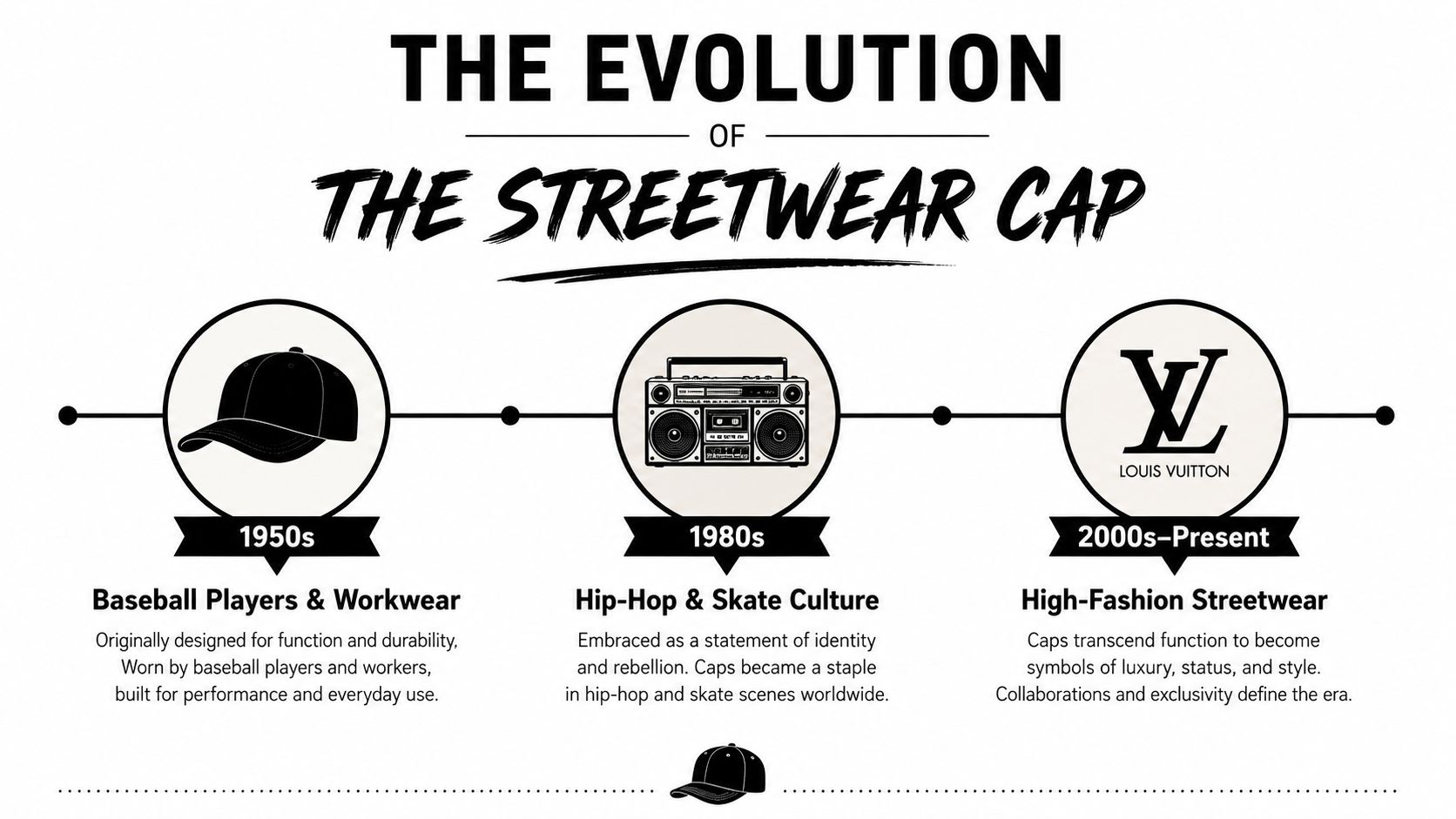
A streetwear baseball cap starts with sports DNA, then gets rewritten by culture. The shape traces back to the Brooklyn Excelsiors in 1860, whose rounded cap with a long brim and button on top became the base for the modern form, and later to the Detroit Tigers adding the first logo in 1901, the structure changes in the 1940s, and New Era's 59FIFTY fitted cap in 1954, all laid out in MLB's cap timeline MLB cap history and timeline. That history matters because streetwear keeps the parts that are easy to read in public, then uses them to send a different signal.
The parts that streetwear keeps using
Three inherited traits carry most of the weight, shape, logo placement, and durable construction. A structured front gives embroidery or patches a flat stage, while the brim, curved or extended, gives the cap its outline from a distance. That is why a cap can carry city names, music references, car culture, or small icons and still read as a cap, not a costume.
The comparison is simple. Sports culture created the format, then fashion wrote new meaning onto it. The shell stayed familiar, but the message changed. That shift is the core of streetwear use, identity signaling instead of team-only loyalty.
Fit precision matters just as much as the graphic. A cap that sits too high can look perched, while one that hugs the brow too tightly can feel sharp and intentional in a way that does not suit every outfit. A slight change in crown depth or brim curve can move the cap from relaxed to pointed, which is why two caps with the same logo can send different cultural signals.
Streetwear language in plain terms
A cap reads as streetwear when it keeps baseball cap structure and adjusts the code around it. A clean front panel makes room for a logo or city reference. A brim angle can make the same silhouette feel casual or more assertive. Even the way the cap sits off the forehead changes the impression, from practical headwear to a styled finish.
Trending Market's graphic-led catalog shows how that works in practice. A minimal cap pairs easily with oversized outerwear, while a bolder front panel can balance simpler pieces by acting like a visual anchor. Those pairings are useful because they show the trade-off clearly. More structure usually looks sharper, but it can also feel less forgiving on different head shapes. More softness often feels easier to wear, yet it may carry less visual authority.
For shoppers, the test is direct. If the cap still reads as a cap first and a costume second, it is probably doing streetwear well. If the graphic overwhelms the silhouette, the cap can move into novelty territory fast.
Popular Streetwear Cap Styles and Materials
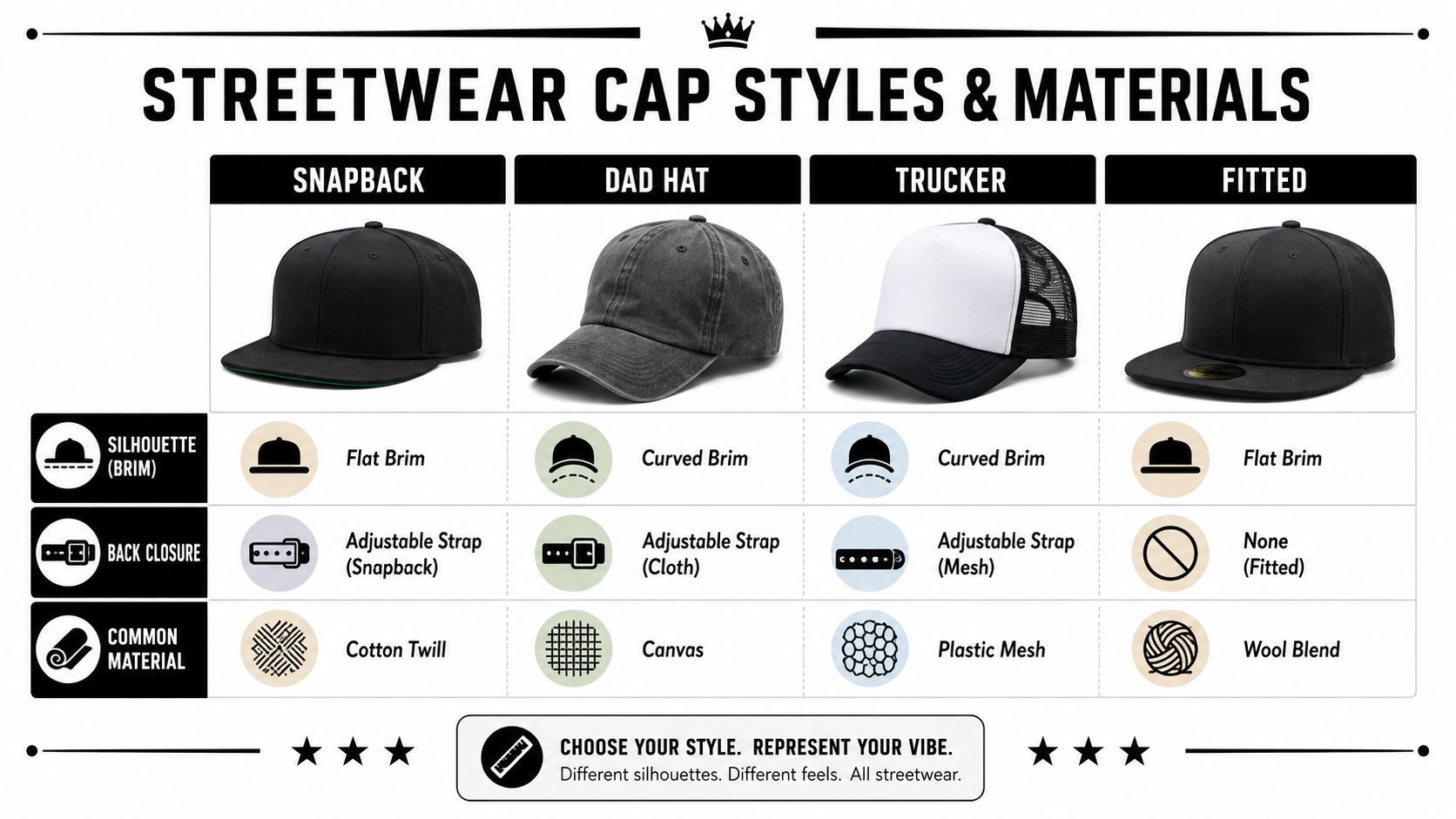
The clearest way to read cap style is to separate silhouette from build quality. Two caps can both signal streetwear, yet one reads as a structured statement piece while another supports the rest of the outfit. That split starts with panel count, brim shape, and the way the back closes.
A cap can also carry a different cultural signal depending on how precise the fit feels. A sharp, controlled crown suggests intention, while a softer build feels more relaxed and less insistent. Trending Market's graphic-led catalog makes that visible in pairing examples, because the cap does not sit alone. It sits beside oversized knits, clean tees, or heavier outerwear, and the balance changes with the cap's shape.
Construction details that actually matter
A technically sound streetwear baseball cap usually starts with a 6-panel crown. That panel geometry gives a more contoured fit than 5-panel skate caps and usually supports cleaner embroidery placement on the front panel, according to cap tech-pack guidance Specter OS cap tech pack. Common specs also include 6 mm metal eyelets, a 35 mm interior sweatband, and adjustable closures such as slide buckles, snaps, or Velcro.
Those details sound small, but they change the way the cap reads on the head. A front panel that holds its shape keeps a logo crisp, while a softer build can make the same artwork look less anchored. Brim curve matters too, since a flatter brim often feels more direct and a pre-curved brim usually reads more casual.
Material choices shape comfort
Material is where appearance and wearability start to split. Standard cotton twill caps are often 180–240 gsm and can gain roughly 8–12% weight when saturated, while more technical builds use 75D–150D polyester microfiber, mini ripstop, or mechanical-stretch woven fabrics in the 90–140 gsm range with wicking finishes Crowns Forge performance cap guide. A practical benchmark for lighter technical caps is a finished weight under 80 g, with many well-developed programs landing around 55–70 g Crowns Forge performance cap guide.
That difference shows up fast in real use. A lighter build with perforated side panels and a moisture-wicking sweatband feels less clingy in heat, while heavier twill gives a firmer cap profile that holds its shape longer. One behaves like a light jacket, the other like structured denim. Both can work in streetwear, but they send different signals. The lighter option often recedes into the outfit, while the heavier one acts as the anchor.
Good filter: If the product page does not say panel count, closure type, or fabric weight, you are reading the photo without the full picture.
How to Find Your Perfect Cap Fit
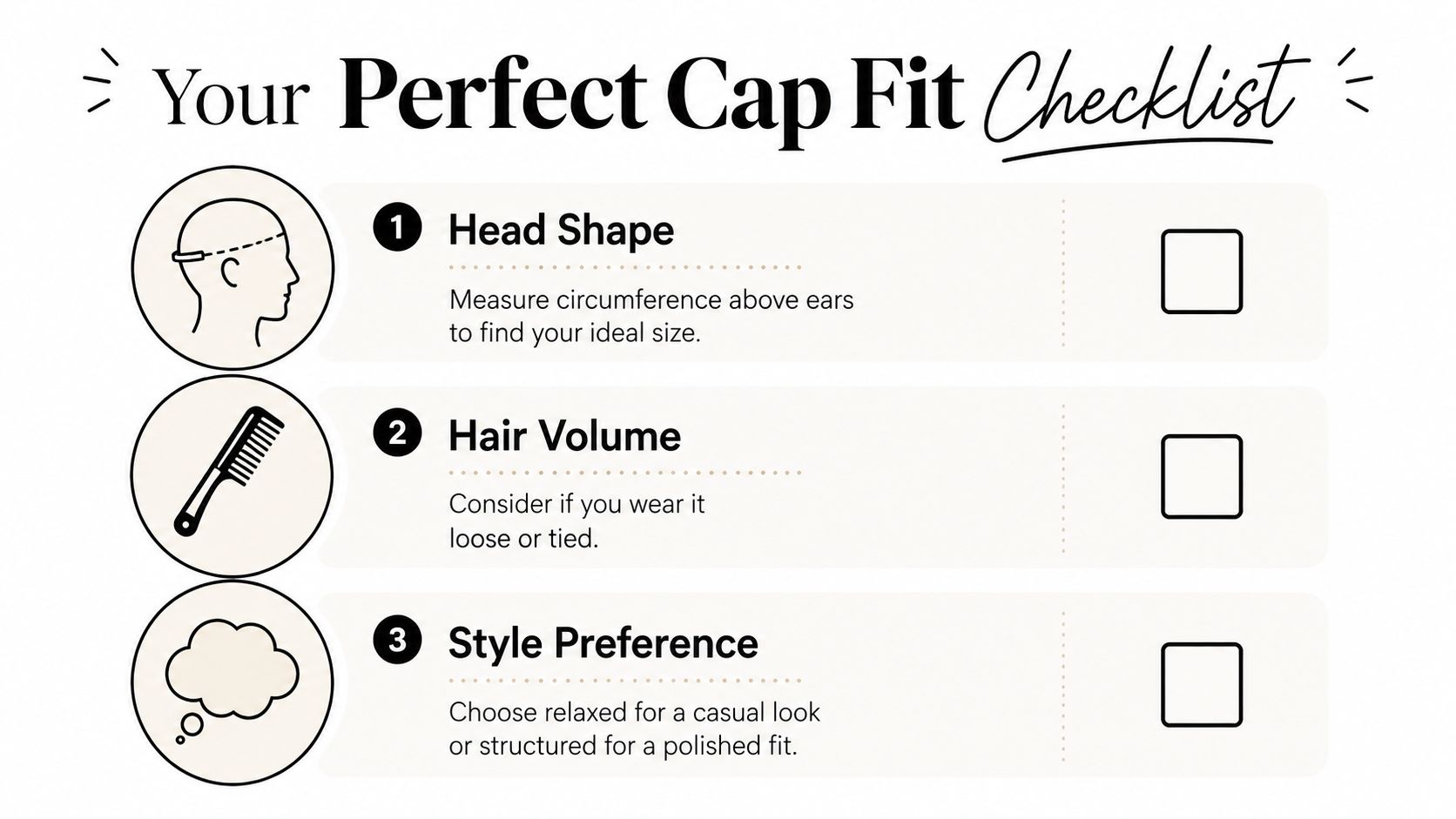
Fit is where cap advice usually gets too casual. A cap can fit the head and still sit awkwardly, pull the forehead line down, or make the whole look feel off balance. In streetwear, that matters because fit changes both comfort and the signal the cap sends. A precise fit reads deliberate. A sloppy one reads borrowed.
Measure what the label won't tell you
Start with head circumference, measured just above the ears and across the most prominent part of the forehead. Then check how you wear your hair, loose, tied back, tucked under, or left with volume at the crown. A cap that feels fine with short hair can sit very differently once hair adds lift underneath.
The closure matters too. Adjustable backs like snaps, straps, and Velcro give you room to adjust, but they do not solve every shape mismatch. In tech packs, ±1 cm tolerance on circumference is normal, yet that still leaves room for a cap to feel a little loose or a little snug depending on the wearer Specter OS cap tech pack. The closure helps with sizing flexibility, not with profile harmony.
Choose profile before branding
A useful contrarian rule is that the most wearable cap often has the lowest visual bulk, not the loudest logo. Low-profile cuts usually sit closer to the head, feel less pressurized at the forehead, and look cleaner with pared-back outfits. High crowns create a stronger statement, but they can overwhelm smaller faces or feel awkward if you want the cap to finish the outfit instead of lead it.
Fit rule of thumb: If the cap pulls attention before the outfit does, the profile may be too tall for your style.
To judge a cap in practice, use this short checklist.
- Head shape: Look for a crown that follows your head instead of hovering above it.
- Hair volume: Leave room if you wear braids, curls, or thicker hair at the crown.
- Brim feel: Make sure the brim does not block your line of sight or force the front panel too high.
- Closure comfort: Use the tightest setting that still leaves the back flat and neat.
That checklist works because fit has two jobs at once. It has to feel comfortable during wear, and it has to support the silhouette you want. A cap that handles both usually wears better than a more expensive one that only gets the sizing part right.
Styling Caps with Trending Market Pieces
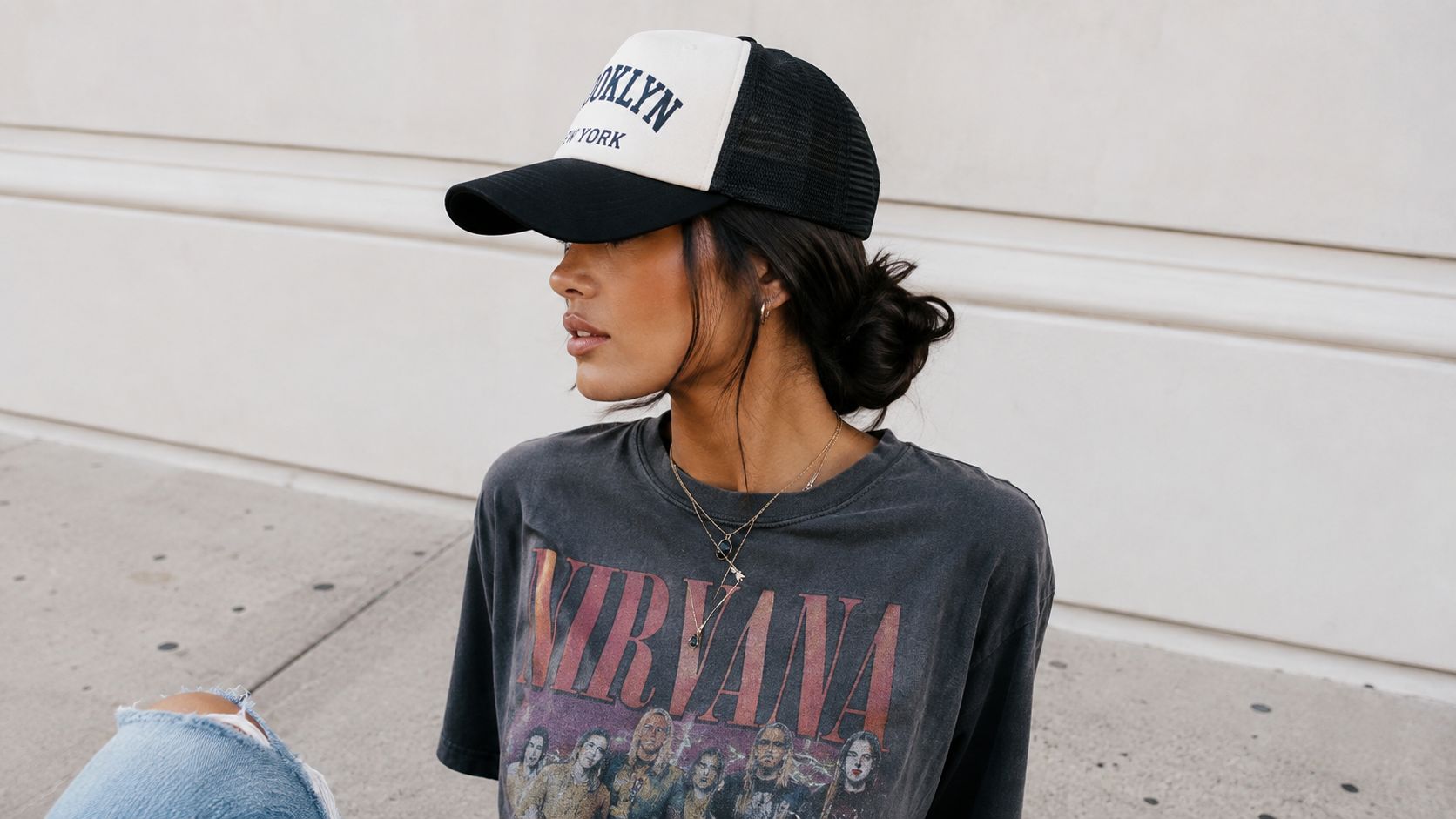
The easiest way to make a cap look intentional is to match its visual energy to the rest of the outfit. A cap with city-reference branding can feel understated next to a graphic tee, while a flatter, more assertive brim can make automotive or tour imagery feel more directional. That's why cap choice is less about “matching everything” and more about deciding which item leads.
Pairing branding intensity with outfit context
A Brooklyn New York trucker cap pairs naturally with graphic-led pieces because the city reference already reads as part of the same language. Against a GT-R Skyline quarter-zip or a Drake Scorpion Tour tee, the cap doesn't need to shout. It just has to keep the outfit coherent, which is often what people mean when they say a look feels styled instead of random.
That's also where cultural signal comes in. Esquire notes that baseball caps fit casual settings best and are usually removed in more formal indoor contexts, while The Hundreds frames the dad hat as a symbol of normcore, showing how the same basic category can slide toward understated rather than hype-driven fashion depending on shape and branding Esquire UK on baseball cap etiquette. In other words, a cap can read as streetwear, dad-wear, or practical, based on what it's paired with and how much structure it has.
Simple outfit formulas that feel current
For a U.S. casual look, keep the cap graphic-light and let the tee carry the message. For a U.K. minimal approach, lean into lower-profile shapes and cleaner color blocking. For an Asian streetwear look, sharper cap structure and more deliberate brand placement usually make the outfit feel finished rather than accidental.
A small catalog like Trending Market's can make this easy because the pieces already share music, automotive, and city motifs. A cap with a city name, for example, makes more sense next to a tour tee than next to a plain sweatshirt. The outfit starts to look curated when the themes overlap instead of compete.
Style cue: If your top already has a loud print, let the cap stay quieter. If the outfit is plain, the cap can carry more of the statement.
Buying Tips and Cap Care Essentials
A streetwear cap can look simple on the shelf and still be tricky to buy well. The difference usually comes down to structure, branding, and how the cap sits once it is on your head. That matters more than a flashy product photo, because a cap that fits your profile correctly reads as intentional, while a cap that sits awkwardly looks like an afterthought.
A fair price point also depends on what you expect from the cap. The baseball cap market is large, which helps keep entry-level options within reach, as noted earlier. That is why a basic streetwear cap can stay affordable without feeling disposable, especially if the crown holds shape and the front panel is built cleanly.
What to check before you buy
Start with the product page, not the cart. Check the crown shape, panel count, closure type, and front branding before you decide anything else. A cap can have a strong silhouette and still disappoint if the embroidery feels thin, the patch sits unevenly, or the fabric has too much slump.
Fit precision matters here because small details change how the cap reads from a distance. A high crown can make the look feel sharper and more athletic, while a lower crown usually feels softer and closer to vintage or everyday wear. A curved brim can quiet the profile, and a flat brim can make the cap feel more graphic-heavy, so the shape should match the rest of the outfit rather than fight it.
Trending Market's storefront keeps that choice easy to read because the pieces are presented in USD pricing and sit in a straightforward entry-level range, with observed list prices around $19.99 to $39.99. That kind of pricing makes the cap feel like a practical add-on, not a major commitment, which is helpful if you are testing a new silhouette or building a rotation.
Keeping the shape after purchase
Care makes the biggest difference after the first wear. Caps usually do not fail by tearing, they lose definition, wrinkle at the front, or bend out of form after rough washing. Cold water is the safest default, low tumble is gentler than high heat, and a cap cage or form holder helps the crown keep its shape while it dries.
Structured fronts need extra restraint. If a cap uses technical fabric, treat it more like performance gear than a heavy work cap, especially if you want the sweatband and brim to keep their outline. Dry cleaning is not the automatic answer, and heat is often the fastest way to change a cap's silhouette in a way you cannot fully recover.
- Wash gently: Use cold water and mild detergent.
- Dry carefully: Let the cap air dry or use low tumble only when the label allows it.
- Store with shape in mind: Keep it on a hook, shelf, or cap form instead of stuffing it in a drawer.
- Protect the brim: Do not fold it flat unless the cap is designed for that.
A cap that keeps its structure looks more expensive for longer, even when it started at an entry-level price.
Key Takeaways on Streetwear Baseball Caps
Streetwear baseball caps work because they sit at the intersection of heritage, fit, and signal. The design comes from baseball's long history, the comfort comes from getting the crown and closure right, and the style value comes from choosing a silhouette that says something without overwhelming the rest of the outfit.
The easiest way to remember the guide is this. First, check the cap's structure and panel layout. Second, make sure the fit suits your head, hair, and preferred profile. Third, decide what the cap is saying, subtle, classic, minimal, or statement-heavy.
Once you start reading caps that way, the rack gets easier to browse. You stop buying the loudest piece and start buying the one you'll wear.
Trending Market carries graphic-led streetwear pieces, including caps, tees, and accessories that fit the same music, automotive, and city-inspired language discussed here. If you want to compare cap-friendly outfits and browse a straightforward USD storefront, visit Trending Market and look through the current pieces with fit and signal in mind.