

You've got the tee, the cap, and the sneakers, but the outfit still feels off. That usually means the pieces are fine and the proportions are wrong. Streetwear looks effortless only when the silhouette is controlled, the fabric weight supports the graphic, and one item leads while the others back it up.
Table of Contents
- Why Most Streetwear Outfits Miss the Mark
- The Roots and Visual Language of Streetwear
- Core Garment Elements That Define the Look
- Outfit Formulas Using Graphic Tees and Accessories
- Getting Proportions Right for Your Body Type
- Building a Streetwear Wardrobe Without Overbuying
- Care and Maintenance for Long-Lasting Streetwear
Why Most Streetwear Outfits Miss the Mark
A lot of streetwear misses because people shop for pieces instead of building an outfit. They grab a graphic tee, a trucker cap, chunky sneakers, maybe a hoodie when it's cold, then wonder why the result looks like a costume rack, not a deliberate fit.
The core issue is item thinking. Streetwear works because the pieces share a visual language, and that language has to be balanced. If the tee is huge, the pants are wide, the cap is bulky, and the shoes carry too much visual weight, the outfit loses shape fast. You end up with one heavy block of volume and no clear focal point.
Fabric weight changes the whole read
Fabric weight changes how a graphic sits on the body. A lighter jersey drapes softer and can go a little translucent, while a heavier tee gives you a boxier shape and a cleaner surface for print, which is why heavier tees usually make logos and photo graphics look sharper (Lekondo). That does not mean heavier is always better. It means the shirt has to match the effect you want.
Practical rule: if the print is the hero, let the fabric support the print instead of fighting it.
Oversized pieces cause the other common mistake. Oversized on top can work. Oversized on top, oversized on bottom, oversized outerwear, and oversized accessories usually just looks sloppy. The best outfits keep one thing loose, one thing controlled, and one thing visually active. That is the difference between intentional volume and just wearing bigger clothes.
The Roots and Visual Language of Streetwear
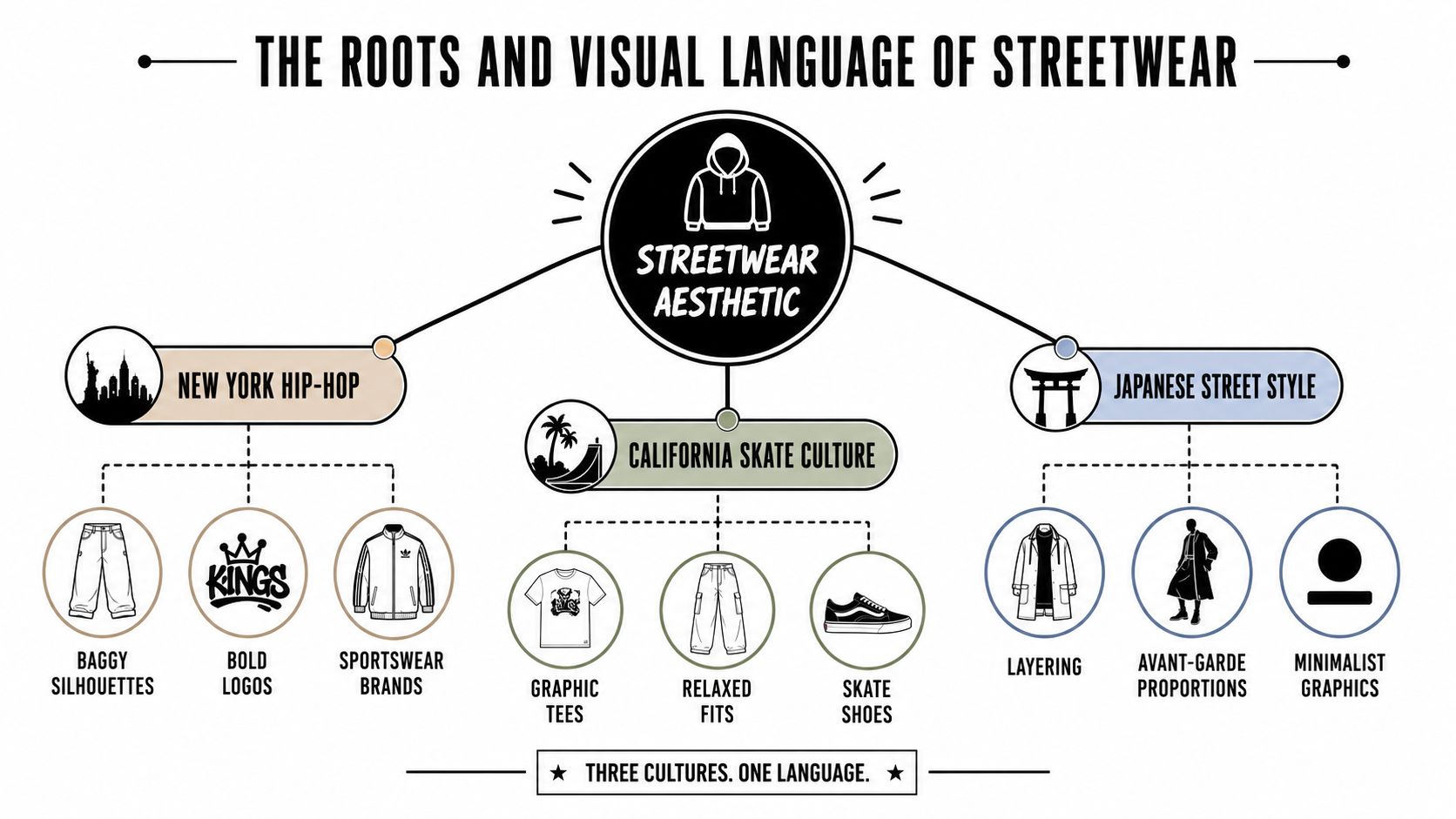
Streetwear didn't come from one clean origin point. Its modern identity formed in the 1980s and 1990s, with roots in earlier subcultures, and it fused New York hip-hop style, California surf and skate culture, plus later punk and Japanese street fashion influences (Streetwear history and evolution). That mix is why the look can swing from logo-heavy and brash to stripped-back and technical without losing its identity.
What each culture actually contributed
New York hip-hop gave streetwear its brand-forward attitude. That's where the logo became the point, not just decoration. California surf and skate culture pushed in the opposite direction with relaxed silhouettes, DIY graphics, and clothes that looked lived in rather than polished. Japanese street fashion added the obsession with fabric quality, scarcity, and the idea that clothing should feel considered, even when it looks casual.
Those roots still show up in today's visual language. Bold photo prints, city names, music references, automotive graphics, and oversized logos all make sense once you see them as descendants of those subcultures. So do the quieter pieces, like minimal graphics on dense fabric, or a tee paired with a technical layer that borrows from performance wear.
Why that matters when you shop
Streetwear looks strongest when the references agree with each other. A music tee, a city cap, and a nylon layer can work together because they all speak the same casual, urban language. A loud graphic tee with ornate tailoring can work too, but only if the outfit has a clear point of view.
That's the key takeaway. Streetwear isn't a random pile of cool objects. It's a visual system built from casualness, identity, and proportion, and every good outfit makes those three things feel connected.
Core Garment Elements That Define the Look
A streetwear tee only works when the details do. Fabric weight, cut, and graphic placement decide whether the shirt looks intentional or just like a blank that got printed on. If those pieces are wrong, the whole top reads cheap even when the artwork is strong.
The tee is the foundation
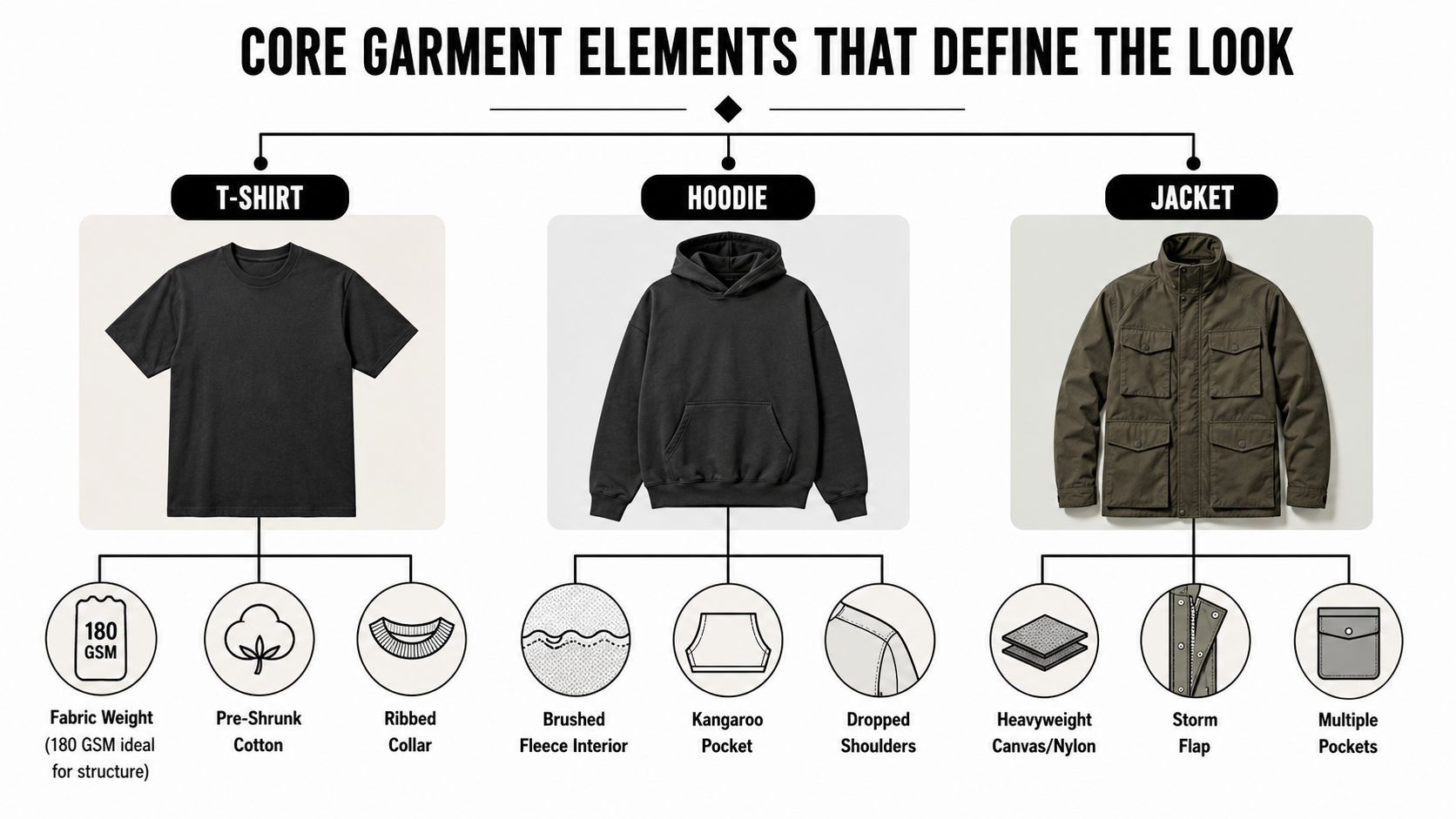
For the core streetwear tee, choose medium-to-heavyweight cotton jersey in a fabric that has enough body to hold its shape (Lekondo). Lighter tees drape softer and sit closer to the body. Heavier tees keep a boxier line and give large graphics a flatter, cleaner surface. That matters because the fabric changes how the shirt hangs, how the print sits, and how much structure survives after repeated wear and washing.
Cheap-looking tees usually fail in the same places. The print is too small for the shirt. The collar caves in. Or the body is so thin that the graphic looks tired after a few wears. If you are buying on a budget, skip those flaws and keep looking.
A good tee gives you proportion before you add anything else. It should sit wide enough through the body to feel relaxed, but not so oversized that the sleeves and hem drown the rest of the outfit. That balance is what makes an affordable graphic shirt look deliberate instead of random.
Silhouette and graphic execution do the rest
Streetwear uses drop shoulders, relaxed fits, and oversized proportions to build volume (Multiversity Store). Volume alone does not create style. The cut has to support the graphic. A boxy tee with a centered logo reads differently from a long, slim tee with the same print, because the eye reads the shape before it reads the image.
The graphic itself needs room. If the print is crowded into the chest or cut off by bad placement, the shirt loses impact fast. Large front graphics work best on tees with enough fabric weight to hold a clean surface. Smaller graphics work better when the silhouette does more of the talking, since the proportions stay cleaner and the outfit avoids looking overdesigned.
A strong streetwear piece gives the graphic room to breathe.
Accessories should follow that same rule. A trucker cap adds a vertical break at the top of the fit. A themed phone case keeps the visual language consistent without stuffing the outfit with extra noise. A quarter-zip adds structure in the middle, which helps when the tee is oversized and the torso needs a clear shape. Good streetwear accessories support the silhouette, they do not fight it.
Outfit Formulas Using Graphic Tees and Accessories
The easiest way to build a good streetwear outfit is to let one graphic piece lead and then tune everything else around it. That's how you make an affordable tee look deliberate instead of random. The formula is simple, but the proportions have to be right.
Use a strong tee as the anchor
Start with a graphic T-shirt that already has a clear theme, like music, automotive, or city branding. Pair a boxy tee with straighter or slimmer bottoms so the top can carry the volume. If the shirt is loud, keep the pants quiet. If the tee is minimal, let the bottoms or outer layer add energy.
A music graphic tee with dark jeans and clean sneakers works because the eye gets one strong focal point. A car-themed tee with cargo pants can work too, but only if the cargos are relaxed rather than ballooning. The point is to create contrast, not to stack the same shape twice.
Add layers when the weather needs it
A quarter-zip over a statement tee is one of the most useful moves in budget streetwear. It gives you structure at the chest and collar area, which keeps the outfit from reading like a plain tee plus outerwear. The tee shows underneath, the zip adds depth, and the whole fit looks considered with almost no extra effort.
A trucker cap helps when the upper half feels too heavy. It gives the eye a vertical break and pulls attention upward, which is useful when the shirt graphic sits low or the fit is oversized. A phone case that echoes the tee's color palette is a subtle way to keep the outfit cohesive without adding another visible garment.
Four formulas that actually work
- Everyday city look: graphic tee, straight jeans, trucker cap, clean sneakers.
- Cold-weather layer: tee under a quarter-zip, relaxed trousers, cap optional, shoes kept simple.
- Coordinated accessory build: tee, matching or near-matching cap, phone case with the same color family, neutral bottoms.
- Minimalist statement fit: one bold tee, black or washed denim, understated shoes, no extra loud pieces.
The best formula is the one that gives the graphic room and keeps the silhouette readable. If the outfit feels crowded, remove one piece before adding another.
Getting Proportions Right for Your Body Type
Most streetwear advice stops at “wear oversized.” That's lazy advice. Oversized can look sharp, but only when the rest of the outfit gives it a frame. If everything is baggy, the shape disappears and you just look buried.
Start with one volume piece
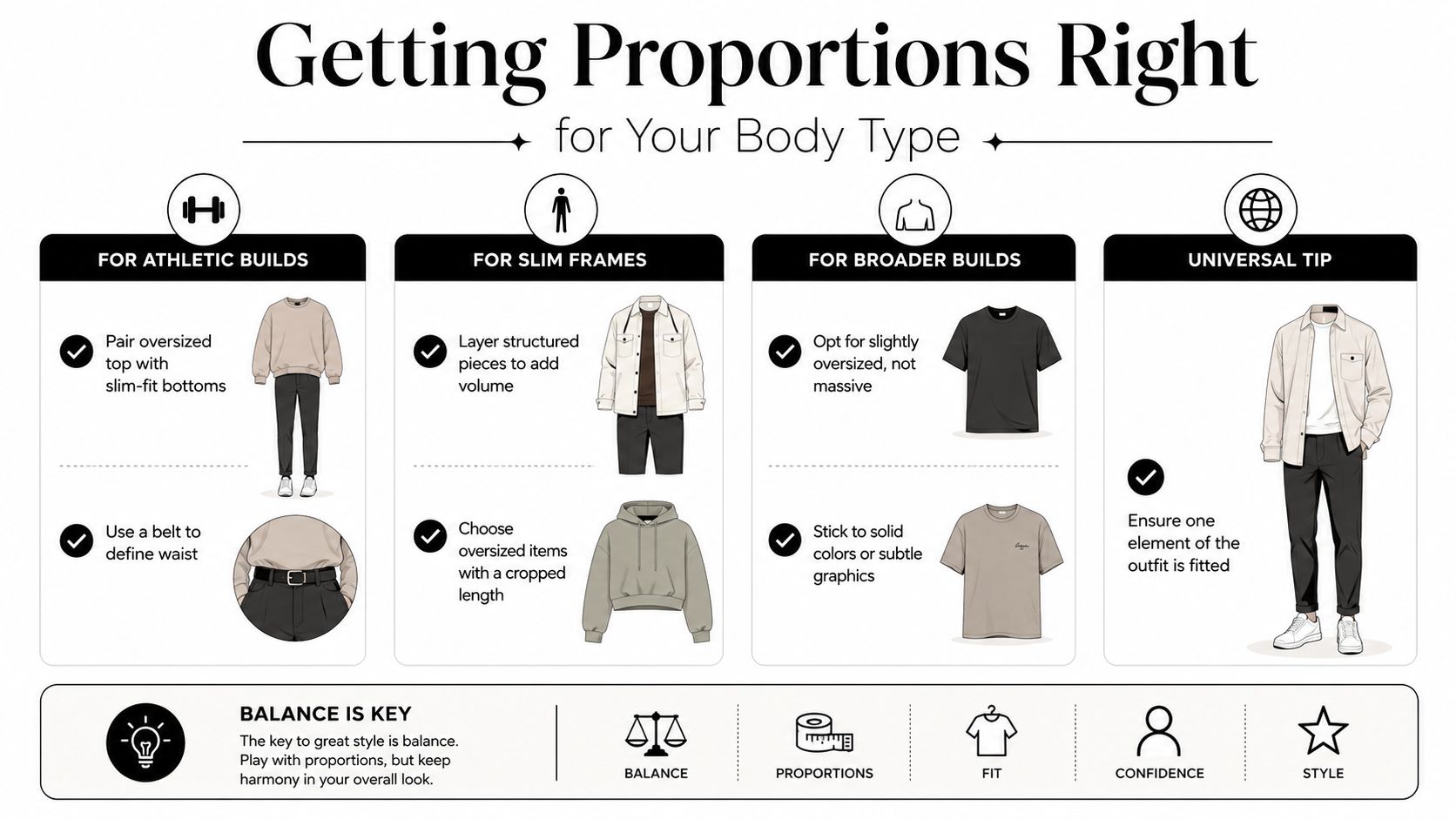
Use one volume piece as the starting point. If the tee is oversized, keep the bottoms cleaner. If the pants are loose, keep the top more structured. That one decision does more for the outfit than any logo ever will.
A boxy tee should usually sit around the hip area instead of hanging so long that it turns into a dress. The shoulder drop should look relaxed, not like you borrowed the shirt from someone three sizes larger. If the sleeve reaches too far down the arm and the body swallows your frame, the fit is doing too much.
Match volume to your build
For athletic builds, oversized tops with slimmer bottoms usually look strongest because the shape still shows. A belt can help if the waist disappears under the shirt. For slimmer frames, structured layers add presence, and cropped or shorter oversized tops keep the proportions from getting too long.
Broader builds usually look better in slightly oversized, not massive, pieces. The goal is ease, not extra bulk. Solid colors or subtle graphics usually read cleaner than crowded prints because they don't add more visual noise to an already full silhouette.
If one piece is loose, make the next one controlled.
The biggest mistake is buying a boxy tee, loose pants, a huge hoodie, and chunky shoes, then wondering why the outfit feels heavy. Balance is the point. The streetwear aesthetic looks best when the body is still visible inside the clothes.
Building a Streetwear Wardrobe Without Overbuying
Streetwear gets expensive fast when you buy on impulse. The fix is simple. Build a small rotation that works together, then stop chasing every graphic that looks loud on a hanger. A wardrobe only feels strong when each piece earns its place in more than one outfit.
Start with repeatable graphics that do real work. A music tee, an automotive tee, a city-reference tee, and one cleaner logo or text tee can cover a lot of ground without making the closet feel random. Those pieces pair cleanly with jeans, cargos, shorts, and layered tops, so you get variety without forcing the same outfit on repeat. The better the graphics line up with your basics, the bigger the wardrobe feels.
Price matters, but only as a filter. Entry-level pieces in the roughly $20 to $40 band make it easier to buy with discipline instead of panic, and a storefront like https://www.hm.com/ fits that kind of shopping mindset. That is not luxury pricing, and that is the point. You can check fit, graphic style, and color choices without committing to a bad purchase that sits in your closet.
Spend on the pieces that do the most work
Put your money into the garment with the most visible surface area, usually the tee or outer layer, because that is where fabric weight and print quality show up first. Thin tees sag, twist, and make the whole outfit look cheaper than it should. A heavier tee with a solid graphic gives you a cleaner base, even when the rest of the fit stays simple.
Accessories can stay leaner if they still look intentional. A cap that fits badly or a phone case with a weak graphic ruins the outfit faster than a plain pair of pants ever will. Cheap accessories are fine. Sloppy accessories are not.
A good budget wardrobe should feel connected without feeling copy-pasted. The tees should work with each other. The colors should repeat in a controlled way. The silhouettes should stay balanced so the outfit looks planned, not like you grabbed whatever was clean.
Buy the item that solves three outfits, not the one that only works once.
That is the filter. If a piece only looks right with one exact pairing, skip it. If it works in a clean outfit, a layered outfit, and a weekend outfit, it earns its spot. That is how you build a streetwear wardrobe without overbuying and without ending up with a closet full of loud pieces that never pull their weight.
Care and Maintenance for Long-Lasting Streetwear
Graphic streetwear dies fast when people wash it badly. Hot water, high heat drying, and rough handling crack prints, fade color, and wreck the shape of the shirt. If you want affordable pieces to stay useful, you have to treat them like clothes you plan to keep.
Keep the print and shape intact
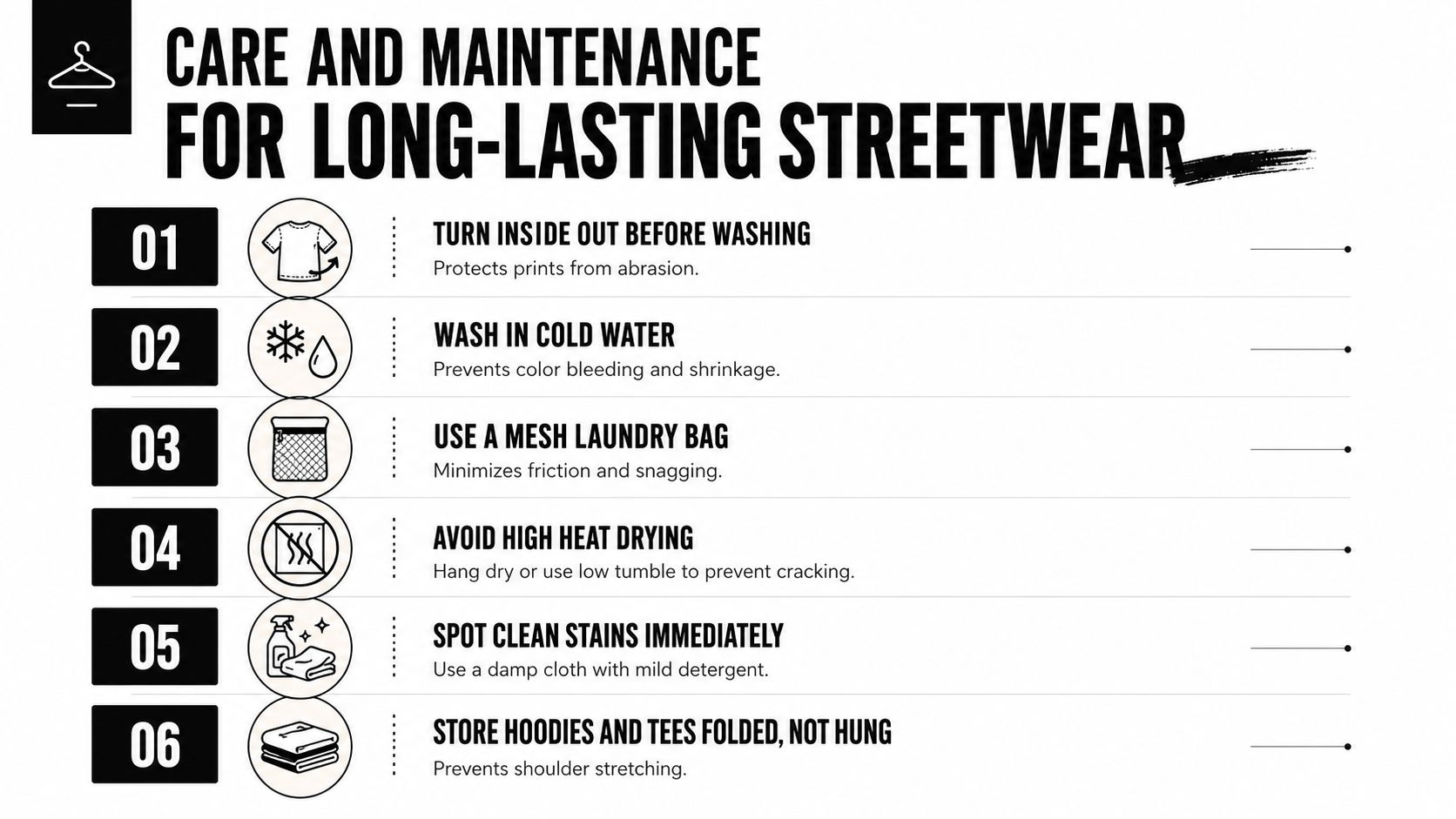
Turn tees inside out before washing so the graphic takes less abrasion. Wash in cold water. Use a mesh laundry bag if the shirt is especially printed or you're washing it with zippers and rough fabrics. Skip high heat drying and hang dry when you can, because heat is one of the fastest ways to crack prints and weaken structure.
Heavier tees hold their shape better over time, but only if you don't abuse them in the dryer. Fold hoodies and tees instead of hanging them for long storage, because hanging stretches the shoulders. Spot clean stains early with a damp cloth and mild detergent before they set.
Accessories need care too. Trucker caps should be spot cleaned, not thrown around with heavy laundry. Phone cases pick up grime fast, so wipe them down before the graphic starts looking dull and greasy.
The rule is simple. If the piece has a graphic you care about, wash it gently enough that the graphic still looks intentional after dozens of wears. That's how a cheap tee turns into a real staple instead of a disposable one.
Trending Market is built for the exact kind of streetwear aesthetic that works when the proportions are right and the graphics are doing real work. If you want affordable tees, caps, phone cases, and quarter-zips that make outfit building easier, visit Trending Market and shop the pieces that fit your rotation instead of filling your closet with clutter.