

You've got a closet full of plain tees, but the one that gets pulled every time is the faded graphic shirt that looks like it's been lived in for years. That's the appeal of retro graphic tees right now. They read fast, they carry attitude, and when you choose the right one, they look like you know exactly what you're doing.
Table of Contents
- Why Retro Graphic Tees Are Dominating Streetwear
- What Makes a Graphic Tee Feel Retro
- From Souvenir to Statement A Brief History of the Graphic Tee
- Finding Your Vibe Popular Retro Themes and Motifs
- How to Style Retro Graphic Tees for a Modern Wardrobe
- The Savvy Buyer's Guide to Authenticity and Quality
- Where to Find Great Retro Tees and How to Keep Them Looking Fresh
Why Retro Graphic Tees Are Dominating Streetwear
You see them on sidewalks, in music videos, and in every other scroll through your feed. Retro graphic tees work because they are easy to wear and they say something before you even speak. The best ones hit the sweet spot between nostalgia and current style, so they stay in streetwear while trendier pieces fade out.
The market side backs that up. A 2025 snapshot focused on retro gaming T-shirts put graphic tees at 32.5% of category share and $390 million in annual revenue MarketIntelo retro gaming T-shirt market report. That same reporting ties retro styling to broader demand, with sales climbing by 40% over the last couple of years and 2026 search growth for minimal graphic tees (+42%) and vintage graphics or retro typography (+33%) MarketIntelo retro gaming T-shirt market report.
Why the look lasts
Retro tees last because they are flexible. A band shirt can read grunge, clean streetwear, or archive-inspired depending on the rest of the fit. A car tee can feel like hobby gear or a fashion piece, depending on the print and the pants.
Practical rule: if a tee only works with one outfit, it is probably too costume-like to earn regular rotation.
The bigger point is simple. Retro graphics give people a visual language they already know, and the better versions feel lived-in without looking lazy. That balance is why the style keeps coming back in streetwear instead of getting stuck in a costume box.
What Makes a Graphic Tee Feel Retro
The retro feel starts with the shirt itself, not the print. A lot of modern tees chase the graphic and ignore the body of the garment, which is why they end up looking flat or too polished. The better retro graphic tees usually have more weight, more texture, and a less perfect silhouette. That's the difference between a shirt that looks styled and one that looks like it belongs in a real wardrobe.
Fabric and drape matter more than people think
Retro tees land better when the fabric has some substance. Industry guidance on retro styles points to heavier cotton bases, often around 230 to 300 gsm, plus pre-washing and ring-spun cotton to improve shape retention and reduce shrink and torque Alibaba retro T-shirts vs modern graphic tees guide. That is why these shirts hang differently. They do not cling like lightweight fashion tees, and they usually settle into a cleaner boxier shape.
Modern graphic tees often rely on lighter knits or cotton-poly blends. That makes them easier to produce at scale, but it also gives them a flatter, newer look. If you want retro energy, go for fabric that feels substantial in the hand without feeling stiff. It should drape with some body, not collapse the second you put it on.
Construction tells you a lot
Stitching gives away a lot about whether a tee feels old-school or just copied from it. Pre-mid-1990s shirts commonly used single-stitch sleeve and hem seams, while double-stitched seams usually point to later production or reproductions My Vintage UK vintage graphic tees guide. Older tees also tend to use heavier 100% cotton and period-correct tags, while lightweight, stretchy fabric is a warning sign for a modern replica.
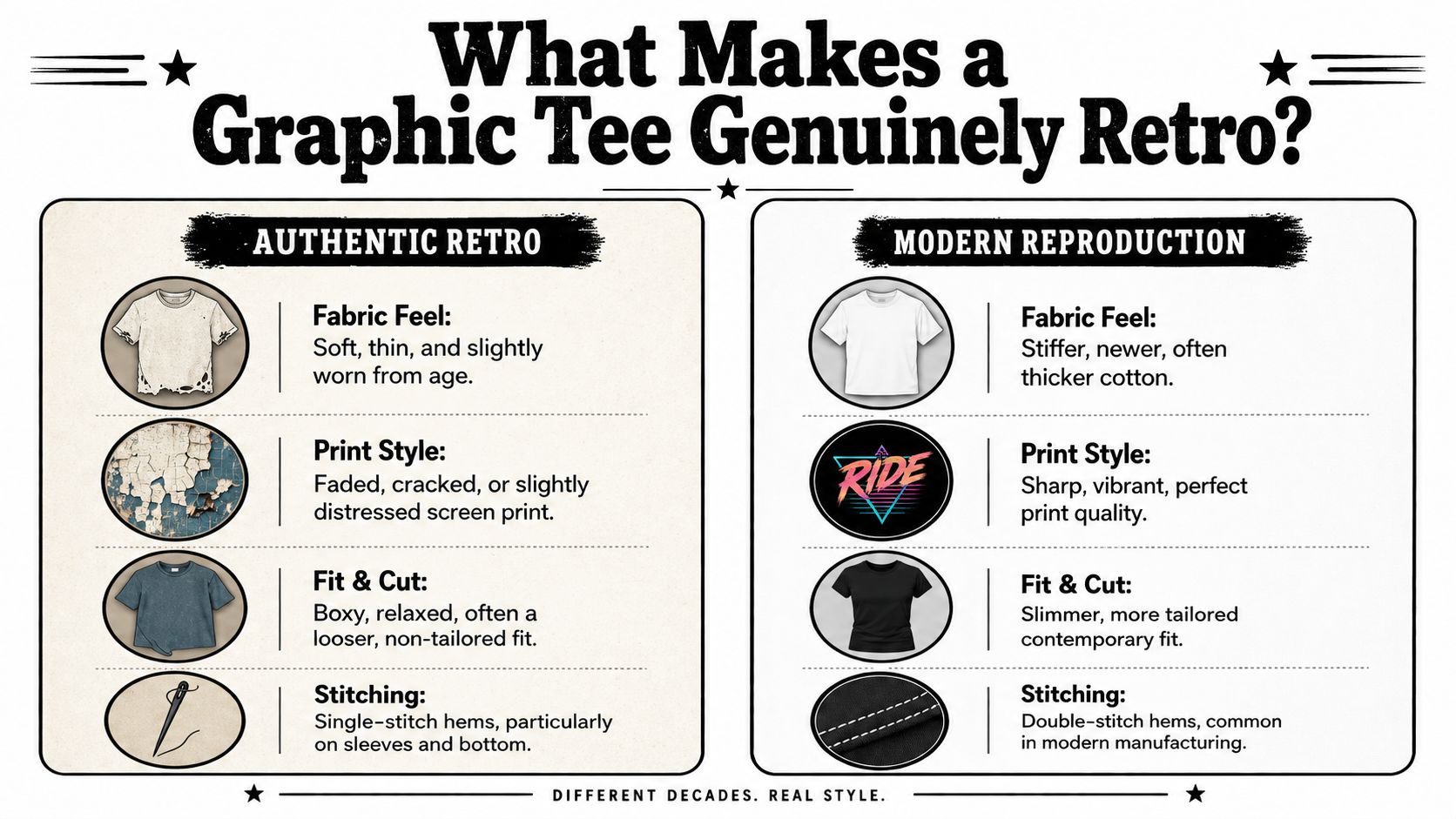
Simple read: heavy cotton, older stitching, and period-correct tags usually beat a perfect print on flimsy fabric.
A tee can look retro in a product photo and still feel wrong in person. If the fabric is thin, the neckline rebounds too sharply, and the seams look modern, you are buying the vibe, not the authentic experience. For hybrid nostalgia, the sweet spot is a tee that nods to the past without looking like a costume piece. Music, cars, and other familiar retro themes work best when the garment feels grounded, worn-in, and easy to style with today's pants and outerwear.
From Souvenir to Statement A Brief History of the Graphic Tee
The graphic tee did not begin as a fashion staple. It grew into one. A significant shift came when screen printing and Plastisol ink made printed T-shirts practical as commercial graphic apparel, not just souvenir pieces Heddels history of the graphic tee. Once that happened, the shirt stopped being a plain layer and became something people could repeat, sell, and wear as a visual statement.
Why the older shirts matter now
As soon as the tee became a real canvas, music, touring, and youth culture claimed it. Shirts tied to bands, tours, and specific scenes from the 1970s, 1980s, and 1990s picked up cultural weight, and older examples now hold real scarcity value in the resale market. Condition, age, and production details can shift value a lot, especially on shirts collectors recognize fast.
That is why authenticity cues matter so much. Single-stitch hems, original manufacturing tags, and decade-specific construction are not trivia. They separate a collectible shirt from a simple printed top.
The tee became cultural shorthand
People used the graphic tee to signal taste, scene, and allegiance. That is still true today. The difference now is that shoppers often buy the symbolism more than the archive, which is why retro styling lives in both the resale market and the streetwear rack.
The smart move is to treat the tee like a piece of visual history. Once you do that, the question stops being whether it is old enough and starts being whether it says anything worth wearing.
Finding Your Vibe Popular Retro Themes and Motifs
Not all retro graphics hit the same way. Some feel sharp and current. Others look like they belong in a theme party bin. The difference usually comes down to hybrid nostalgia, meaning a recognizable era paired with a niche that still has life now.
Choose a lane that already exists in culture
The strongest retro tees tend to cluster around a few clear signals, especially music, movies, cartoons, TV, wrestling, horror, and retail-brand nostalgia. That mix matters because people aren't searching for “retro” in a vacuum. They're looking for a cultural reference they already know how to wear.
Music is the easiest entry point. Band and tour graphics already carry built-in attitude, and they look even better when the print is slightly faded or the color palette is restrained. Automotive motifs work for the same reason, but they lean cleaner and more modular. A tee with a classic car, a motorsport reference, or a tuner-era silhouette feels more like streetwear than a costume when the artwork is sharp and the color story stays tight.
City motifs are another smart lane. They read local, not generic. A Brooklyn trucker cap or a city-name tee can feel like a real wardrobe piece because it signals place, not just nostalgia.
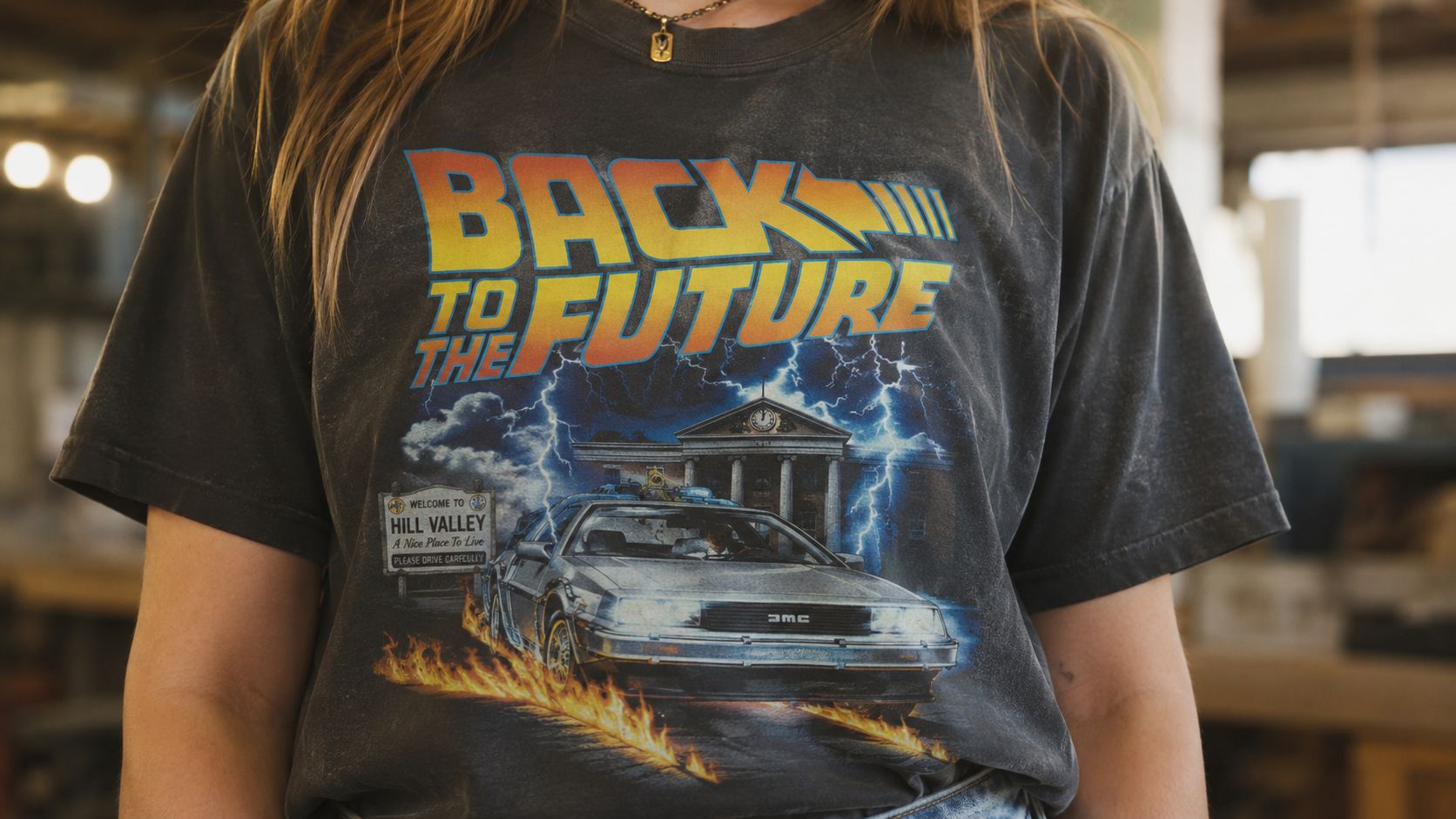
Go for specificity, not broad decade cosplay
The weak move is grabbing a shirt that says “80s” and stopping there. That usually reads lazy. The better move is to pair one era with one niche, like a music reference, a car culture cue, or a city identity. That makes the shirt feel intentional instead of borrowed from a costume rack.
Good filter: if the design needs a paragraph of explanation, it's too niche. If it only needs a logo, a car silhouette, or a city name, it usually works better in real outfits.
For streetwear, the best retro graphic tees are the ones that feel like they belong in your life now. The print can nod to another decade, but the overall message should still look current.
How to Style Retro Graphic Tees for a Modern Wardrobe
A retro tee works when the rest of the outfit keeps it grounded. If everything else is equally nostalgic, you end up looking like you raided a prop department. If you balance it with modern basics, the tee does the talking and the outfit still feels sharp.
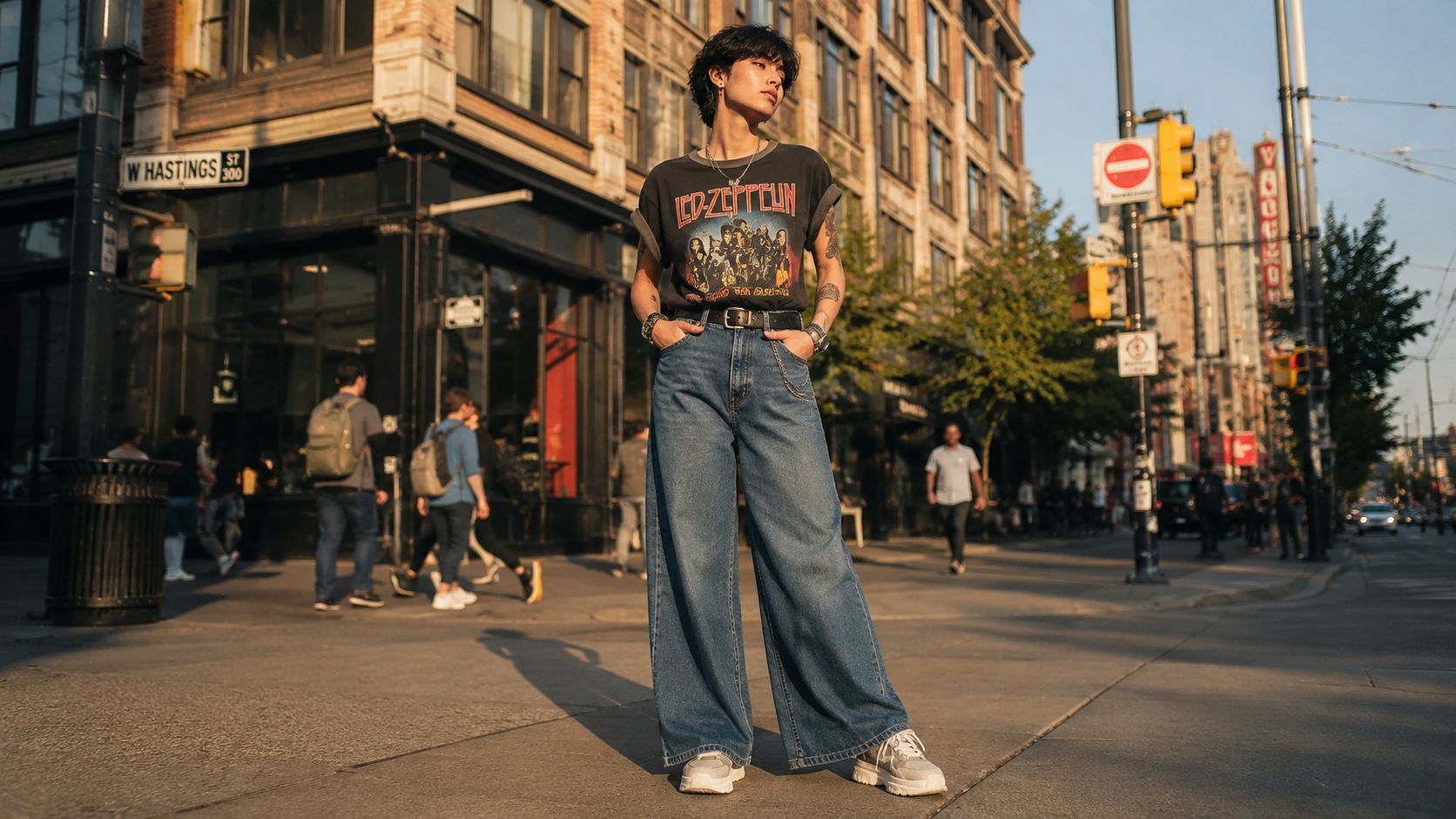
Three outfit formulas that actually work
Start with the easiest formula, a band tee, well-fitting trousers, and clean sneakers. The trousers kill the costume vibe, and the sneakers keep it relaxed. This works for dinner, a show, or any day you want the tee to feel intentional.
A second formula is automotive or motorsport graphics with workwear pants and a cap. Think straight-leg cargos, carpenter pants, or sturdy denim. The hard lines of the pants make the tee feel less precious and more street-ready.
The third move is oversized retro tee, relaxed jeans, and minimal accessories. Keep the wash tonal and avoid stacking too many references. One graphic, one denim tone, one clean shoe. That's enough.
Small choices change the whole read
Tucking matters. A full tuck can make a tee look too tidy, while a front tuck gives shape without killing the relaxed feel. Layering also helps. Throwing a zip jacket, overshirt, or lightweight outer layer over the tee makes the graphic feel like part of a fit, not a standalone poster.
Let the shirt be the loud piece. Everything else should support it.
You can also use contrast on purpose. A faded black tee with crisp trousers feels more grown-up. A vintage-style white tee with loose denim feels more laid-back. The point is to keep one foot in the present so the shirt doesn't overwhelm the rest of your look.
The Savvy Buyer's Guide to Authenticity and Quality
Buying retro graphic tees gets easier once you know what to inspect. New retro-style shirts and true vintage pieces solve different problems. New tees give you clean sizing and less risk. Vintage gives you character, but it asks you to care about condition and construction.
What to check before you pay
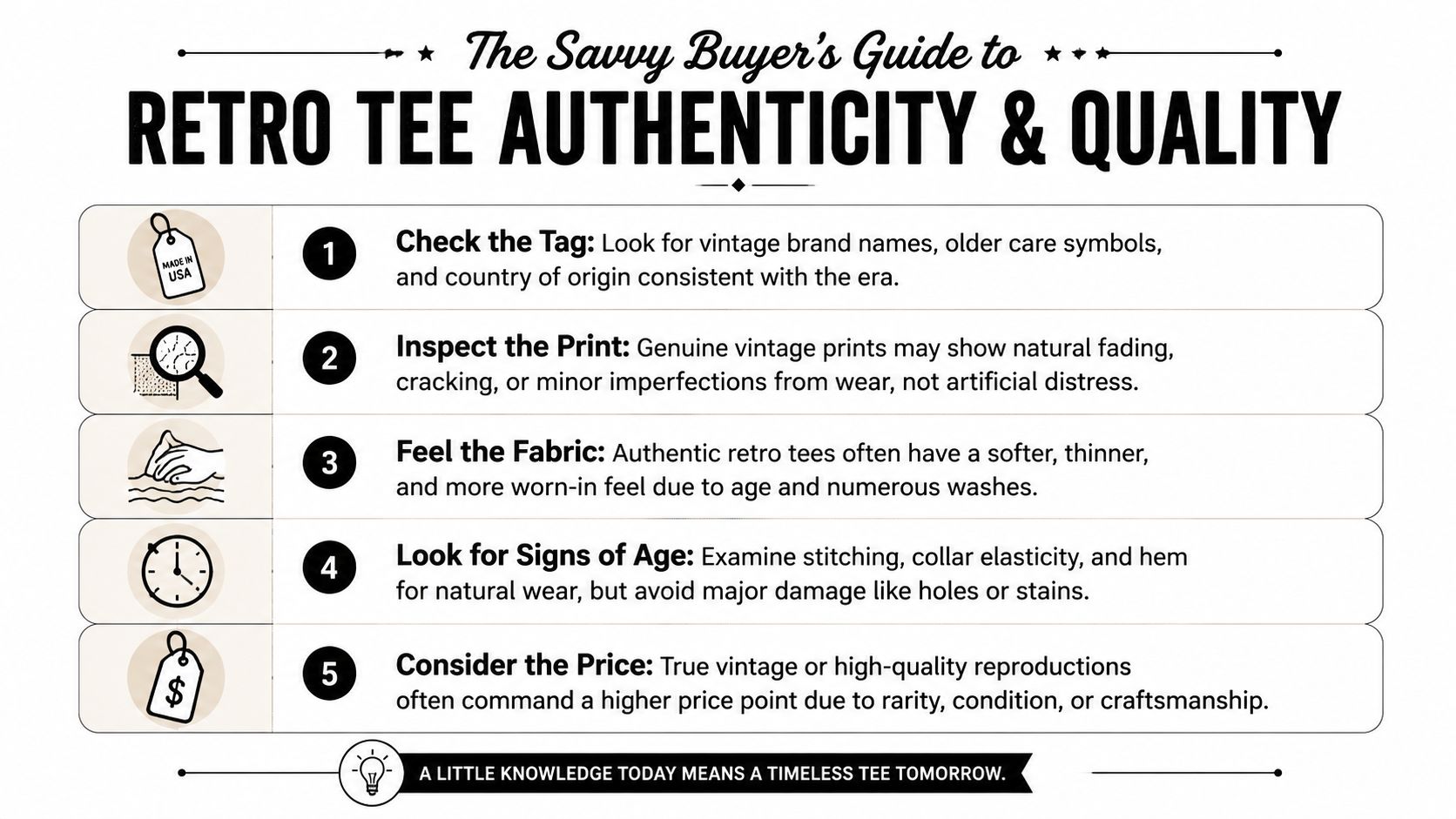
A good purchase starts with the tag. Look for brand names, care symbols, and country-of-origin details that match the era. Then check the print for natural fading or cracking, not fake distressing that looks sprayed on.
Feel the fabric next. Authentic older tees usually feel softer, thinner, and more broken in because they've been washed so many times. After that, inspect stitching, collar elasticity, and hems for age that looks natural rather than damaged.
- Check the Tag: Look for brand names, older care symbols, and origin details that fit the period.
- Inspect the Print: Natural fading and cracking beat artificial wear every time.
- Feel the Fabric: A worn-in hand feel usually tells you more than the product photos do.
- Look for Age, Not Damage: Some collar wear is fine, but holes and stains kill the piece.
- Judge the Price by Rarity: Higher prices can make sense when the shirt is rare, clean, and well made.
Buy for the use case, not the label
If you want a shirt you'll wear hard, a high-quality reproduction may be the better call. If you want the most character and you're comfortable paying for rarity, vintage is the move. The wrong choice is paying vintage money for a modern shirt that only looks old from a distance.
A quick sanity check helps. If the seams look modern, the fabric feels stretchy, and the tag looks generic, you're probably looking at a reproduction. That's not automatically bad. It just means you should price it like one.
Where to Find Great Retro Tees and How to Keep Them Looking Fresh
Start with search terms that say what you want. “90s single stitch band tee” is a much better search than “retro t-shirt” because it filters for construction, era, and category at the same time. The same logic works for movie tees, car tees, city tees, and tour tees.
Thrift stores and curated vintage marketplaces still make sense if you want one-of-one finds. Online shops are better when you want predictable sizing, easier returns, and less digging. If you care about fit more than hunting, buy from the source that gives you the cleanest product photos and measurements.
Keep the shirt looking right by washing it cold, turning it inside out, and skipping aggressive heat. High heat is how prints crack faster and cotton shrinks or twists out of shape. Air drying is the safest play, especially on heavier tees with screen prints.
Care rule: treat the print like a graphic surface, not like plain cotton.
Fold instead of hanging if the neckline is already soft. Hanging heavy shirts can stretch the shoulders over time. If you've got a true vintage piece, wash it less often and only when it needs it.
If you want retro graphic tees that feel street-ready instead of overworked, Trending Market is a strong place to start because its graphics lean into music, automotive, and city references that already fit modern wardrobes. Visit Trending Market and use this guide to pick the right print, the right fit, and the right outfit around it.