

You're likely following a pattern common to first-time online streetwear shoppers. One tab has a clean graphic tee that looks perfect in the product photo. Another has a washed hoodie with just the right faded texture. A third is selling something “limited” and “exclusive,” but the site feels sketchy, the fabric details are vague, and you can't tell whether you're buying a good piece or an overpriced blank with a print on it.
That's the gap most streetwear guides don't solve. They'll tell you which labels are cool, which drops sold out, and which collaborations broke the internet. They're much less helpful when your real question is simpler: what's worth buying if your budget for a tee is in the $20 to $40 range?
That's where online streetwear gets interesting. The best shops in this space don't just sell clothes. They sell signals. Music references, city pride, motorsport nostalgia, skate energy, washed textures, loud back graphics, simple caps that sharpen an otherwise basic outfit. But the smart move isn't chasing every hype item. It's learning how to spot quality, understand the trade-offs, and build a rotation that feels like you.
Table of Contents
- What Is an Online Streetwear Brand
- The Hallmarks of Modern Online Streetwear
- How to Judge Quality and Authenticity
- Decoding Streetwear Prices and Shopping Smart
- Styling Streetwear Essentials and Finding Gifts
- Where to Find Brands That Fit Your Budget and Vibe
- Your Next Steps in Building a Streetwear Collection
What Is an Online Streetwear Brand
An online streetwear brand is more than a website that sells hoodies and graphic tees. It's a digital storefront for a point of view. Sometimes that point of view comes from skate culture, sometimes from rap and tour merch, sometimes from car scenes, city identity, punk graphics, or vintage sportswear references.
That's why streetwear feels different from basic apparel. A plain tee is just a tee. A washed oversized tee with a cracked graphic, a tour photo, or a recognizable automotive reference says something about what you're into before you speak. The clothes work like shortcuts for taste.
Culture first, storefront second
The best online streetwear brands understand that people aren't just buying coverage or comfort. They're buying into a world. That world might be loud and collectible, built around limited drops and resale chatter. Or it might be simple and wearable, built around affordable staples that still carry personality.
Either way, the online part matters. The website becomes the brand's stage, shop, archive, and community touchpoint all at once. Product photos, lookbooks, launch timing, email drops, sold-out banners, and even the way items are categorized all shape how the brand feels.
Streetwear works best when the product feels like wearable culture, not generic stock with a logo pasted on top.
Some brands go hard on scarcity. Others win by making accessible pieces that slot into daily outfits without feeling watered down. Both can be real streetwear. The difference is whether the brand has a coherent visual language and a clear sense of who it's for.
Three patterns worth recognizing
If you're trying to understand what separates online streetwear brands from ordinary online clothing stores, start with these signals:
- A distinct visual identity. You should be able to recognize the brand's references fast. Maybe it leans into faded Y2K washes, racing graphics, city names, or music imagery.
- Product pages that sell a mood. Good streetwear stores don't just list color and size. They make you understand how the piece fits into a style world.
- A tighter assortment. The best smaller stores usually don't try to be everything. They go deep on a lane and make shopping feel focused.
Streetwear also sits at a different emotional temperature than ordinary basics. People talk about pieces, wait for them, compare washes, debate graphics, and build outfits around one strong item. Even at the entry level, that energy matters.
The Hallmarks of Modern Online Streetwear
Open three tabs from different streetwear stores in the $20 to $40 range and the surface starts to look similar fast. Heavy graphic tees, washed hoodies, oversized fits, moody product shots. The difference shows up in whether the brand is building a real point of view or just copying the visual shorthand.
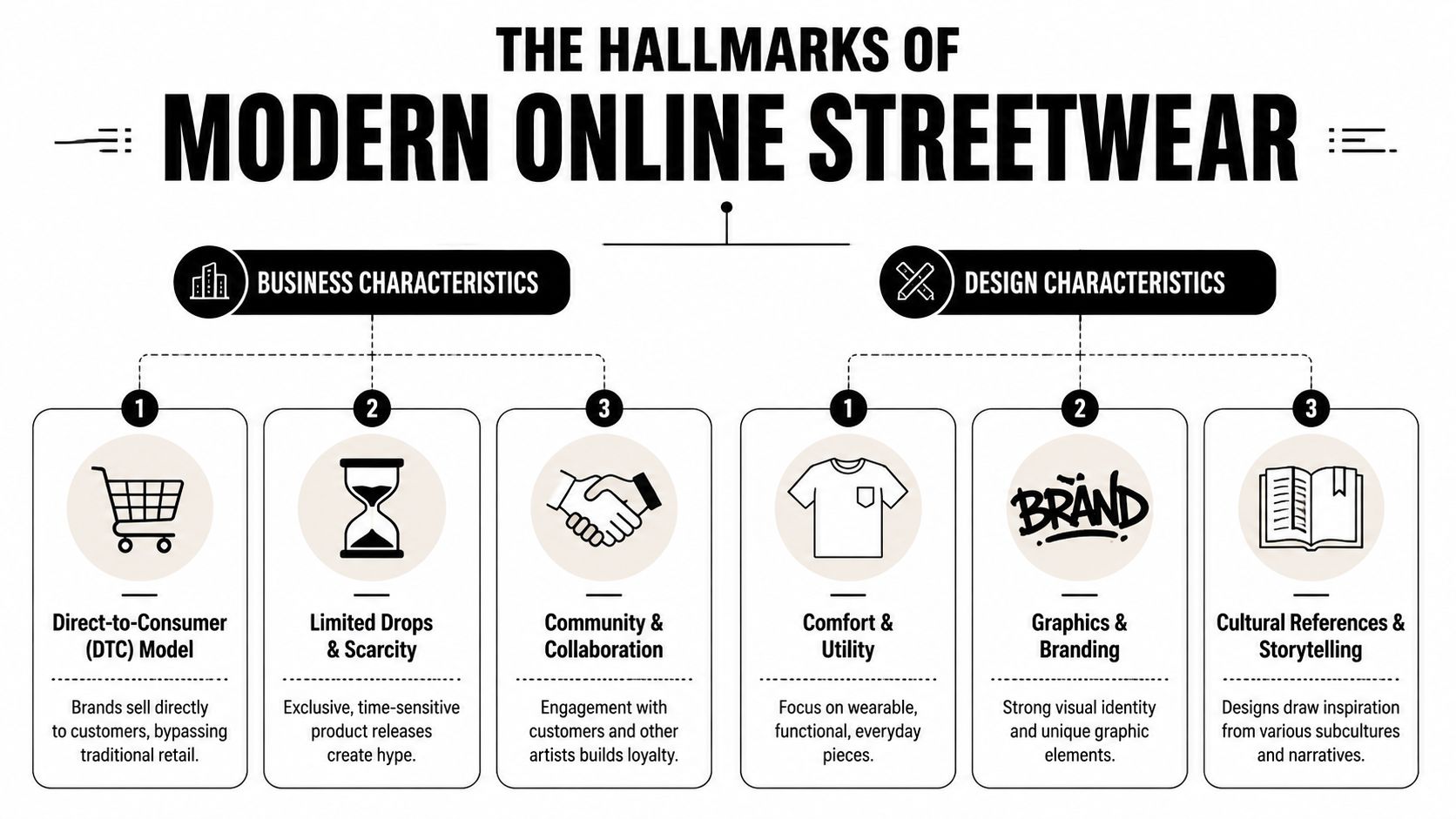
Good online streetwear brands sell more than a garment, but the product still has to hold up. That matters even more at the entry level, where shoppers are trying to get the look without spending luxury money. A strong brand in this range usually balances three things well. A clear visual identity, a release strategy that creates interest, and pieces that still make sense as everyday clothes.
Culture first, product close behind
Streetwear online is shaped by timing, references, and presentation. A standard apparel store uploads new stock and waits for conversions. A streetwear brand treats a release like a small event, with a tighter edit, sharper styling, and enough context to make the drop feel connected to a scene.
That can come from music, skating, motorsport, anime, regional pride, club graphics, or old sportswear codes. The best versions feel specific. The weaker ones feel like an algorithm assembled them.
For budget-conscious shoppers, this is a useful filter. If a store puts all its energy into hype language but the clothes themselves look flat, thin, or badly proportioned, the brand is selling mood harder than product.
Three patterns worth recognizing
The first pattern is controlled scarcity. Small-batch drops, limited colorways, and short preorder windows can make a brand feel sharper and more intentional. They can also be a practical way for smaller labels to avoid overproducing inventory. The trade-off is obvious. Scarcity creates excitement, but it can also hide inconsistency if every release is too brief for buyers to compare quality over time.
The second is collaboration and crossover. Streetwear gets energy from other scenes. Artists, tattooers, DJs, local photographers, illustrators, and niche communities often shape the strongest capsules. Good collaborations add a fresh visual language or a real subcultural link. Weak ones just stack logos and call it a concept.
The third is design discipline. The better stores do not throw every trend into one collection. They repeat certain silhouettes, fabric finishes, print placements, and references until the brand feels recognizable.
| Design cue | What it signals |
|---|---|
| Bold graphics | Strong identity and a piece that can carry an outfit |
| Washed or faded fabric | Texture, softness, and a worn-in feel |
| Oversized or boxy fit | Current proportions and easier layering |
| Back prints | Visual impact from a simple base garment |
| Cultural references | A connection to a scene, hobby, city, or era |
In the $20 to $40 bracket, these cues matter because they often do the heavy lifting. A tee at this price will not compete with premium Japanese jersey or luxury cut-and-sew construction. It can still look excellent if the proportions are right, the graphic placement is considered, and the wash gives the piece some depth.
One practical rule helps cut through the noise.
Practical rule: if the brand identity disappears when you remove the logo, the store probably has not built much of a world.
The strongest online streetwear brands make the visuals, pricing, and product choices work together. You see it in a collection that feels edited instead of bloated, in graphics that match the garment, and in pieces that look good on a product page and still make sense with cargos, denim, or a plain hoodie you already own.
How to Judge Quality and Authenticity
Shopping streetwear online gets tricky because you can't touch the fabric, check the inside seams, or see how the print sits after a wash. So you have to learn to read a product page the same way a buyer or production person would.
Read the product page like a buyer, not a fan
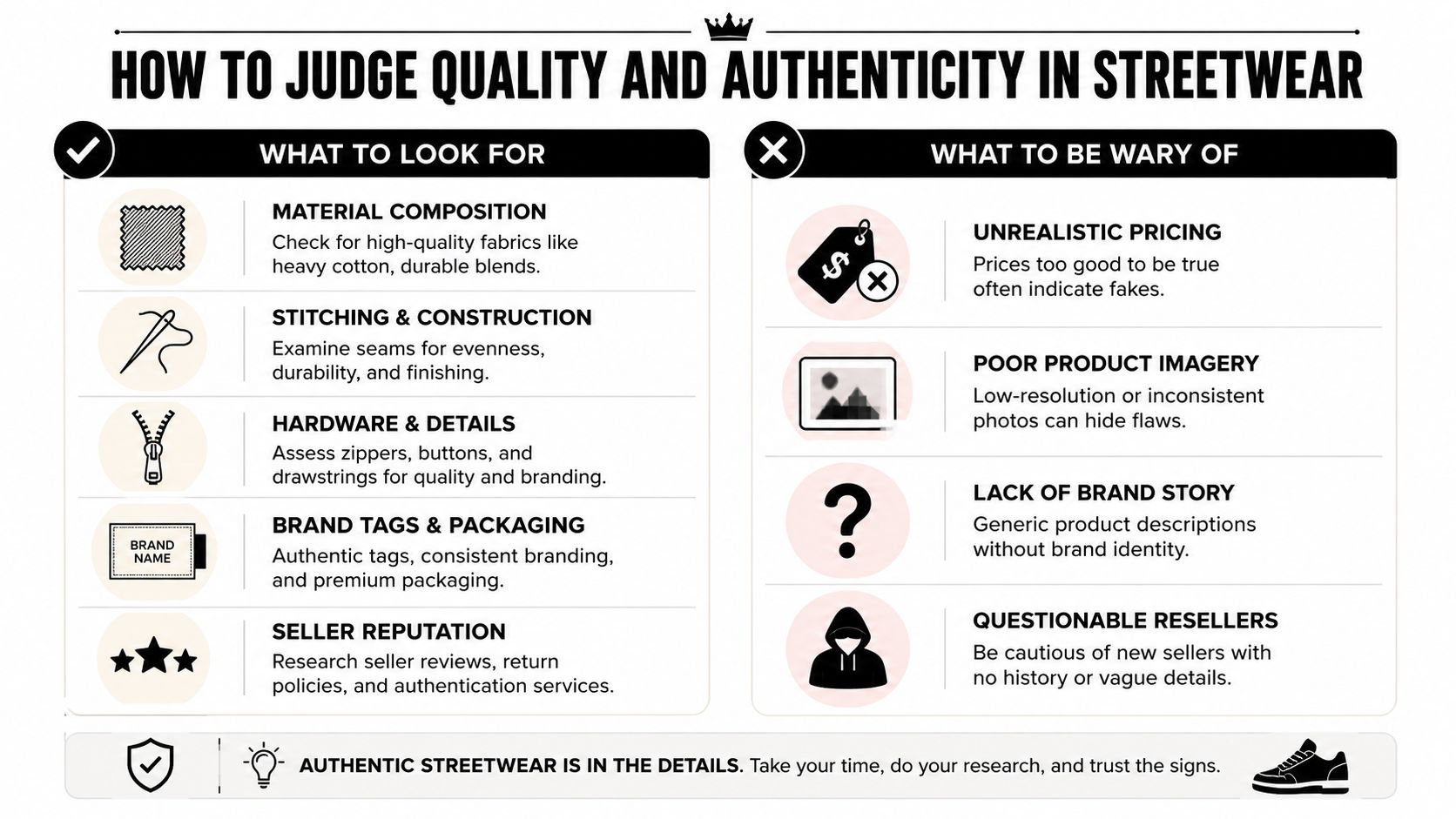
Start with the fabric description. If a brand gives you almost no information beyond “premium cotton” or “high-quality material,” that's weak. It doesn't always mean the product is bad, but it means you're being asked to trust the vibe instead of the garment.
What usually helps:
- Fabric specifics. Cotton, cotton blend, fleece, jersey, washed finish. The more concrete the language, the better.
- Fit details. Oversized, cropped, boxy, relaxed, true to size. Streetwear fit matters almost as much as the graphic.
- Close photos. You want to see texture, collar shape, hems, print edges, and how the item falls on a body.
- Policy pages. A store that bothers to publish shipping, refund, and contact details is usually more serious than one that hides behind aesthetic minimalism.
One detail that matters more than people think is the wash or finish. In the U.S. market, “oversized acid wash tee” holds a Trend Score of 94, while “vintage washed cotton” scores 82 and “fuzzy hoodie” textures score 87, according to SourceReady's United States streetwear market report. That tells you these finishes aren't decoration alone. They help justify the purchase because they visibly change how the piece looks and feels.
Know what printing and fabric choices mean
Printing technique affects both appearance and durability. For budget-friendly graphic tees, DTG and DTF printing have changed the game by making complex, vibrant artwork possible at accessible prices like $19.99 to $39.99, as explained in Printify's streetwear fashion trends article. That's why you see so many sharp, detailed back prints and photo-heavy graphics on lower-priced tees now.
Here's the trade-off in plain terms:
- DTG or DTF works well for detailed art, color gradients, and short-run graphics.
- Embroidery usually feels more premium and lasts longer, but it costs more and changes the visual style.
- Plain blanks with weak printing don't become good value just because the price is low.
If a tee sits in the budget range, I don't expect luxury construction. I do expect the brand to make smart compromises. Good art, decent blank, solid fit, clear product photos, and honest descriptions. That's a fair deal. A vague “heavyweight” claim with no evidence usually isn't.
A smart budget buy doesn't need to be perfect. It needs to be honest about what it is.
Quick red flags that usually signal low effort
A lot of low-effort stores follow the same pattern. The site looks trendy, but the details collapse when you inspect them.
Watch for these signs:
- Inconsistent product images. Different lighting, different mockup styles, or graphics that look digitally pasted on.
- No close-ups at all. If you can't see fabric texture or print finish, the brand may be hiding something.
- Generic naming. “Streetwear Tee” tells you almost nothing. Strong stores usually give products a clear identity.
- Thin transparency. No contact page, no return policy, no shipping explanation, no sizing guidance.
- Overheated marketing copy. If every item is “luxury,” “exclusive,” and “premium” without specifics, that language stops meaning anything.
Authenticity also includes whether the brand feels real as a brand. Does it have a recognizable style language, or is it just pulling images from whatever trend is hottest that week? The good stores don't need to scream credibility. They show it through consistency.
Decoding Streetwear Prices and Shopping Smart
Price in streetwear can be useful information, but it's a terrible shortcut. Expensive doesn't automatically mean better. Cheap doesn't automatically mean fake. What matters is whether the product, presentation, and construction line up with the asking price.
What the entry price really gets you
The $20 to $40 range is where a lot of buyers start, and for good reason. It's accessible enough to try a graphic-heavy style without committing to collector pricing. It's also the range where brands can deliver a visually strong piece, especially when they use modern print methods and keep the garment category simple.
But this range has real trade-offs. Research cited by Weavabel says 78% of streetwear buyers under 25 prioritize price over brand origin, and 63% of entry-level graphic tees from non-transparent online stores use low-grade 150 to 180 GSM blends that degrade after 10 washes, as noted in Weavabel's article on standing out in a saturated streetwear market. That's the catch. Affordable shopping works best when the store is transparent. If it isn't, the odds of getting a weak blank go up fast.
A good budget tee should feel like a deliberate purchase, not a disposable one. You're paying for design, fit, and wearability. You are not paying for heirloom-level construction.
How to shop without getting burned
When you're deciding whether an online streetwear store deserves your money, use a simple filter:
- Check the checkout flow. Familiar, secure storefront infrastructure matters.
- Read the policy pages. Refund, shipping, privacy, and contact pages should be easy to find.
- Look for consistency. Same aesthetic, same quality of imagery, same tone across the catalog.
- Don't get hypnotized by “sale” language. A fake markdown doesn't create real value.
- Prioritize pieces you'll wear often. A graphic tee you can style five ways beats a louder item that only works once a month.
If a store makes it easy to understand what you're buying, how it fits, what it costs, and how returns work, that's already a strong sign. Trustworthy shopping often looks a little less flashy and a lot more clear.
Styling Streetwear Essentials and Finding Gifts
You spot a tee in the $32 range, add it to cart, then hesitate. Will it work with what you already own, or will it become another impulse buy that looks good once and then sits in the drawer? That is the key styling question for budget streetwear. The best pieces in this price range earn their place by being easy to wear, easy to repeat, and distinct enough to give an outfit some identity.
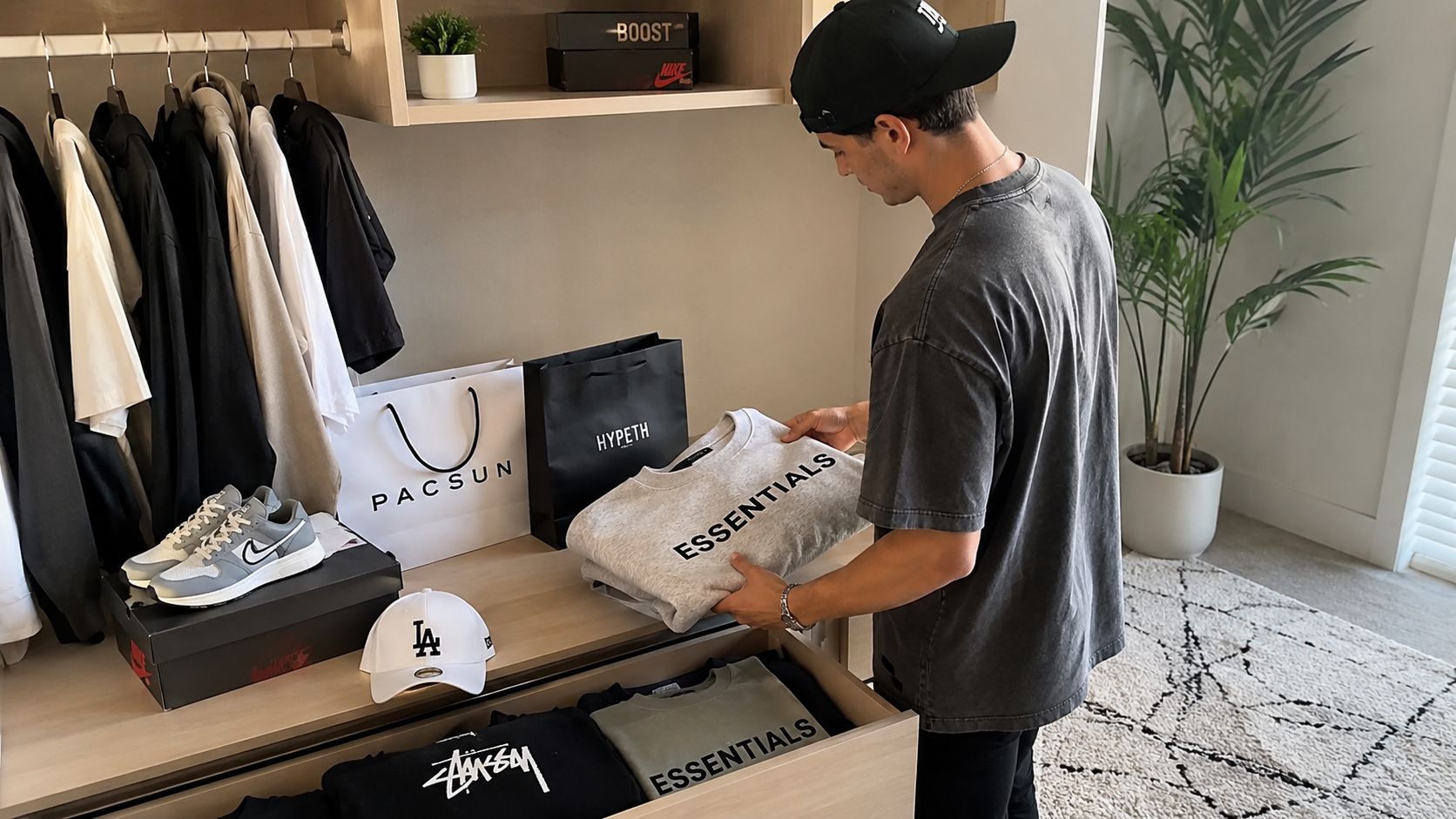
Shoes still pull attention first, but for practical shopping, tops and accessories do more work per dollar. A good graphic tee, cap, or quarter-zip changes the mood of an outfit without forcing a full wardrobe reset. That matters if you are trying to build style on a real budget instead of chasing expensive statement pieces.
The low key creative
A washed graphic tee, straight-leg denim, and a neutral overshirt is still one of the safest wins in streetwear. It has enough texture and personality to feel styled, but it does not look forced. Music references, faded photo prints, vintage sports graphics, and small chest hits usually work better here than oversized artwork trying to dominate the whole fit.
Restraint matters.
If the shirt carries the visual weight, keep the rest clean. Plain sneakers, simple jewelry, and one solid outer layer usually beat stacking logos on top of logos. In my experience, this is also where cheaper streetwear can look better than it costs. A well-faded tee paired with solid basics often reads more intentional than a loud $90 top with weak styling around it.
The easiest strong streetwear outfit is one graphic focal point with everything else kept under control.
The city uniform
Some outfits need to survive a full day, not just a mirror check. A city cap, relaxed cargos, a graphic tee, and a light zip layer handle that job well. The formula works because every piece has a purpose. The cap sharpens the look, the cargos add shape, and the extra layer gives the outfit some depth without making it heavy.
This is one of the better lanes for online shopping in the $20 to $40 range. Caps and tees are easier to size than pants or outerwear, and they make solid gifts because the risk is lower. If you know someone's general taste, a clean trucker cap or an understated city graphic usually has a better hit rate than buying them a complicated cut-and-sew piece.
For a quick visual refresher on modern styling cues, this video is useful:
The weekend uniform
Automotive graphics, washed black denim, and a chunkier sneaker make sense together for a reason. The references are familiar, the palette is easy to control, and the outfit already has an anchor. A BMW-inspired tee or motorsport graphic can carry a look without much help, especially if the rest of the outfit stays dark and simple.
That trade-off is worth understanding. Recognizable graphics are easy to style, but they can also feel dated faster than cleaner designs. If you are buying on a budget, pick references you would still wear six months from now, not just something loud enough to grab attention today.
The easy gift move
Good streetwear gifts sit in the overlap between useful and expressive. The goal is not to buy the wildest item. The goal is to buy something the person will wear twice a week.
A short list that usually works:
- Graphic tees with music, automotive, sports, or city references that match the person's interests
- Trucker caps because sizing is simple and repeat wear is high
- Phone cases for a lower-cost pick that still feels tied to personal style
- Simple quarter-zips or lightweight tops if you already know how they like their fit
The smartest gift is usually the one that fits into someone's current rotation without effort. In streetwear, value is not just about price. It is about how often a piece gets worn.
Where to Find Brands That Fit Your Budget and Vibe
Finding online streetwear brands used to feel like a social media game. Follow enough accounts, scroll enough reels, and hope the algorithm drops the right store in your lap. That still happens sometimes, but it's not the most reliable way to discover good brands anymore.
Stop relying only on the feed
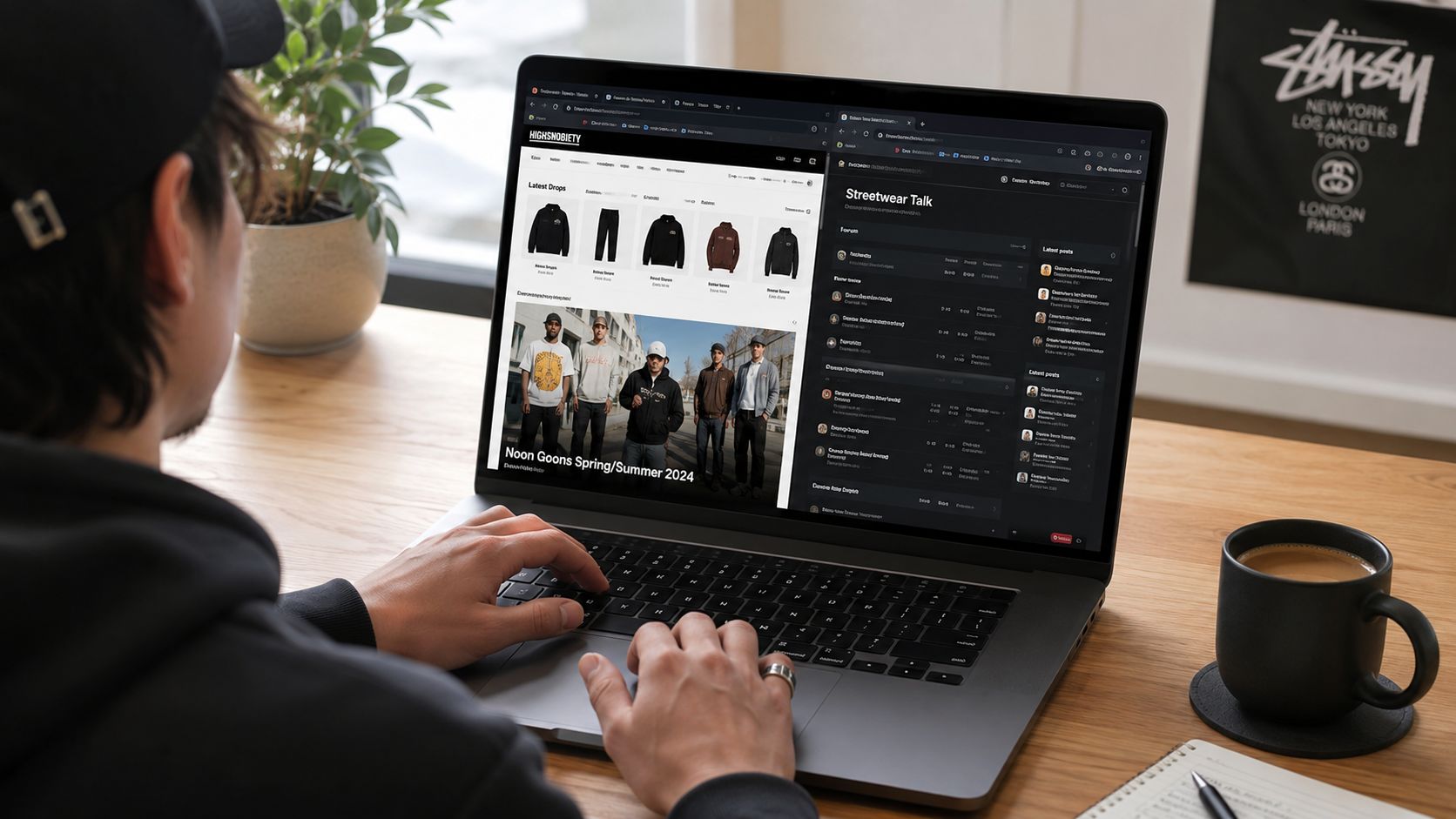
A more useful pattern has emerged around community. Streetwear discovery has shifted toward Discord servers and newsletters, which can offer drop access 3 to 5 days before social posts, and 42% of new buyers miss drops when they rely only on algorithmic feeds, according to Vistoya's roundup of independent streetwear brands in 2026. That rings true because the feed is crowded, inconsistent, and designed to reward attention, not clarity.
If you want to buy well, not just browse well, community channels are better. Newsletters tell you what's launching. Discord communities tell you what's worth caring about. Both give you context that a random social post rarely does.
Here's a better discovery stack:
- Brand newsletters for launch timing and early access
- Discord communities for fit pics, reactions, and honest product talk
- Curated niche stores for focused browsing
- Your own taste history for filtering hype from impulse
Why curated stores work better for most people
Most shoppers don't need infinite choice. They need a clean lane. If your style lives around graphic tees, trucker caps, phone cases, and a few casual layers, a tightly curated store is often better than a giant catalog trying to serve every trend at once.
That's especially true for budget-conscious buyers. A narrow price band helps you compare products faster. Clear categories like bestsellers, new arrivals, and featured picks reduce friction. Theme-driven products, like music graphics, automotive references, and city motifs, make it easier to know whether a store fits your vibe within a few clicks.
The best shopping experience isn't the one with the most options. It's the one that helps you recognize your style quickly.
A practical test helps here. Open a store and ask three things fast: Do I understand the aesthetic? Do I understand the price level? Do I understand what kind of person this store is for? If the answer is yes, you're probably in the right place. If everything feels random, the store probably is.
Your Next Steps in Building a Streetwear Collection
A good streetwear collection doesn't come from buying the most expensive pieces or copying whatever sold out last week. It comes from getting sharper with your choices. Learn how to read product pages. Pay attention to wash, fit, and print quality. Favor stores that are clear about what they sell and how they sell it.
Start small. One strong graphic tee can do more for your rotation than a pile of forgettable impulse buys. A cap with the right city reference or a textured hoodie in a fit you'll wear can become the piece that makes the rest of your closet click.
If you're shopping in the budget range, don't think of that as a compromise. Think of it as a filter. It forces you to care about value, not just hype. That usually leads to better style in the long run.
Streetwear is at its best when it feels personal. Not performative. Not overcurated. Just a set of pieces that reflect what you're into and make getting dressed more interesting.
If you want a straightforward place to start, Trending Market is worth a look. The store keeps things focused around graphic T-shirts, caps, accessories, and easy top layers with music, automotive, and city-inspired motifs, all in an approachable price band. That kind of tight edit makes it easier to shop for your own rotation or pick up a gift without falling into the usual online streetwear rabbit hole.