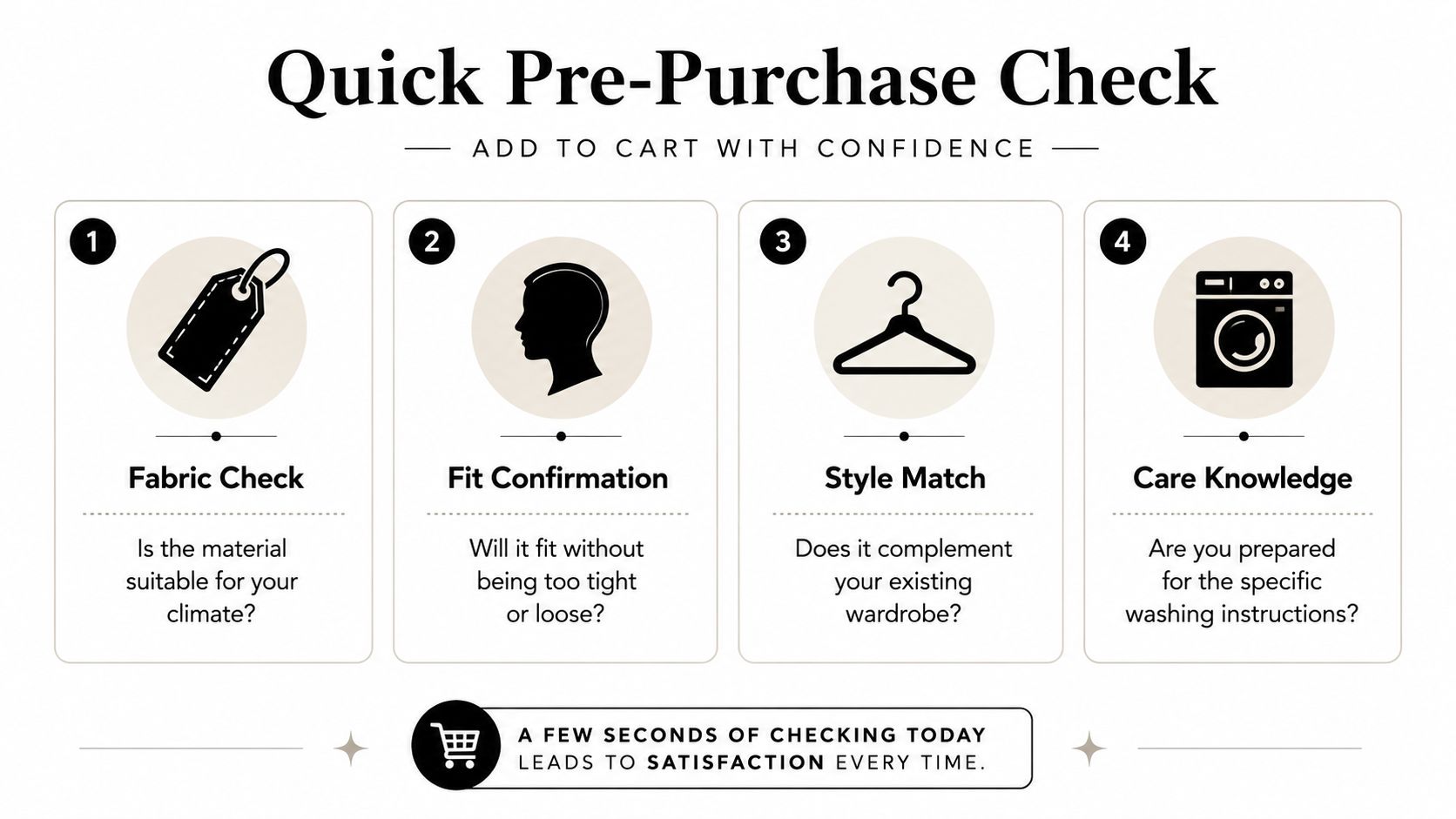
Leopard print beanies get sold like they're an instant outfit upgrade. They're not. On the wrong head, with the wrong texture, and next to the wrong coat, they read like a leftover costume piece from a theme party nobody planned properly. The print has history, though, and that matters. Leopard moved from luxury fur and runway shorthand into a printed motif that could live on accessible accessories, including hats, after the shift historians point to in the 20th century and the 1973 ban on leopard skin use (Ohio State fashion history).
The smarter way to wear one in 2026 is to treat it like a styling problem, not a print problem. The beanie sits close to your face, competes with your hair, and changes the balance of your whole outfit before you even zip your jacket. If you've ever tried one on and immediately felt too loud, that wasn't in your head. It was probably contrast, scale, or fabric hand-feel doing exactly what they do.
Table of Contents
- Why a Leopard Print Beanie Is Harder to Wear Than It Looks
- What to Check Before You Buy
- Five Outfits That Actually Work With the Print
- Fit, Hair, and the Questions Most Listings Skip
- Acrylic Versus Wool Blends and What That Means for Price
- Caring for the Print and the Shape
- A Quick Checklist Before You Add It to Cart
Why a Leopard Print Beanie Is Harder to Wear Than It Looks
Leopard print isn't the issue. Placement is. On a coat or bag, the pattern can sit as a separate statement. On a beanie, it lands right next to your face, so the print has to play nicely with your skin tone, hair texture, and outerwear all at once.
That's why the loudest version often looks the least wearable. A high-contrast beanie with oversized spots can overpower the face, especially if the rest of the outfit is already busy. A lower-contrast knit, or even a softer tonal version, usually looks more grown-up because the hat becomes part of the outfit instead of the entire conversation.
Think in scale, contrast, and distance
Use a simple mental model before you buy. Scale is how large the spots feel. Contrast is how sharp the dark and light areas are. Distance is how close the print sits to the parts of you people notice first, which in this case is your face and hairline.
If the hat has giant, sharp spots, it reads bolder. If the spots are smaller or fuzzier, it reads less aggressive. If the knit is soft and the contrast is muted, the beanie can feel like a texture choice instead of a shout.
The quickest way to make leopard feel expensive is to let one thing be loud and everything else stay calm.
That's the rule I'd use in 2026. Not “more leopard,” not “bigger spots,” just better balance. Once you see the beanie as a close-up accessory rather than a random cold-weather add-on, the styling choices get way easier.
What to Check Before You Buy
The product page usually shows the print and the pose, then skips the part that decides whether you'll wear it. Start with the knit, the stretch, and the size logic. Those three details tell you whether the hat will sit right, flatter your face, and hold up after more than one cold morning.
Read the knit like a fit chart
For most leopard print beanies, the practical spec is the knit package. A good listing spells out the fiber mix, the finished dimensions, and the shape of the cuff, because that tells you more than the styling photo ever will. Some versions use 100% acrylic or acrylic-heavy blends, while others lean into wool blends for a warmer hand-feel and better drape. A product spec reference from Trendsi shows the kind of details worth checking before you buy.
One-size beanies live or die on elastic recovery, not tailoring. If the knit does not spring back cleanly, the hat can sag, creep up, or press too hard at the forehead. Fit can also vary more than the product photo suggests, so a hat that looks relaxed online may land awkwardly once it is on your head.
Use a fast size check before checkout
Look for size language like 56 to 60 cm or a similar head-circumference range. That is the range you want to compare against your own measurement, not the vague promise of “one size.” If you fall far outside the middle of that band, the fit risk goes up fast.
A simple sanity check works better than guesswork:
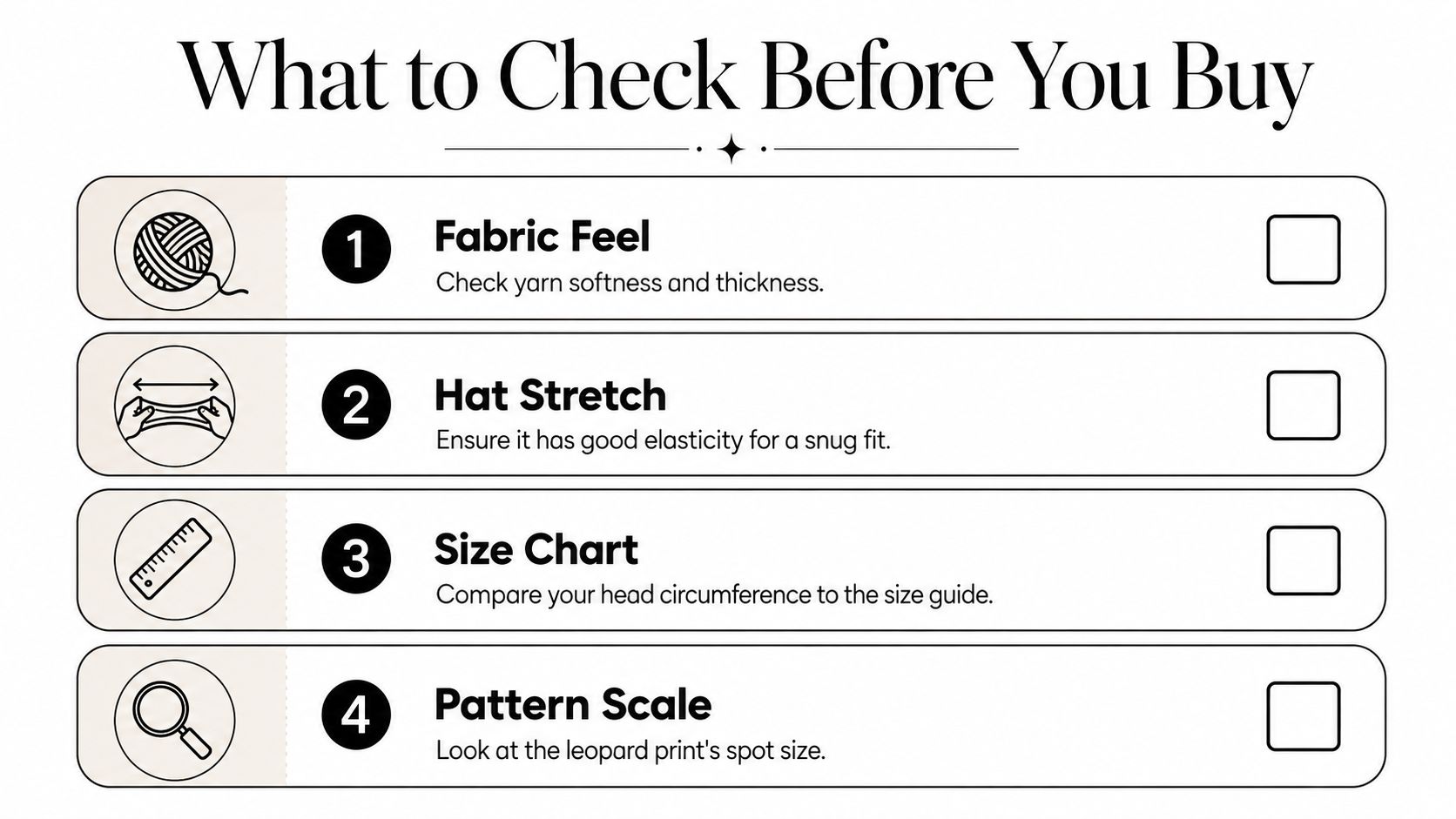
- Fabric feel: The knit should feel soft enough for repeated wear, not stiff like a cheap costume prop.
- Stretch recovery: Pull the cuff, release it, and see whether it snaps back cleanly.
- Circumference: Compare the flat and doubled measurements to the size chart.
- Pattern scale: Zoom in on the spots and decide whether you want subtle texture or a louder statement.
I would also check the hand-feel against what you already own. A beanie that feels scratchy in the listing usually feels worse after a full day, especially if you wear it over a fresh blowout, curls, or a low bun. The right leopard print beanie should look intentional and feel easy enough to grab on the way out the door.
Five Outfits That Actually Work With the Print
The mistake many make is trying to “match” the hat. Don't. A leopard print beanie works when the rest of the outfit gives it a job. Sometimes it anchors a look, sometimes it breaks up too much black, and sometimes it adds the only texture worth noticing.
Start with the safest outfit formulas
Oversized black hoodie with vintage denim is the easiest entry point. The beanie anchors the top half so the hoodie doesn't feel lazy, and the denim keeps the look from drifting into gym territory. This is the safest pick for first-time wearers because the palette is already doing the heavy lifting.
Cream knit sweater with cargos works when the beanie adds contrast without turning harsh. The cream softens the print, and the cargos keep it street. If the leopard is low-contrast, this combo feels polished instead of loud.
Leather jacket over a band tee is where leopard gets sharper. The beanie echoes the attitude of the jacket and adds another hard texture, so this is the one for people who already wear obvious pieces comfortably. Don't pile on other prints here unless you want the look to feel dated.
Counterintuitive but true: the all-monochrome neutral fit is often the best backdrop for leopard. Black, charcoal, stone, or taupe lets the hat read as the only accent, which makes it look deliberate instead of random.
All-monochrome neutrals are my favorite styling move for the office or brunch because the outfit looks edited. The beanie becomes the punctuation mark. That's cleaner than trying to force it into a busy graphic-heavy fit.
A sporty track set gives the beanie a very current, off-duty feel. It works because the hat borrows the set's casual energy, then adds a little pattern punch. Keep the shoes simple, or the whole thing starts to look try-hard.
| Base outfit | Beanie's role | Risk level |
|---|---|---|
| Oversized black hoodie and vintage denim | Anchoring | Low |
| Cream knit sweater and cargos | Contrasting softly | Low to medium |
| Leather jacket and band tee | Adding edge | Medium |
| All-monochrome neutral fit | Acting as the accent | Low |
| Sporty track set | Echoing casual texture | Medium |
If you want the one formula I'd hand to a friend who doesn't trust animal print, it's the black hoodie and denim combo. It works in real life, not just in photos.
Fit, Hair, and the Questions Most Listings Skip
Most product pages talk about trend, not wearability. That's a problem if you've got curls, locs, braids, twists, or any protective style that needs room and less friction. The wrong beanie doesn't just look off, it gets ignored because it feels annoying after twenty minutes.
Hair compatibility matters more than hype
If your hair has volume, look for a knit with enough stretch recovery to accommodate it without flattening everything. A tighter acrylic beanie can hold shape well, but if it's too snug, it can create pressure and frizz at the hairline. A softer or slightly looser knit usually feels better for daily use, especially if you wear the hat over braids or a fuller natural style.
High-contrast and low-contrast versions behave differently. A high-contrast jacquard knit makes the pattern pop, but it can also look harsher against textured hair if the rest of the outfit is already loud. A low-contrast printed version is quieter and usually more forgiving if your goal is repeat wear, not a one-off photo.
I'd make the choice like this. If you're wearing the beanie once for a styled look, go bold and sharp. If you're wearing it to walk the dog, commute, or cover day-three hair, choose the muted one. The more your hair already has visual texture, the more the hat should calm down.
For daily wear, comfort decides the rotation. The beanie that feels less dramatic usually gets worn more.
That's the test most listings ignore. A leopard print beanie should work with your hair, not force you to fight it every time you leave the house. If the hat needs constant adjusting, you'll stop reaching for it, no matter how good it looks on the page.
Acrylic Versus Wool Blends and What That Means for Price
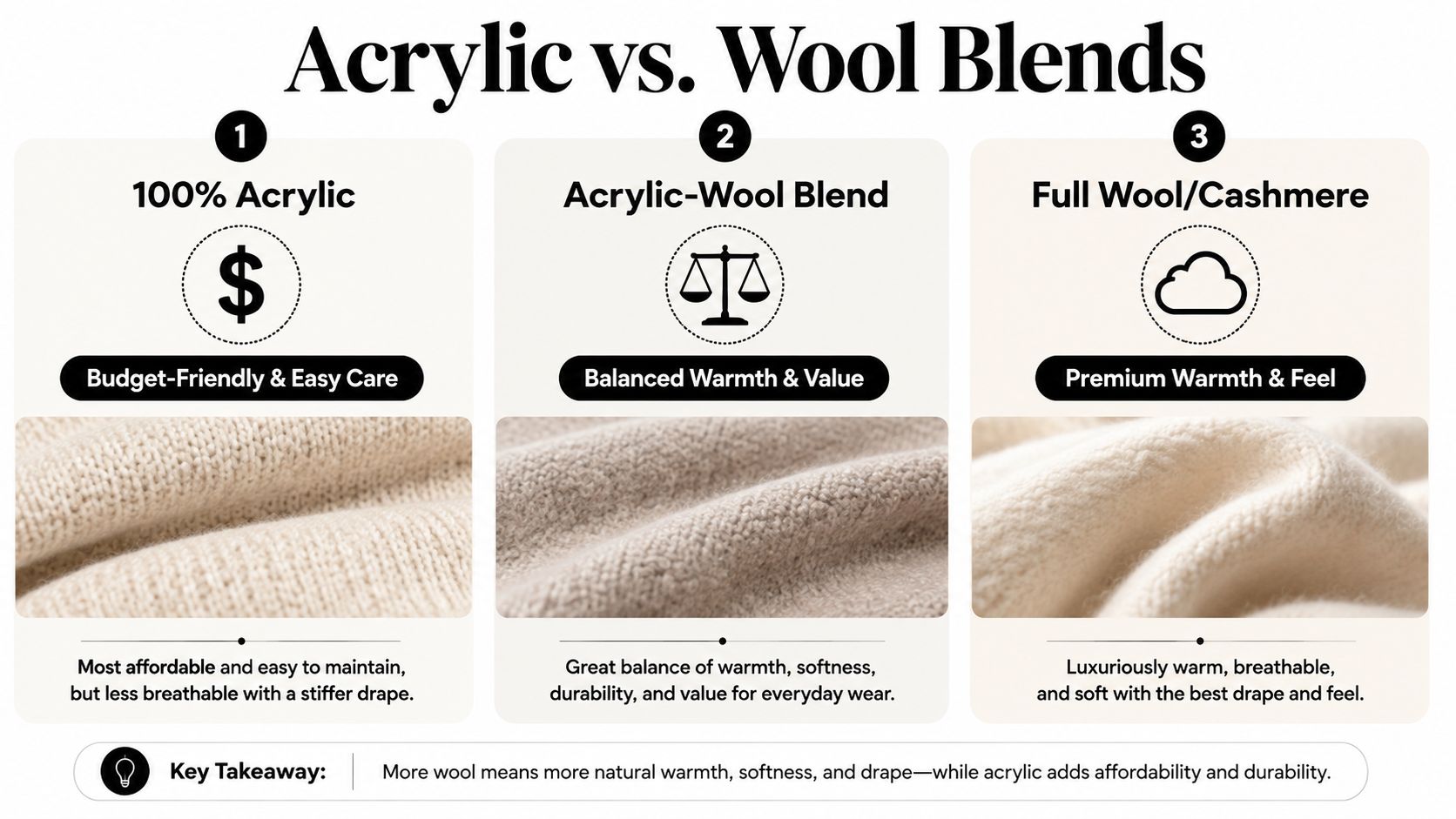
Fabric changes the whole mood of a leopard print beanie. 100% acrylic reads practical, easy, and usually budget-friendly. Acrylic-wool blends feel warmer and more substantial. Full wool or cashmere pushes the hat into a softer, more premium lane, but it also asks for more care and attention.
Pick the fabric for how you live, not just how it sounds
For streetwear buyers on a budget, 100% acrylic is the obvious pick. It usually stays in rotation because it tends to handle everyday wear without much fuss, and product listings commonly lean on that kind of care language for acrylic and polyester-blend pieces. If you wear hats hard, commute in them, or throw them in a bag, acrylic makes sense.
If you want the hat to feel more grown-up, an acrylic-wool blend is the clean step up. It usually gives you better drape and a softer hand without making the beanie too precious. That is the sweet spot for someone who wants leopard to look styled, not cheap.
Full wool or cashmere is the most luxurious option, but I'd skip it if you already know you ignore care labels. A beautiful hat that pills, shrinks, or turns into a babying-only piece is a bad buy. The whole point of a leopard beanie is casual impact, not wardrobe anxiety.
One useful example is a streetwear retailer like Trending Market, which runs a compact, budget-conscious Shopify storefront with accessories and apparel in a similar entry-level pricing lane. If a leopard beanie shows up there, I'd expect it to fit the same easy-buy logic as the rest of the shop, which is exactly why fabric and care should still decide the purchase, not just the print.
Caring for the Print and the Shape
A leopard beanie goes tired fast if you treat it like a throwaway cap. You don't need a fussy routine, you just need one consistent one. The goal is to keep the crown shaped, the knit springy, and the print from looking fuzzed out.
Wash it like a knit, not like a hoodie
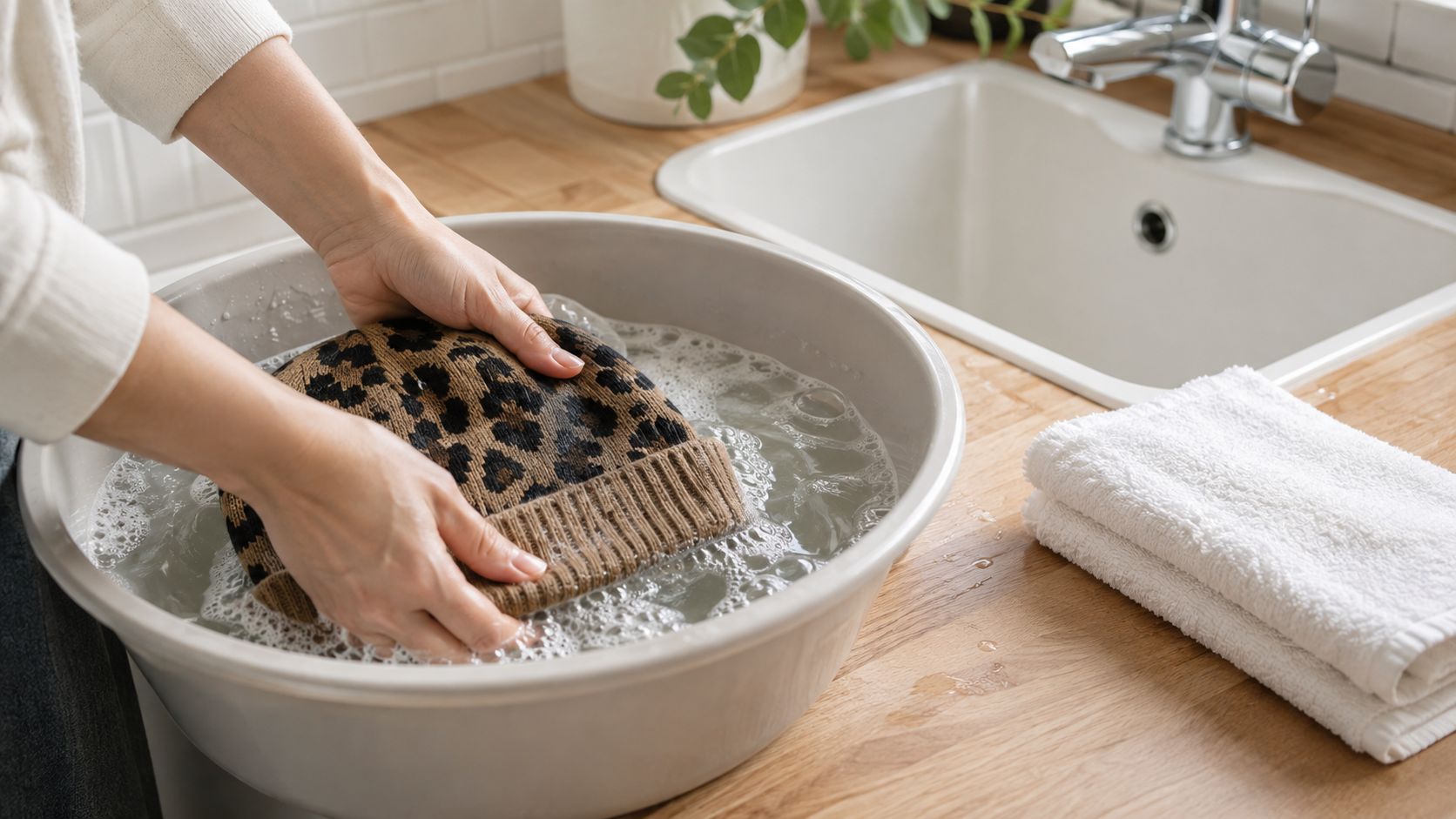
Start with cold water and a gentle cycle if the care label allows machine washing. If the hat is wool-blend or especially soft, hand washing is safer. Skip hot water either way, because heat is what makes knits lose shape and makes the finish look rough.
Do not wring it out like a towel. Press the water out with a clean towel, then reshape the crown by hand. Lay it flat to dry, and keep it away from direct heat. Hanging a wet beanie usually stretches the body and warps the cuff.
Pilling is normal on acrylic blends, but it shouldn't be ignored. Use a fabric shaver carefully, or a sweater comb if the fuzz is light. For storage, keep it folded loosely instead of crushed under heavier pieces, because pressure can flatten the texture and make the print look dull.
A Quick Checklist Before You Add It to Cart
A good leopard print beanie doesn't need to be the loudest thing you own. It needs the right contrast, the right knit, and a shape that works with your actual wardrobe. If the print looks sharp but the fabric feels flimsy, pass. If the fit is vague, pass. If you can't picture it with at least two outfits you already wear, pass.
Use this as your final filter
- Print contrast: Choose high-contrast if you want a statement, lower contrast if you want repeat wear.
- Fabric: Pick acrylic for easy care, a blend if you want a softer feel, and wool only if you'll maintain it.
- Outfit pairing: Make sure it works with a monochrome fit, denim, or a simple outerwear layer you already own.
- Care: Buy it only if you're willing to wash, reshape, and store it properly.
The best leopard beanie is the one you'll pull on without thinking. If it stays in your rotation, it's doing its job. If it only lives in screenshots, it's just a print.
Trending Market carries streetwear-ready pieces that fit the same easy, graphic-first mindset as a leopard print beanie, from accessories to casual layers. If you want to compare that kind of look with other everyday add-ons, visit Trending Market and see what fits your rotation.