

Hip hop graphic tees surged with 30.02% search growth in April 2025 and 25.85% in May 2025, while monthly sales peaked at 1,096 units in May before easing to 820 units in July, which makes them a style category worth reading carefully, not casually. The key question isn't whether the tee has a rapper on it, it's whether the fit, fabric, and print placement make it look like streetwear or souvenir merch.
Table of Contents
- What Makes a Hip Hop Graphic Tee More Than Just a Shirt
- The Quality Markers That Separate Authentic Streetwear From Souvenir Merch
- How to Choose Fit, Fabric, and Print Placement for Your Build
- Styling Hip Hop Graphic Tees for Real Life
- Care and Longevity Tips to Keep Your Graphic Tees Looking Fresh
- Finding Curated Hip Hop Graphic Tees That Meet These Standards
What Makes a Hip Hop Graphic Tee More Than Just a Shirt
A tee can carry a face, a logo, or a tour date and still feel flat. The version that feels right usually has a better shape on the body, stronger visual intent, and a print that says something about the culture instead of just borrowing it.
The cultural shift that made the category matter
Hip hop graphic tees became culturally important in the 1990s, when hip-hop moved from underground culture into mainstream fashion and the oversized graphic tee became a signature item. Fashion histories tie that shift to bold graphics, oversized logos, and message-driven prints that let wearers signal identity, crew, and musical taste, and they note that artists such as Run-DMC and Tupac helped push logo-heavy and statement tees into wider view through streetwear and hip-hop fashion history.
By the 2000s, artist collaborations and the blending of streetwear with luxury fashion normalized music-linked apparel as a global style category in that same historical arc. That matters because the tee stopped being a souvenir from a concert and became a sign of taste, reference, and alignment with a scene.
A hip hop tee reads as credible when it feels like it belongs to a wardrobe, not a souvenir table.
What the graphic is doing, not just what it shows
The strongest designs don't rely on a famous face alone. They lean on album-era references, city motifs, automotive culture, and iconography that fans recognize at a glance, then place that artwork on a shape that supports the message.
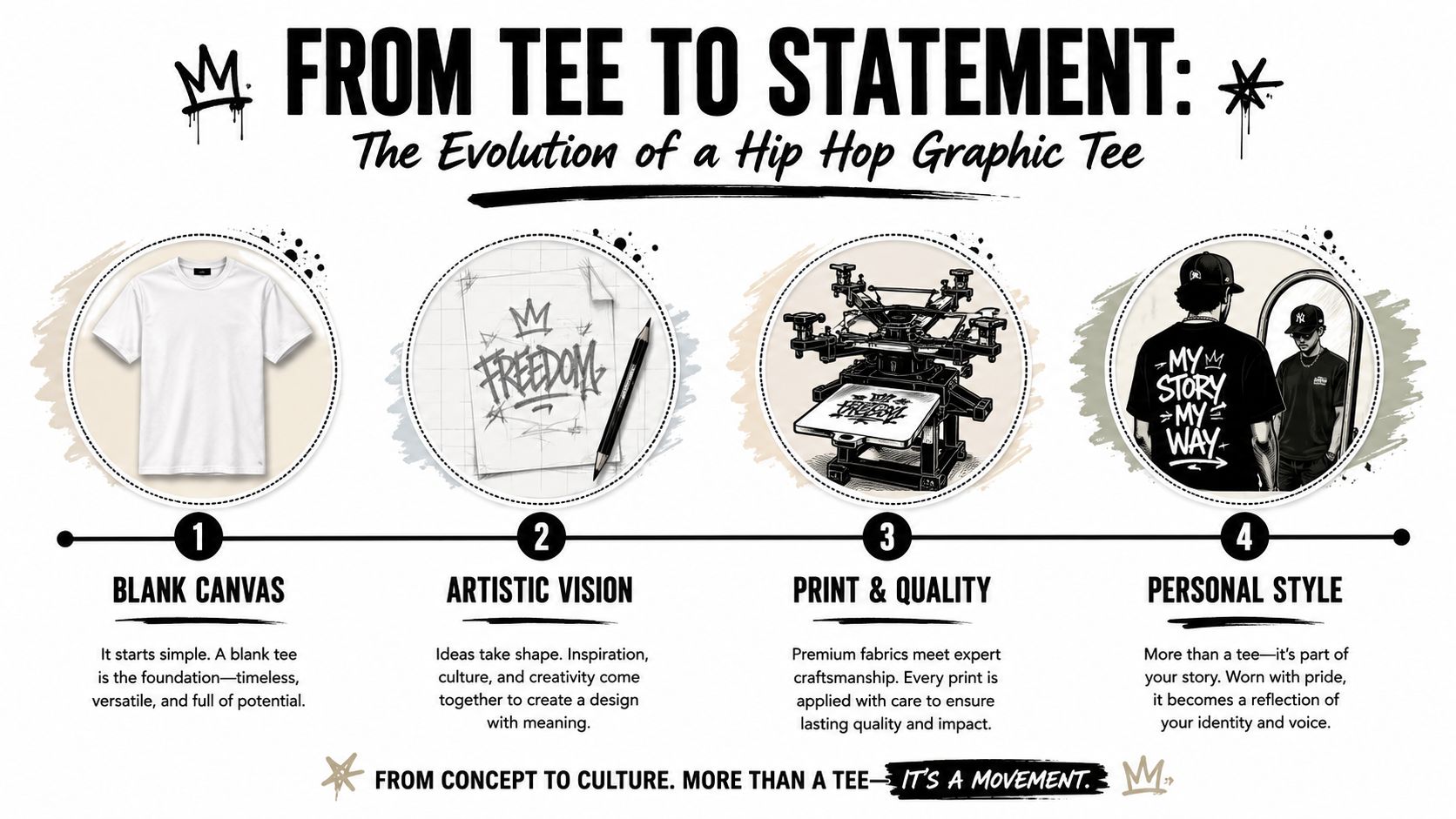
That's why the category still holds up. It works because it combines music memory, streetwear proportion, and a graphic language that says the wearer knows exactly what they're signaling. A generic printed shirt can look decorative, but a hip hop graphic tee should feel like part of an outfit, part of an era, and part of a point of view.
The Quality Markers That Separate Authentic Streetwear From Souvenir Merch
The easiest mistake is judging a tee by the artwork alone. A sharp print on a flimsy body still feels cheap, and a good fit can't rescue a garment that shrinks, twists, or loses its neckline after a few washes.
Fabric weight tells you how the shirt will wear
Streetwear guidance puts the ideal fabric weight for heavier tees around 220–300 gsm, with some production guidance extending to 400 gsm for a more structured drape, because higher GSM gives the shirt more body and helps oversized silhouettes keep their shape after laundering (streetwear production guidance). That heavier knit also gives screen prints and vintage wash finishes a more stable surface, which matters when the graphic is doing most of the visual work.
Lightweight tees can be fine for basics, but they rarely give hip hop graphics the same presence. If the body collapses, the design looks less intentional and the whole shirt starts reading like event merch.
Print method changes durability and finish
For large designs with up to 8 colors, screen printing is generally the most cost-efficient and durable option at scale, and properly executed prints can hold up through 100+ cycles of washing according to streetwear production guidance in the brief (production control guidance). DTG makes more sense for photographic or unlimited-color artwork, but only when pretreatment and curing are done carefully at roughly 160–180°C for 60–90 seconds so the ink doesn't fail.
Construction details matter too. The same source recommends 8–10 SPI, overlock side seams, coverstitch hems, and explicit post-wash shrinkage tolerances, because those specs affect print alignment, neckline recovery, and whether an oversized tee stays oversized.
| Marker | Streetwear Quality | Disposable Fast Fashion |
|---|---|---|
| Fabric weight | 220–300 gsm or heavier feel, better shape retention | Thin knit that collapses or twists |
| Print method | Screen print for large color designs, durable finish | Weak print that cracks or fades fast |
| Wash behavior | Better resistance to shrinkage and torque | Neckline warps, body loses shape |
| Construction | Overlock seams, coverstitch hems, controlled SPI | Loose finishing, inconsistent recovery |
How to Choose Fit, Fabric, and Print Placement for Your Build
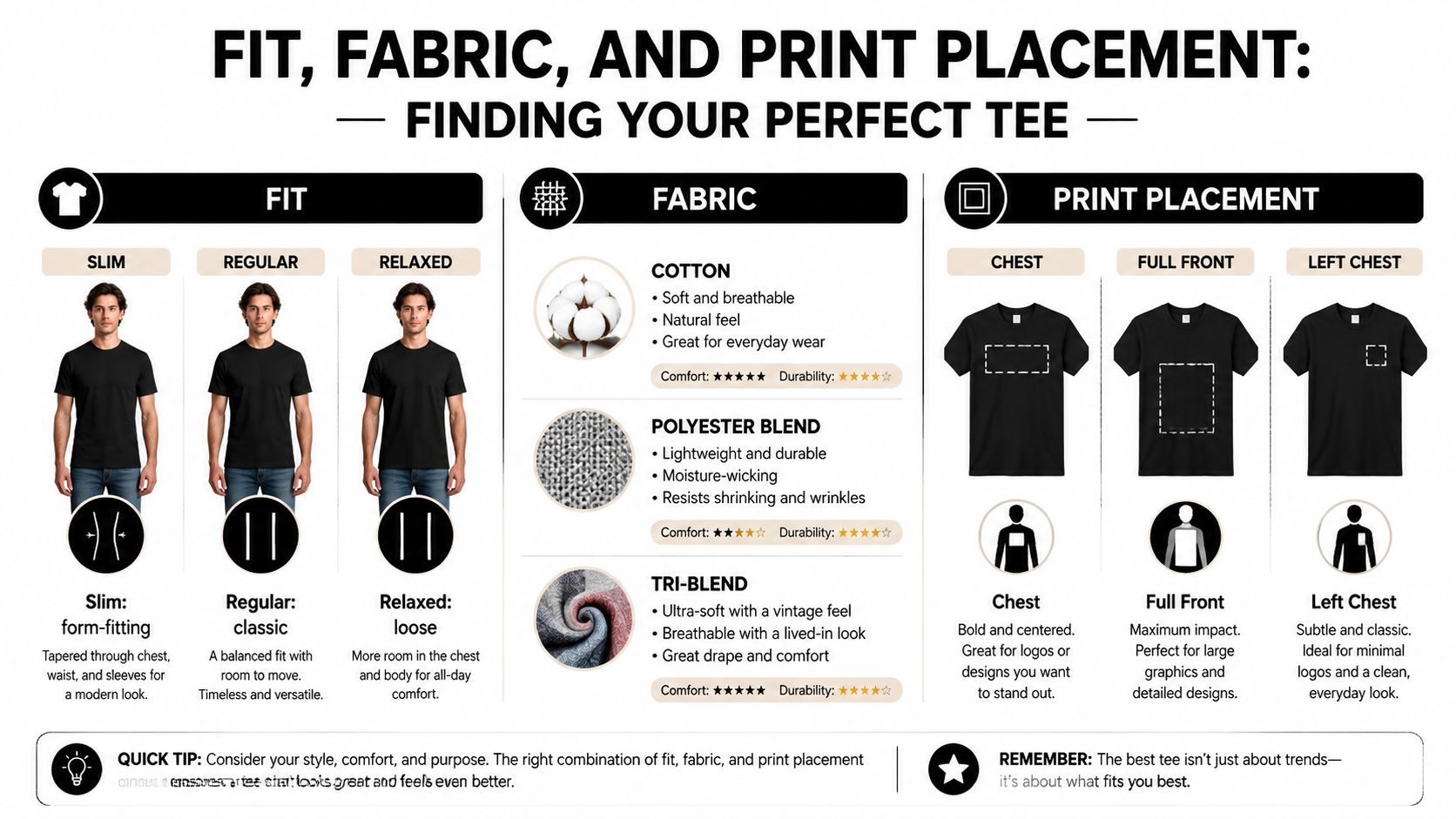
A good hip hop tee can still look wrong if the silhouette fights your frame. The goal is not just oversized, it's oversized with proportion, where the shirt feels roomy without swallowing the body.
Fit should support the graphic, not compete with it
The streetwear silhouette usually leans relaxed, with dropped shoulders and a longer body that doesn't cling. That shape works because it creates space around the print, so the artwork can read clearly without the shirt looking tight across the chest or short at the waist.
If you're between sizes, think about where the hem lands and how far the shoulder seam drops. A tee that's too small looks accidental, while one that's dramatically too large starts to feel like you grabbed a sleep shirt instead of choosing an outfit.
Placement is the part shoppers overlook most
Print placement changes the whole read of the shirt. A front-chest minimal print feels clean and modern, an oversized back graphic makes a statement without crowding the front, and sleeve details or bootleg-style layouts create depth that a centered chest print can't match.
Practical rule: if the tee has a loud graphic, keep the cut and placement disciplined. If the graphic is minimal, the silhouette can carry more volume.
The brief also notes an underserved shopper concern around unconventional print placement, including front-chest minimal prints, oversized back graphics, sleeve details, and bootleg-style layouts. That gap exists because most product grids sort by artist or motif, while actual buyers often decide based on whether the shirt looks like authentic streetwear or basic merch. The difference usually shows up in proportion before it shows up in the graphic itself.
Match the fabric to the shape
A heavyweight cotton body supports the drape that oversized cuts need. A lighter knit might look fine on the hanger, but once you wear it, the shirt can cling in the wrong places and lose the clean line that makes streetwear feel deliberate.
Use this filter: the more structure in the silhouette, the more you want a fabric that can hold it. That's why the tactile feel of the shirt matters almost as much as the artwork.
Styling Hip Hop Graphic Tees for Real Life
The best tee in your closet still needs the right frame around it. Styling works when the rest of the outfit lets the graphic do its job instead of arguing with it.
Daytime outfits should keep the tee in charge
For casual wear, pair an oversized graphic tee with straight-leg or relaxed-fit jeans and clean sneakers. That combo gives the shirt room to breathe and keeps the look grounded, especially if the graphic is already busy.
A worn jacket can add texture without stealing attention. Worn open, it creates layers; fully zipped, it makes the tee feel like a deliberate underlayer rather than an afterthought.
Small adjustments make the outfit feel intentional
For streetwear with a vertical line break, an open quarter-zip or lightweight overshirt adds structure that disrupts the silhouette. A partial tuck often works better than a full tuck for oversized cuts, because it preserves the volume while giving the waist some definition.
Accessories should stay controlled. A trucker cap, minimal chain, or even a themed phone case can connect the look when the tee is already carrying the visual weight.
One styling mistake shows up fast, too much competition. If the shirt has a big back graphic or a bootleg-style layout, everything else should be quieter so the outfit doesn't turn into visual noise.
Evening looks need structure around the looseness
For night, dark denim, boots or high-top sneakers, and a structured outer layer such as a chore coat or oversized blazer can sharpen the tee without flattening it. That mix works because it keeps the street energy while adding enough polish to feel like a real outfit.
Care and Longevity Tips to Keep Your Graphic Tees Looking Fresh
A tee only stays strong if you treat it like a printed garment, not just another cotton shirt. Heat, rough washing, and sloppy storage do most of the damage.
Wash for the print, not just the fabric
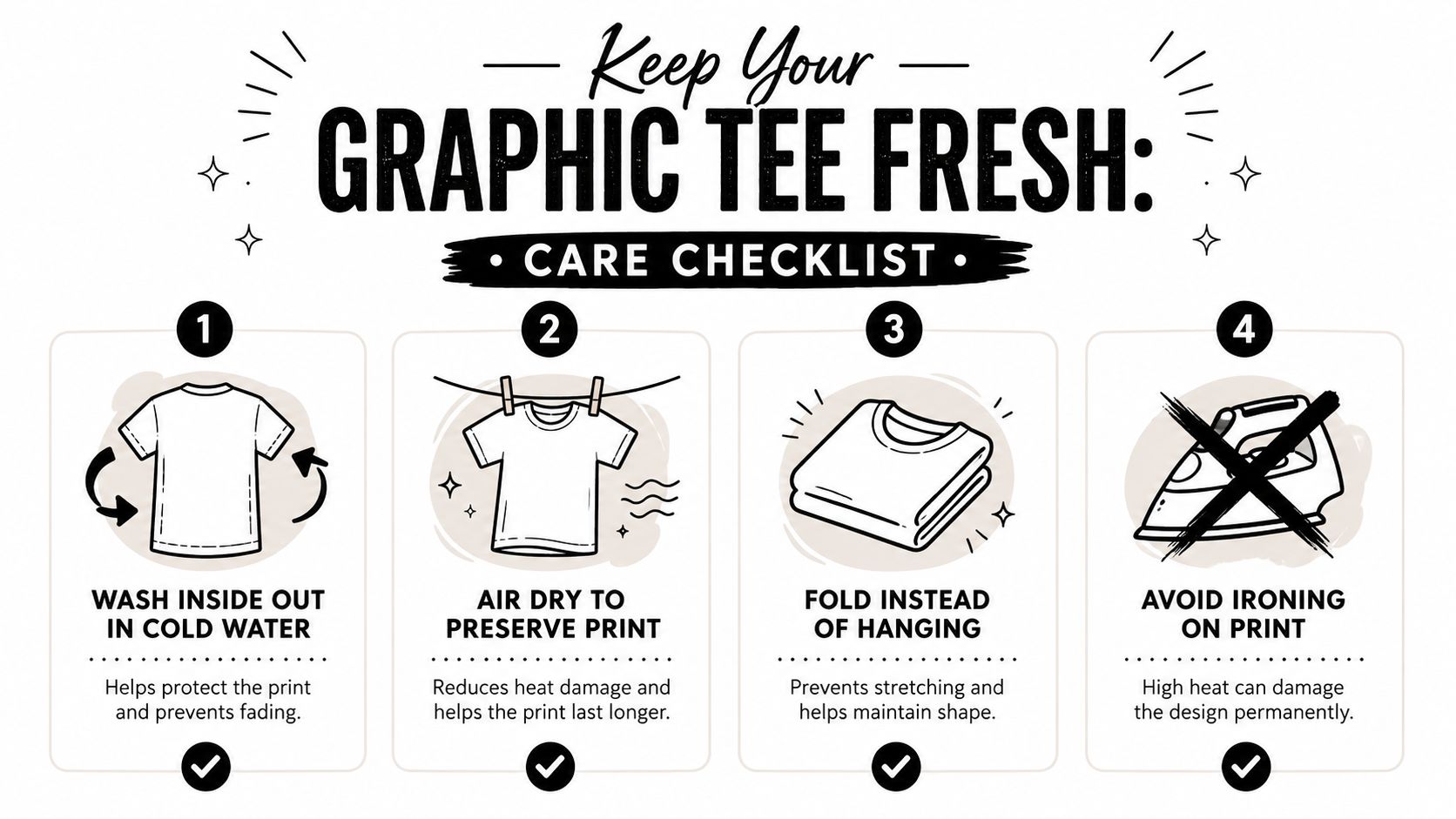
Turn the shirt inside out and wash it in cold water. Heat is the main enemy of print longevity, so cold water helps protect both the fabric and the artwork.
Skip bleach unless you absolutely need it, and never pour it directly onto the print. That kind of shortcut often shows up later as faded artwork or brittle ink edges.
Drying and storage matter more than most people think
Low heat or air drying is the safer move, because high heat accelerates shrinkage and print breakdown. If the tee is heavily printed, folding is usually better than hanging, since long-term hanging can stretch the neckline and let the shoulders pull out of shape.
Fold it if the print adds weight. Hang it if the garment is light and unstructured.
If you need to iron the shirt, keep the setting low and never press directly on the graphic. The print should look crisp because the garment was cared for, not because it was rescued from heat damage after the fact.
Finding Curated Hip Hop Graphic Tees That Meet These Standards
Once you know what matters, the shopping process gets easier. You stop sorting by cover art alone and start looking for tees that match the silhouette, print method, and placement you want.
Trending Market's assortment is built around graphic streetwear basics, with product themes tied to music, automotive culture, and city motifs, and the catalog stays focused enough that you can compare styles without digging through a huge, unfocused marketplace. The store's published prices sit in a narrow USD range, roughly $19.99 to $39.99, which makes it easier to shop by design preference rather than getting pulled into a dozen different price tiers.
The market context supports that kind of curation. In 2025, Amazon Trends data cited in the brief showed Men's Hip Hop Graphic Tees with search volumes above 100 and average monthly sales of about 900–1,100 units, while the broader urban streetwear category rose from 55 in January 2025 to 100 by August 2025 (2025 market trend data). That tells you the demand isn't random, it sits inside a wider streetwear pattern.
The practical upside of a curated storefront is speed. Homepage sections like New Arrivals, Bestsellers, and Featured surface current items quickly, and a complete catalog view gives you a straightforward way to compare pieces with transparent pricing and add-to-cart controls. For shoppers who care about fit, fabric weight, and print placement, that kind of presentation makes it easier to spot what reads as streetwear.
If you want to narrow your search without wasting time on generic merch, start with a curated streetwear catalog that keeps the graphics specific and the browsing simple. Visit Trending Market to compare hip hop graphic tees, spot the silhouettes that fit your style, and choose pieces that feel built for the culture, not just printed on top of it.