

You buy a graphic tee because the artwork hits. Maybe it's a sharp back print, a washed band-style front, or a clean automotive graphic. Then two or three laundry days later, the print starts looking tired, the collar relaxes, and the body doesn't hang the way it did out of the bag.
That usually sends people toward the wrong question. They ask whether the brand is “good” or whether the print was “cheap.” Those matter, but the bigger clue is often the cotton itself. The fabric isn't just the background for the design. It affects how the shirt feels, how the print grips the surface, how the fit changes after washing, and whether the tee still looks like streetwear instead of sleepwear.
If you've ever scrolled product pages and felt stuck between terms like ring-spun, organic, heavyweight, screen print, and DTG, this guide will make those labels easier to read. The goal is simple: help you choose graphic tees cotton options that look better longer, fit the way you want, and match your values without getting lost in technical language.
Table of Contents
- Introduction to Cotton Graphic Tees
- Understanding Cotton Types and Quality
- Printing Methods and Cotton Interaction
- Choosing Fit and Sizing for Cotton Tees
- Care Instructions for Prints and Fabric
- Sustainability and Styling Ideas
- Conclusion and Next Steps
Introduction to Cotton Graphic Tees
You spot a graphic tee online that looks perfect. The art is sharp, the fit looks right, and the cotton label sounds promising. Three washes later, the print starts to crack and the shirt twists at the side seam. That kind of disappointment usually starts long before laundry day.
A cotton graphic tee works like a poster printed on paper. The design matters, but the surface under it matters just as much. Cotton fiber, fabric weight, and print method all affect how the graphic sits, how long it stays clear, and how the shirt feels after repeated wear.
That connection often gets overlooked by shoppers who focus only on the artwork or only on softness. Streetwear buyers usually need to judge all three at once. Quality, longevity, and eco-impact are tied together more closely than they first appear. A tee made from better cotton can feel nicer, hold print more cleanly, and stay in rotation longer, which also changes its real environmental cost per wear.
Streetwear makes these details easier to notice because the tee often carries the outfit. If the collar waves, the fabric shrinks unevenly, or the print loses definition, the whole look loses structure.
Practical rule: Read the fabric line and the print method together. One tells you what the shirt is made of. The other tells you how the graphic is likely to age.
A useful shopping habit is to treat the product page like a checklist. Check the cotton type, fabric weight, print method, and fit notes. Those details reveal more than a polished product photo, and they help you choose a tee that still looks good after the first few washes.
Understanding Cotton Types and Quality
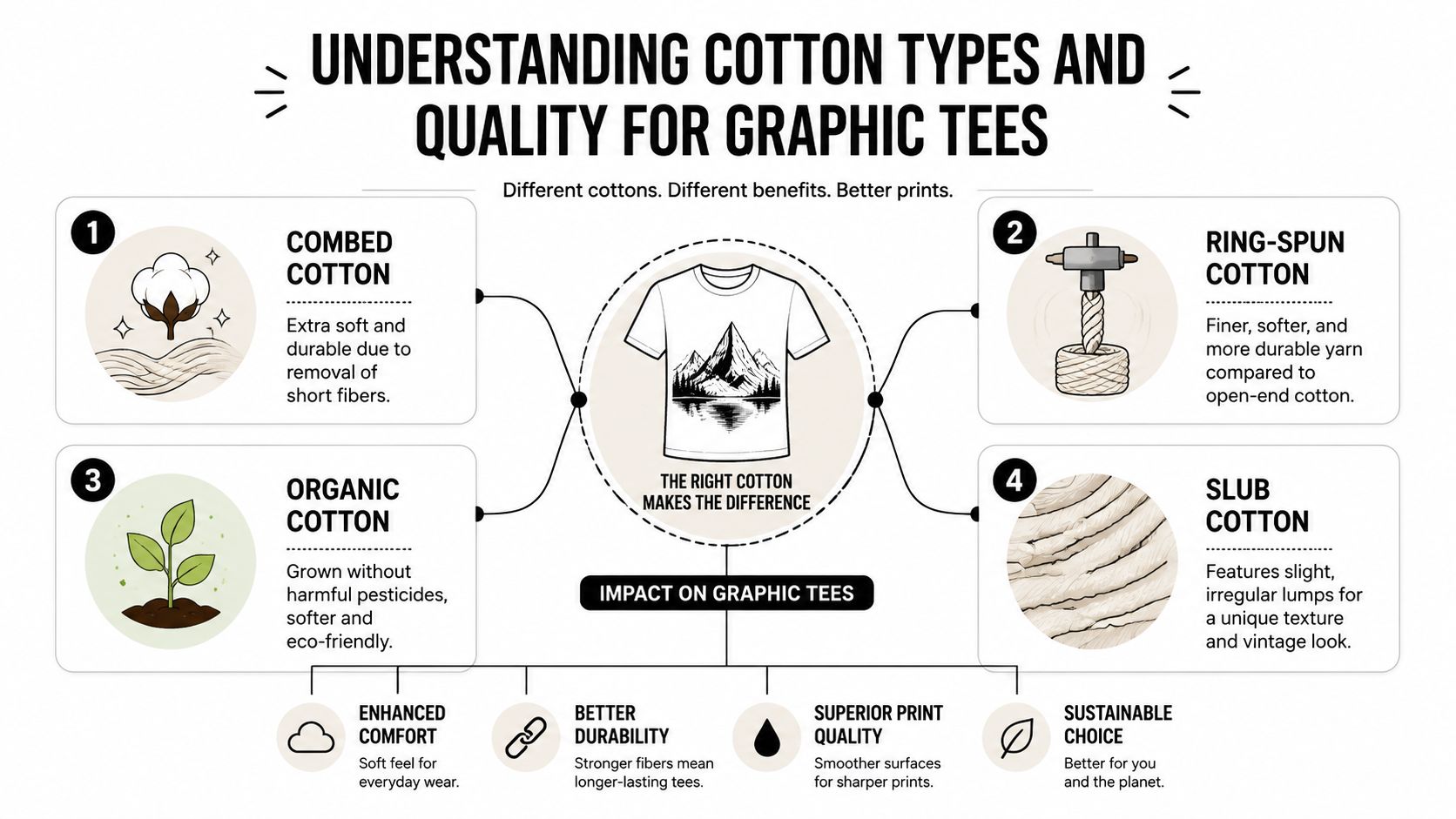
Cotton can look simple on a product page and behave very differently in real life. Two tees may both say 100% cotton, yet one holds a graphic cleanly for months while the other starts looking tired much sooner. The difference often starts at the fiber level.
Why cotton stays the default
Cotton remains the standard base for graphic tees because it balances comfort, breathability, and print compatibility better than many alternatives. That matters in a category with broad demand. As noted earlier, analysts project continued growth in the graphic tee market, which helps explain why brands keep refining cotton options instead of replacing them.
For shoppers, the practical point is straightforward. Cotton gives ink a familiar surface, feels good against skin, and comes in enough variations to support both lightweight basics and heavier streetwear blanks.
How fiber type changes feel and print results
Fiber labels are more useful than they first appear. They do not just describe softness. They also hint at how smooth, even, or textured the print surface will be.
- Combed cotton has shorter, rougher fibers removed before spinning. That usually creates a cleaner, smoother fabric surface, which helps graphics look sharper and more controlled.
- Ring-spun cotton is made by twisting and refining the yarn until it feels softer and stronger. A ring-spun tee often feels less coarse and tends to hold up better with repeated wear.
- Organic cotton tells you more about how the cotton was grown than how the print will age. It can feel soft and appealing, especially for buyers who care about lower-impact materials, but organic alone does not guarantee a longer-lasting graphic.
- Slub cotton includes intentional irregular texture. That texture can add character to washed or vintage-style designs, but it can also make fine lines and crisp edges look less precise.
A useful way to read this is simple. Cotton type affects both the hand feel and the canvas. If the shirt is the wall, the print is the paint. A smoother wall usually shows cleaner edges. A textured wall changes the look on purpose.
That is the part many buyers miss. Softness and print durability are related, but they are not the same thing. A very soft tee can still be a weaker base for a bold graphic if the surface is uneven or the knit lacks stability.
A cotton tee is not just fabric you wear. It is the surface your graphic has to live on.
What fabric weight tells you
Fabric weight changes how a tee hangs, how it feels in hand, and how well it supports a large print. Lighter cotton usually feels cooler and easier to wear in heat. Heavier cotton usually looks more structured and gives oversized fits more shape.
For streetwear, that difference is easy to spot. A lightweight tee can work well for faded prints, layered outfits, or a broken-in look. A heavier tee often gives bold chest graphics and larger back prints a steadier base because the fabric moves less and keeps its form better.
That does not mean heavy is always better. It means weight should match the look you want.
| Cotton detail | What it usually means for you |
|---|---|
| Combed | Smoother touch, cleaner-looking print surface |
| Ring-spun | Softer feel, stronger yarn, better long-wear potential |
| Organic | Lower-impact farming focus, often higher price |
| Slub | Textured fabric, more visual character, less crispness |
| Heavier weight | More structure, stronger drape, better support for bold graphics |
| Lighter weight | Cooler feel, easier layering, softer and more relaxed look |
If you are comparing two graphic tees, read the cotton description like you would read sneaker materials. Leather, mesh, and suede all change wear and upkeep. Cotton works the same way. The fiber choice shapes comfort, the print surface, and how long the tee earns a place in your rotation.
Printing Methods and Cotton Interaction
A design can look identical on screen and behave very differently in real life once it lands on cotton. That's why two tees with similar artwork can age in completely different ways.
Screen printing versus DTG
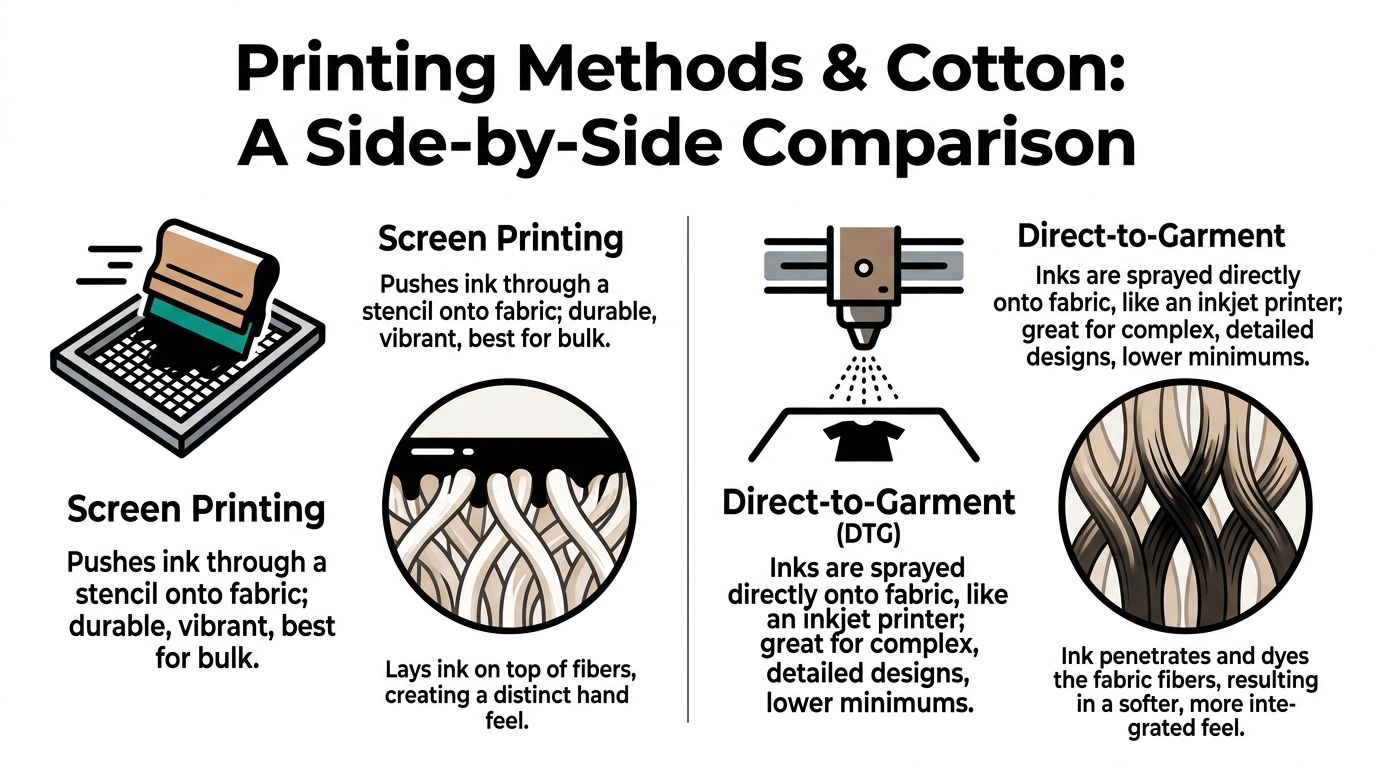
The biggest split is usually screen printing versus Direct-to-Garment, often shortened to DTG.
According to Groovecolor's supplier guide for premium oversized graphic tees, screen printing is the durability benchmark for large cotton graphics, delivering 100+ wash cycles because the ink bonds mechanically to the fiber surface. The same guide says DTG typically reaches 40 to 50 wash cycles and depends heavily on accurate pretreatment and curing.
That sounds technical, but the practical difference is easy to picture:
- Screen printing is more like laying down a durable layer that grips the surface.
- DTG is more like spraying color directly into the fabric with high detail.
How cotton surface affects the result
Cotton isn't passive in this process. The fiber surface changes how the print sits, feels, and wears.
A smoother, more stable cotton face usually helps a bold logo or solid block graphic look sharper. A heavily textured surface can interrupt that clean edge. That doesn't always mean “worse.” It may just mean the print looks more broken-in from day one.
Here's a simple comparison:
| Print method | Best use | Feel on cotton | Longevity note |
|---|---|---|---|
| Screen printing | Bold logos, large graphics, streetwear staples | More noticeable print layer | Stronger durability benchmark |
| DTG | Complex artwork, photo-style detail, lower-run designs | Softer integrated feel | More sensitive to process quality |
The mistake many shoppers make is choosing by image style alone. If you want a large chest print or back graphic that stays punchy, screen printing usually fits that goal better. If you want subtle gradients and art detail, DTG may look better at first, but it asks more from the fabric and the care routine.
Don't treat “soft print feel” as automatic proof of quality. Sometimes that softness comes from a process designed for detail, not maximum lifespan.
If a brand lists both cotton composition and print method clearly, that's a good sign. It means they understand that the fabric and the artwork are a system, not separate choices.
Choosing Fit and Sizing for Cotton Tees
You order a graphic tee because the print looks perfect online. Then it arrives, the cotton feels good, the artwork is solid, and the fit still feels off. That usually comes down to shape, not just size.
A cotton tee works like a frame around the graphic. If the body is too narrow, the print can stretch across the chest and lose its intended look. If the shoulders sit too high or too wide, even a well-printed design can feel awkward instead of relaxed.
Measure before you trust the label
Start with the silhouette you want to wear. A streetwear tee labeled "L" can fit trim, boxy, cropped, or long, depending on the brand.
Use a tee you already like as your reference point. Lay it flat and check a few basic measurements:
- Chest width tells you how roomy the body feels.
- Body length shows where the hem will land.
- Shoulder width affects whether the tee looks structured or boxy.
- Sleeve length helps oversized fits look intentional instead of sloppy.
That last point trips up a lot of shoppers. Sizing up by one or two sizes does not always create a true oversized fit. It can give you extra width without the dropped shoulders or sleeve shape that make streetwear cuts look balanced.
Fit changes after cotton settles
As noted earlier, cotton can tighten after the first wash. That matters because fit and print do not age separately. They change together.
If a tee starts out close to the body, a little shrinkage can make the chest feel tighter and the graphic look more strained across the front. If a tee starts with extra room, that same amount of change may help it fall into a cleaner shape. The best choice depends on the look you want on day ten, not just day one.
Here is a simple way to read the fit:
| Fit goal | What to check first | Common mistake |
|---|---|---|
| Regular fit | Chest width, length, shoulder width | Buying your usual label size without checking the chart |
| Oversized fit | Shoulder drop, sleeve length, straight body shape | Just sizing up and hoping it looks boxy |
| Boxy streetwear fit | Wider shoulders, shorter or balanced length, room through the body | Choosing a long tee with width, which can look stretched instead of square |
Fiber choice also plays a quiet role here. Softer cotton with a smoother surface often drapes more cleanly, which helps detailed prints sit flatter. Heavier or denser cotton can hold a boxier shape better, which often suits bold graphics. That fabric behavior is easy to miss, but it affects how the print presents on the body over time.
A good rule is simple:
- For a true regular fit, compare your measurements to the size chart and leave a little room for cotton to settle.
- For oversized, look for a tee cut oversized on purpose.
- If the brand says little about shrinkage or garment wash, give yourself some margin.
A graphic tee should match your laundry habits, your preferred silhouette, and the kind of print you want to keep looking right after repeated wear.
Care Instructions for Prints and Fabric
A good tee can still age badly if you wash it like gym gear. Cotton and printed graphics both react to friction, heat, and sunlight. Care isn't boring here. It's part of the purchase.
The wash routine that protects both fabric and print
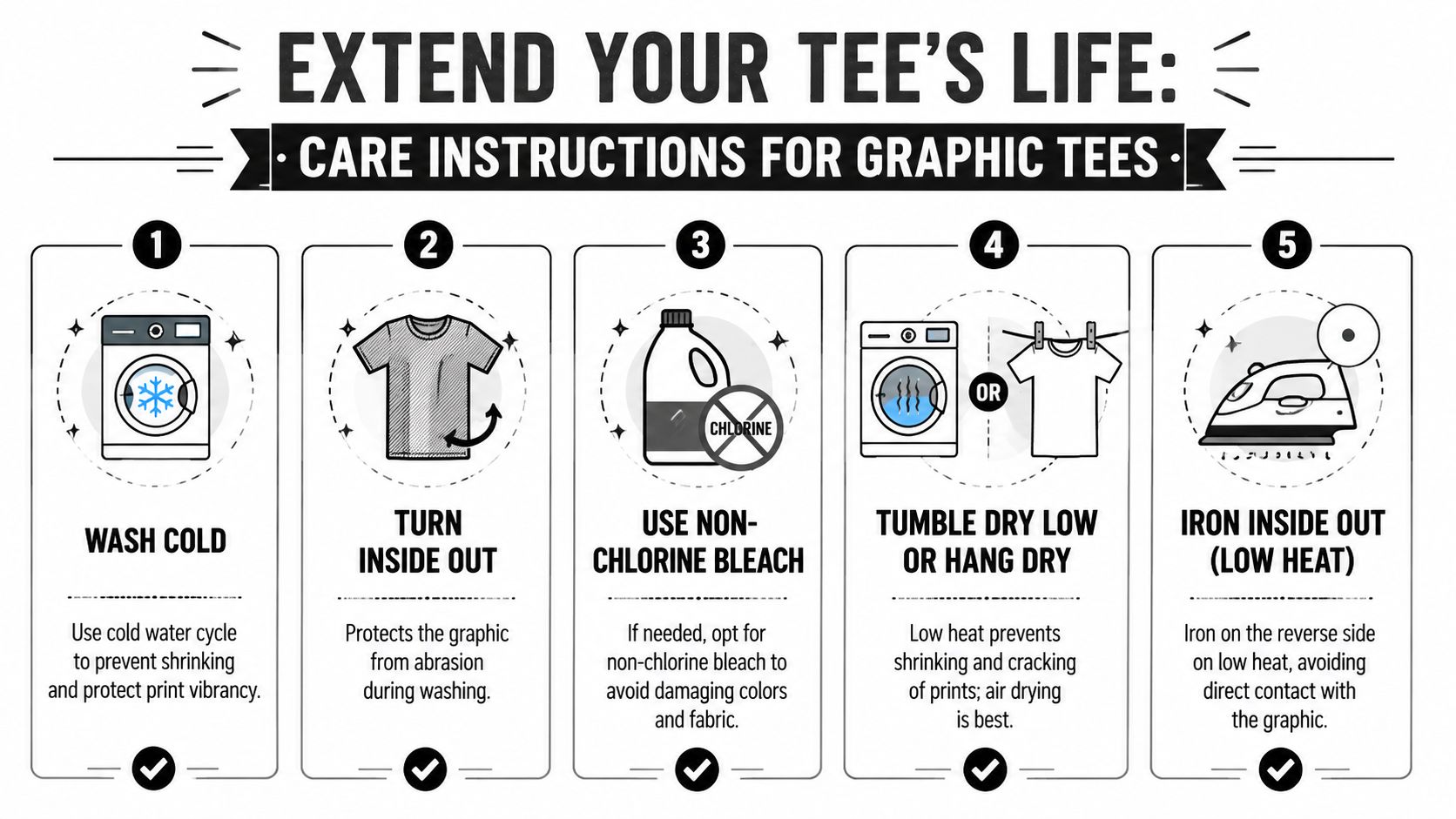
The safest routine is gentle and consistent. You don't need special equipment. You need fewer harsh habits.
- Wash cold. Cooler water helps reduce stress on cotton and printed areas.
- Turn the tee inside out. That cuts down on surface abrasion during the wash cycle.
- Use mild products. If bleach is necessary, choose non-chlorine options.
- Dry on low heat or hang dry. Heat is one of the quickest ways to age both cotton and print.
- Iron inside out on low heat. Never press directly over the graphic.
That routine matters even more for eco-focused prints. Alibaba's product insights on print durability over time notes that water-based inks used in eco-tees lose opacity 38% faster than DTG prints after 50 washes, especially with heat or UV exposure.
Think of a print like a photo left near a sunny window. The image may still be there, but the crispness fades sooner than you expect.
Common mistakes that age a tee fast
The biggest damage usually comes from routine shortcuts, not one dramatic mistake.
- Hot dryer cycles can push cotton to shrink and make prints brittle.
- Direct sun for long drying periods can dull image clarity, especially on more sensitive inks.
- Overloading the washer increases rubbing and twisting.
- Ironing over the graphic can flatten, stick, or stress the print layer.
A simple do-and-don't table makes this easier:
| Do | Avoid |
|---|---|
| Cold wash | Hot water cycles |
| Inside-out washing | Graphic rubbing against rough items |
| Low heat or hang dry | High heat dryer settings |
| Gentle detergent use | Harsh chemical treatment |
| Reverse-side ironing | Direct heat on the print |
Care labels can feel small and forgettable. On graphic tees cotton pieces, they decide whether the shirt still looks intentional months later.
Sustainability and Styling Ideas
A lot of shoppers feel split here. They want a tee that looks sharp, feels soft, and lines up with their values, but they also don't want to pay more for a vague promise. That's a fair hesitation.
When organic cotton makes sense
Organic cotton has a clear environmental appeal. According to Edwin Von Holy's discussion of sustainable graphic tee alternatives, organic cotton is 91% more water-efficient and produces a softer, more durable fabric than conventional cotton. The same source says it typically costs 2 to 3 times more upfront, with examples of $36 to $49 versus $12 to $22, while also noting that clear studies isolating print durability differences still aren't available.
That missing piece matters. If you buy organic cotton expecting the graphic itself to last dramatically longer, current evidence doesn't clearly prove that. The fabric may feel better and align better with your values, but the print still depends heavily on the print method and how you care for it.
So the smart way to read organic cotton is this:
- It may improve the fabric side of the experience.
- It doesn't automatically solve print-life questions.
- It makes the most sense when you value both feel and eco-impact.
Organic cotton can be the better canvas ethically and physically, but the artwork still lives or dies by printing and care.
How to style cotton graphic tees well
Cotton quality affects style more than people realize. A structured tee holds shape under layers. A softer, looser one can read more relaxed and vintage. Use that to your advantage.
A few dependable combinations:
- For oversized graphics, pair the tee with straighter or tapered bottoms so the outfit doesn't turn shapeless.
- For smaller front prints, layer under an open overshirt, denim jacket, or zip hoodie.
- For washed or textured cotton, lean into rugged pieces like faded denim, work pants, or retro sneakers.
- For clean, smoother cotton, keep the rest of the outfit minimal so the print stays the focal point.
If the shirt has a loud back graphic, let your shoes and pants do less. If the graphic is subtle, you've got more room to add texture elsewhere.
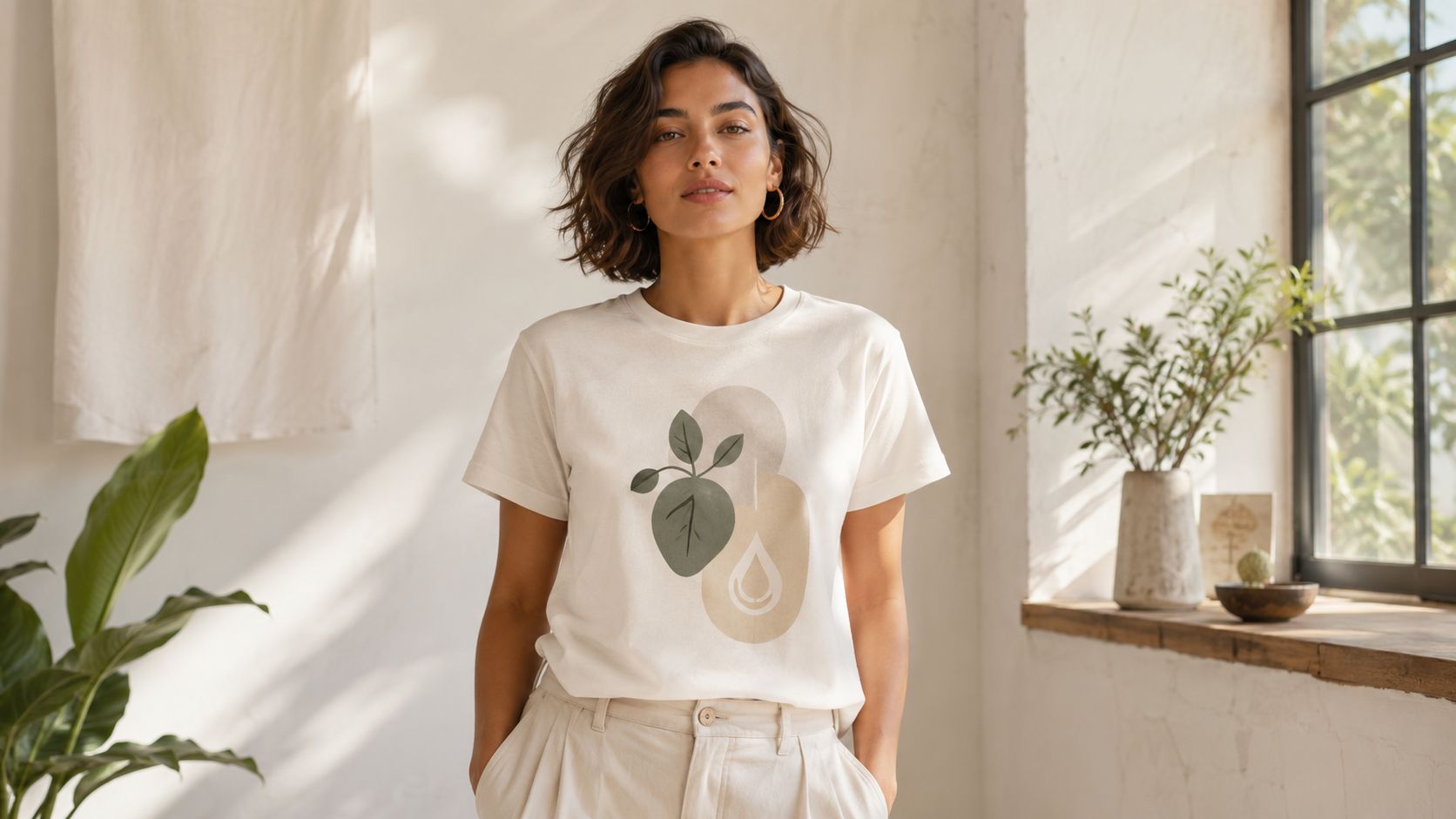
A quick visual example can help if you're building outfits around a cotton tee.
A simple way to balance values and wearability
You don't need one perfect rule for every purchase. Use a three-part filter instead:
| Question | What to look for |
|---|---|
| Will it feel right? | Cotton type, softness, structure |
| Will the graphic age well? | Print method, care realism, surface smoothness |
| Does it match your priorities? | Organic or conventional cotton, price tolerance, styling flexibility |
That approach keeps you out of two common traps. One is buying a “sustainable” tee that doesn't suit your wardrobe. The other is buying a great-looking tee that you already know you won't care for properly.
The best graphic tees cotton choice is usually the one you'll wear often, wash carefully, and still enjoy months from now. Streetwear works best when the tee earns repeat wear, not just first-impression praise.
Conclusion and Next Steps
A strong graphic tee starts with better cotton choices. Look past the artwork for the details that shape the experience: fiber type, fabric weight, print method, fit, and care needs. That's where longevity lives.
When you shop next, read the product page like a label, not an ad. Check whether the tee uses ring-spun or organic cotton, whether the print is screen printed or DTG, and whether the size chart leaves room for cotton to settle after washing. A little attention up front can save you from a shirt that looks great once and disappointing after that.
If you want to put these ideas into practice, browse Trending Market for streetwear-inspired graphic tees, caps, and accessories that make it easy to compare styles and build outfits around bold visuals.