

You're staring at a feed of tees that all start to look the same. One has a giant retro logo, another leans on vague nostalgia, and half of them feel like they were designed for people who want to be seen buying a trend, not wearing one. The smarter move in graphic tee trends right now is to stop chasing broad nostalgia and start looking for micro-regional and subculture-specific graphics that feel like they belong to a real scene, not a mood board.
Table of Contents
- Why Graphic Tees Still Define Streetwear in 2026
- The Motifs Driving Demand Right Now
- How to Evaluate Print Quality and Fabric at Entry-Level Prices
- Styling Graphic Tees for Modern Streetwear Outfits
- Choosing Between Music, Automotive, and City Motifs
- How to Shop a Curated Streetwear Catalog Efficiently
- Why Entry-Level Graphic Tees Beat Hype Drops for Most Shoppers
Why Graphic Tees Still Define Streetwear in 2026
A shopper opens a store, scrolls past six tees, and pauses on the one that says something specific without trying too hard. That's the whole game now. Graphic tees still anchor streetwear because they work as fast identity signals, and the market numbers back up the obvious consumer behavior. One estimate puts the global graphic tees market at USD 72.66 billion in 2023, USD 77.18 billion in 2024, and projects USD 125.04 billion by 2032 at a 6.22% CAGR. Another report places it at USD 31.8 billion in 2025 with a projection of USD 47.99 billion by 2031 at 7.1% CAGR. Both point in the same direction, the category is still expanding, not fading, which fits what buyers already know from the rack and from the feed. Wise Guy Reports
Why the category keeps winning
Young shoppers don't buy graphic tees just for coverage. They buy them for music fandom, car culture, city pride, and the kind of visual shorthand that says, “you already know what this is.” In a 2023 retail summary, graphic tees represented nearly 58% of all casual T-shirt sales in the 18 to 34 age group, which tells you exactly where the category sits in youth wardrobe priorities. Alibaba product insights
That matters because the tee isn't competing with plain basics on price alone, it's competing on meaning. A clean print with a specific reference gives a buyer more personality per dollar than a blank shirt ever can.
Practical rule: if a graphic tee can't be tied to a real scene, album, neighborhood, or machine, it usually reads as generic within a week.
What this means for your wardrobe
The smartest buyers don't build around one loud hero tee. They build around pieces that can rotate across different outfits, one shirt for gigs, one for weekends, one that nods to a city or car scene. That's why the best streetwear graphics feel coded instead of broad, they communicate membership without shouting to everyone in the room.
If you want a wardrobe that gets worn, stop asking whether a tee is trendy in the abstract. Ask whether the graphic tells a believable story, because that's what keeps it relevant after the initial rush fades.
The Motifs Driving Demand Right Now
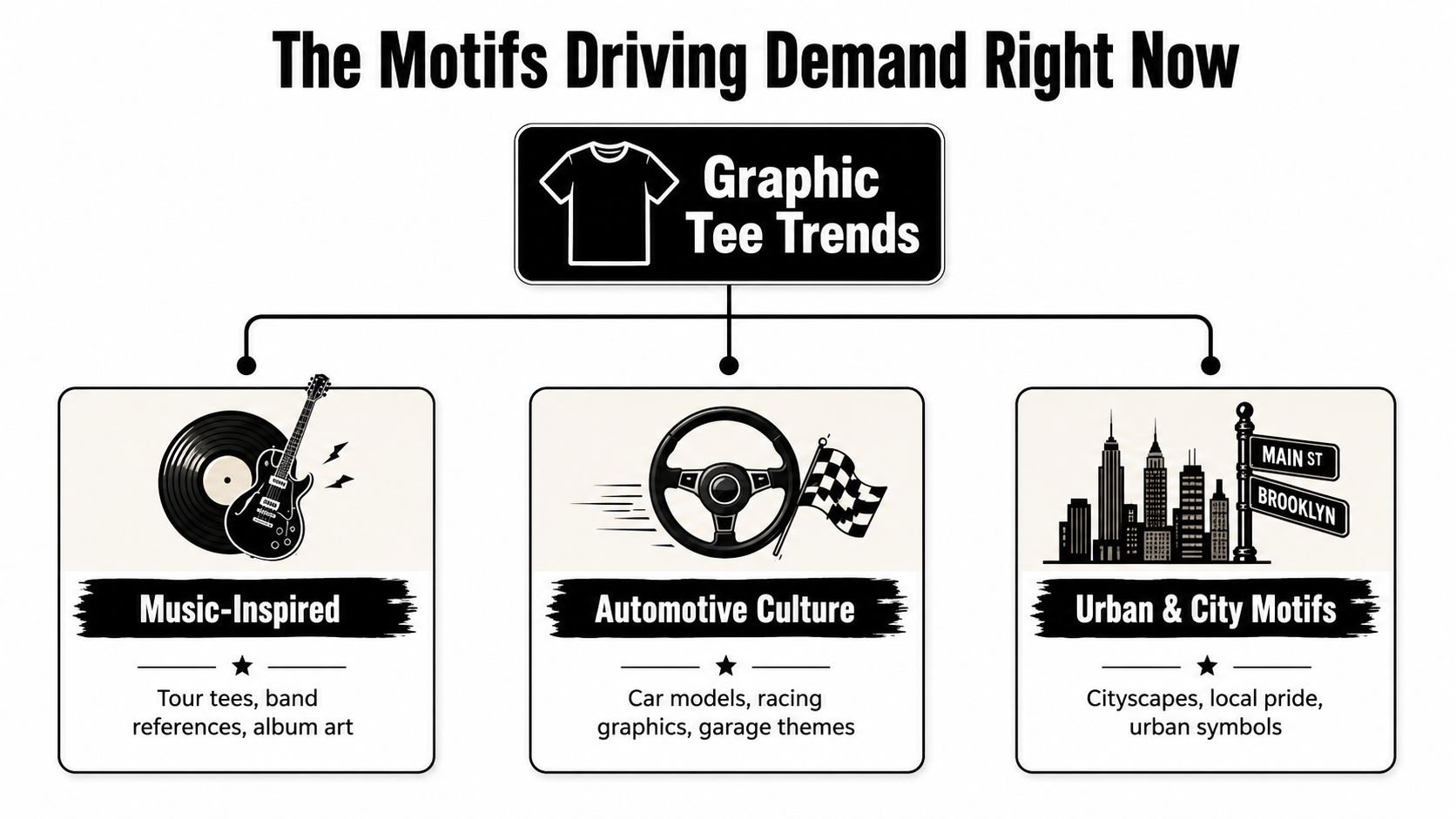
The strongest graphic tee motifs right now are music-inspired, automotive culture, and urban or city-coded graphics. The reason is simple, these are identity systems, not decoration. Buyers use them to signal what they listen to, what they drive, where they're from, or the scenes they feel attached to, and that makes the shirt easier to wear with purpose.
Music graphics work because they carry context
Tour-style tees, band references, and album-art prints still pull because they already come with a built-in story. A shirt that nods to a concert run or a specific record gives the wearer instant credibility with people who recognize the reference. That's also why generic “retro music” art falls flat. Real fans want a reference point, not just a loud font and a fake distressed wash.
Automotive prints hit harder when they're specific
Car tees work best when they name the machine, the chassis, the racing lane, or the garage culture around it. A BMW E36 print means more than a random car silhouette, because the specificity signals knowledge. The same logic applies to JDM references, racer typography, and parts-inspired graphics. If the tee looks like it was made by someone who cares about cars, it lands. If it looks like it came from a mood board labeled “speed,” it doesn't.
City motifs feel personal, not promotional
Neighborhood names, skyline outlines, and urban map graphics give shoppers a way to wear local pride without turning the tee into merch for a tourist shop. A Brooklyn New York trucker cap in the same visual language shows how this category extends beyond tees into the wider streetwear stack. City graphics work because they're intimate. They don't need to explain themselves to everyone.
Buyer's filter: the more a print feels like insider code, the less you need to over-style it.
That's also where curated sellers like Trending Market fit naturally, because a narrow catalog built around music, automotive, and city motifs makes it easier to shop by identity instead of sifting through every possible aesthetic. The better listings make the reference clear in the product title or image, which saves you from buying a tee that only looks good on a thumbnail.
How to Evaluate Print Quality and Fabric at Entry-Level Prices
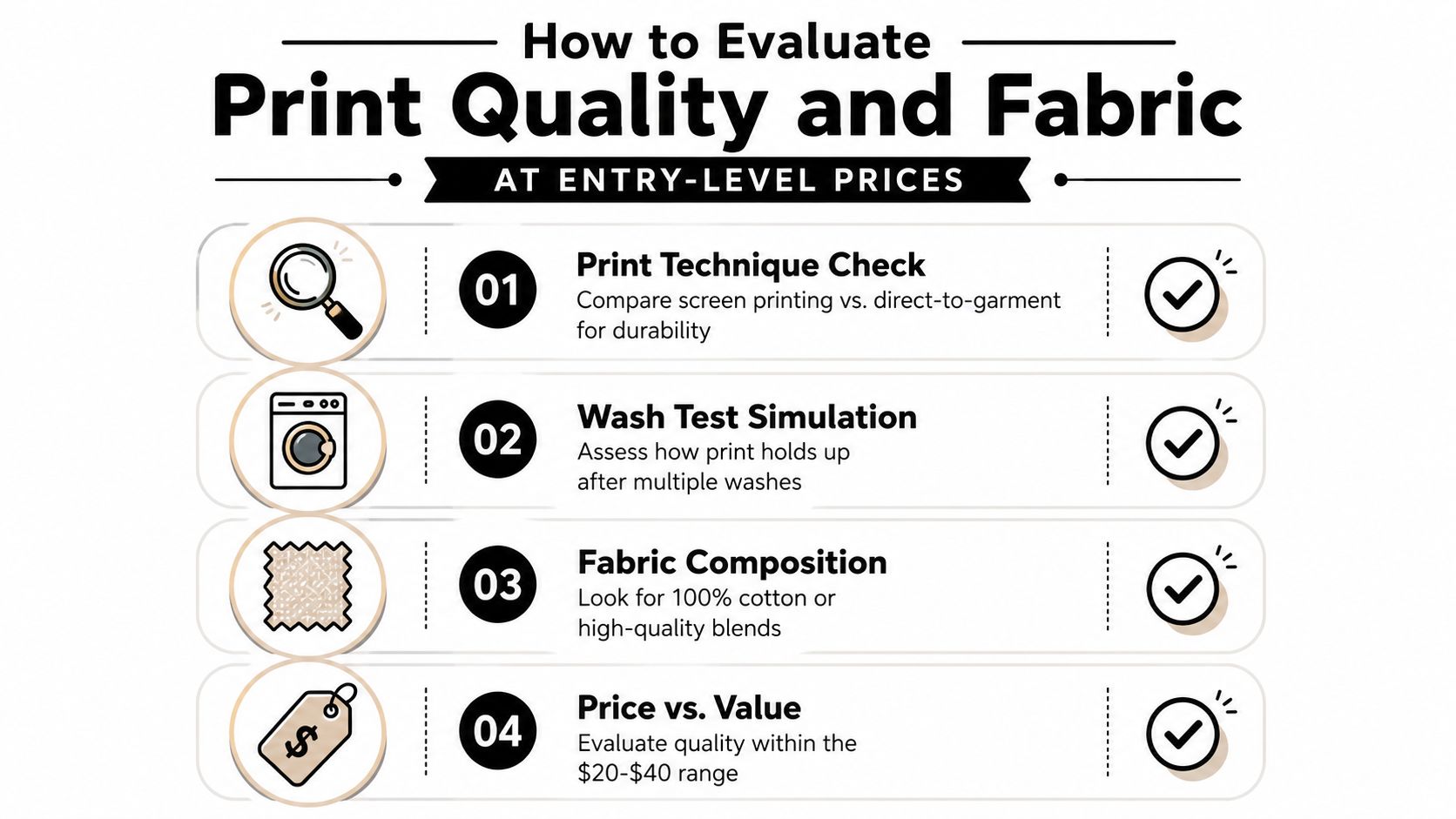
At the $20 to $40 level, you're not shopping for luxury construction. You're shopping for the tee that won't feel flimsy after a few wears and won't turn the print into plastic soup after the first wash. Entry-level doesn't mean disposable, but it does mean you need to read product pages like a buyer, not like a fan.
Start with the print method
Screen printing usually gives you the most dependable feel for bold graphics because it lays ink on the surface in a way that can wear in cleanly. Direct-to-garment can work well for softer, more detailed art, but the finish often depends on the fabric and the ink saturation. If a product page doesn't tell you anything about the print process, assume the brand wants you to buy on image alone.
Look at the fabric content, then the build
A shirt made from 100% cotton usually feels easier to judge than a random blend because you know what you're getting in hand. Blends can be fine, but the seller should make the reason obvious, comfort, drape, or stretch. Then check for construction details like a ribbed collar, shoulder tape, double-needle hems, preshrunk fabric, and a tear-away label if the brand mentions it. Those are the things that separate a decent daily tee from one that twists, stretches, or scratches at the neck.
Rule of thumb: if the collar looks weak in product photos, the tee will probably lose shape faster than the graphic wears out.
A listed weight like 5.0 oz/yd² means the fabric is on the lighter side, which can be good for summer wear and layering, but don't confuse light with premium by default. Read it as a clue about drape and season, not as a quality badge.
Judge value against everyday use
The core question isn't whether the shirt looks good in a staged image. It's whether the piece can handle real rotations, commute, class, weekends, and repeated styling with jeans, cargos, or shorts. If the print is crisp, the collar looks stable, and the fabric content is clearly stated, you're already ahead of most buyers.
Styling Graphic Tees for Modern Streetwear Outfits
The strongest streetwear outfits don't overload the tee. They let the print do one job, then keep everything else disciplined. If the shirt is loud, the rest of the outfit should give it room. If the shirt is restrained, the fit, layers, and accessories can carry more of the visual weight.
Build around the print intensity
A bold back-print tee can be the whole outfit. Pair it with straight-leg denim, cargo pants, or relaxed shorts, then keep sneakers clean so the graphic stays in focus. That setup works because the shirt becomes the statement, not one layer among many.
A more restrained chest-logo tee does the opposite. It gives you room to push the bottoms, a louder pant, a patterned trouser, or a stronger sneaker. That balance works especially well with the Quiet Optimism and Subversive Typography direction now showing up in sharper graphic tee trends, where the shirt speaks in a lower register and the rest of the fit does the heavier lifting. Alibaba product insights Alibaba pricing and profit report
Use layers to make the tee work harder
Throw a graphic tee under a work jacket, overshirt, or quarter-zip when you want the print to feel integrated instead of isolated. That works best with city tees and automotive graphics, because the extra layer creates a tougher, more grounded silhouette. In colder weather, a tee under a zip layer keeps the outfit casual without making it look unfinished.
Accessories should stay linked to the shirt's theme. A trucker cap can echo a city graphic, while a phone case with a matching visual tone keeps the set coherent without trying too hard. Don't stack every themed item at once, though. One or two matching signals are enough.
Keep the shirt visible, but don't let the rest of the outfit argue with it.
For daily wear, I'd reach for a tee that reads clearly from a few feet away and style it with one quiet layer, one clean bottom, and one sharper accessory. That formula survives school, dinner, casual dates, and weekend errands without looking overworked.
Choosing Between Music, Automotive, and City Motifs
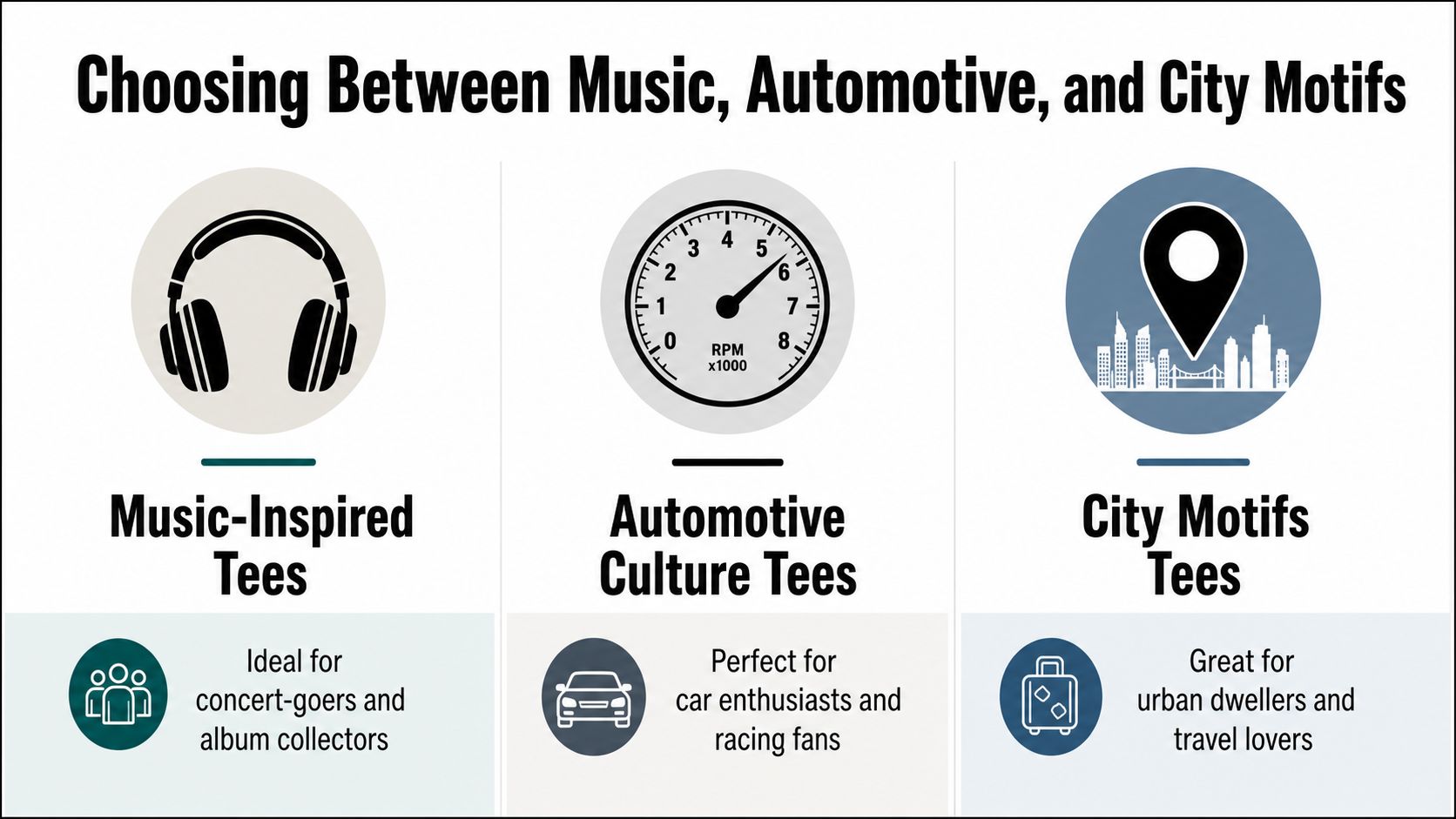
Your first purchase should match what you care about, not what photographs best. That sounds obvious, but a lot of people buy the wrong motif because they want a tee that “fits streetwear” instead of a tee that fits their life. If you're deciding between the three main lanes, use your routine as the filter.
Music inspired tees
These are for concert-goers, collectors, and anyone who treats clothing like a callback to a playlist or live show. They're the easiest category to wear as a conversation starter because the reference often gets recognized immediately. The trade-off is repetition. If you buy too many broad music graphics, they can start to blur together unless the references are distinct.
Automotive culture tees
These are for people who care about machines, shape language, racing influence, and the visual discipline of car culture. They usually feel stronger when the graphic is rooted in a specific model, part, or racing aesthetic, not just a generic speed motif. These tees tend to pair well with cargos, utility pants, and more structured outerwear because the theme already has mechanical weight.
City motif tees
These are the most personal and the most flexible. A neighborhood reference or skyline design can work as a quiet statement, especially if you're not trying to turn your outfit into a fandom billboard. They also wear well over time because the meaning stays attached to place, not to whatever is buzzing online this month.
If I had to rank them for versatility, city motifs come first, automotive second, music third. If I had to rank them for immediate recognition, music takes the top spot. Pick based on how you want the shirt to function, not just how it looks folded on a product page.
How to Shop a Curated Streetwear Catalog Efficiently
Curated stores make life easier, but only if you use them properly. A focused storefront with New Arrivals, Bestsellers, and a Featured section tells you a lot faster than a massive catalog with a thousand near-identical options. You want the shops that expose the point of view quickly, not the ones that force you to guess what the brand cares about.
Use the homepage like a buyer, not a browser
Start with New Arrivals if you want the freshest graphics and the current visual direction. Move to Bestsellers when you want proof that other buyers are choosing the piece over time. Then check Featured collections for the brand's strongest theme clusters, because curated picks usually surface the motifs the store wants to be known for.
Product pages matter even more than homepage banners. Read the fiber content, check the care notes, and look for clear sizing language. If the page gives you the print name, the colorway, and the category in plain English, you can make a faster call and avoid the dead-end scroll.
Search by motif, not by mood
If a store has a search bar, use specific terms like tour, BMW, Brooklyn, or Skyline instead of vague ideas like “cool” or “vintage.” That's how you get to the right shelf faster. It also tells you whether the retailer's catalog is built around real graphic themes or just generic fashion filler.
The one thing I'd trust in a narrow streetwear catalog is transparent USD pricing, because it keeps budget decisions simple. When you're shopping multiple pieces at entry level, clarity beats surprise every time.
Make the cart work for you
Add only the items that pass the first read. Then compare them by motif, print clarity, and whether you can wear them with what's already in your closet. A focused store should save you time, not tempt you into stacking random picks because they're inexpensive.
Why Entry-Level Graphic Tees Beat Hype Drops for Most Shoppers
Most buyers don't need a rare tee. They need a shirt they'll wear twice a week without worrying about ruining something “collectible.” That's where entry-level graphic tees beat hype drops in real life. A reasonably priced tee gives you room to experiment, rotate, and repeat, while a limited piece often gets treated like a museum object.
The math is straightforward even if you keep it qualitative. A lower-priced shirt worn often earns its place faster than a pricey drop you baby out of fear. Streetwear only looks sharp when it moves through your routine, and entry-level pieces make that possible without turning every outfit decision into a financial calculation.
What actually makes a wardrobe work
A good tee rotation needs repetition, not scarcity. You want a few shirts that can move across jeans, cargos, shorts, and layered fits, because that's what makes a streetwear wardrobe feel lived in. Hype creates urgency. Basics with strong graphics create utility.
That's why I'd rather see someone buy three or four tees with clean construction and specific motifs than chase one expensive release they're scared to wear. If the graphic is tied to music, automotive culture, or a city reference, it stays useful longer because the meaning is clearer and the styling options stay open.
Spend for wear, not for attention
The better buy is the one that fits your life and your closet. If a shirt works with the jacket you already own, the sneakers you already wear, and the places you already go, it's doing its job. That's the standard. Not resale value, not hype screenshots, not whether strangers on the internet know it sold out.
If you want a streetwear reset, start with one sharp graphic tee and build from there. Pick the motif that matches your real interests, check the fabric and print quality, and keep the price band honest. Then wear the shirt.
Trending Market keeps its catalog centered on graphic T-shirts, caps, phone cases, and other streetwear basics, so it's easy to shop by music, automotive, or city-coded graphics without digging through a bloated store. If you want to browse entry-level pieces that fit this exact lane, visit Trending Market and use the motif you already wear in real life as your filter.