

You're probably seeing gorpcore streetwear everywhere without always hearing it called that. A fleece with roomy cargo pants. Trail shoes with a graphic tee. A cap, a zip layer, and colors that look like they belong on a hiking map. The whole thing feels practical, relaxed, and a little tougher than regular streetwear.
That's why the style sticks. It looks like you're ready for weather, movement, and a long day out, even if your actual plan is coffee, errands, and meeting friends later. And the best part is this: you don't need a closet full of expensive mountain gear to get the vibe right.
Table of Contents
- What Is Gorpcore Streetwear Really
- From Mountain Trails to City Streets
- The Essential Gorpcore Gear Checklist
- Get the Gorpcore Look Without the Price Tag
- Three Gorpcore Outfits with Trending Market Basics
- Shopping and Caring for Your Streetwear
What Is Gorpcore Streetwear Really
You throw on a hoodie, loose cargo pants, and trail-style sneakers before heading out for coffee, class, or a long walk across town. Nothing in the outfit feels fussy, but it looks prepared. That feeling sits at the center of gorpcore streetwear.
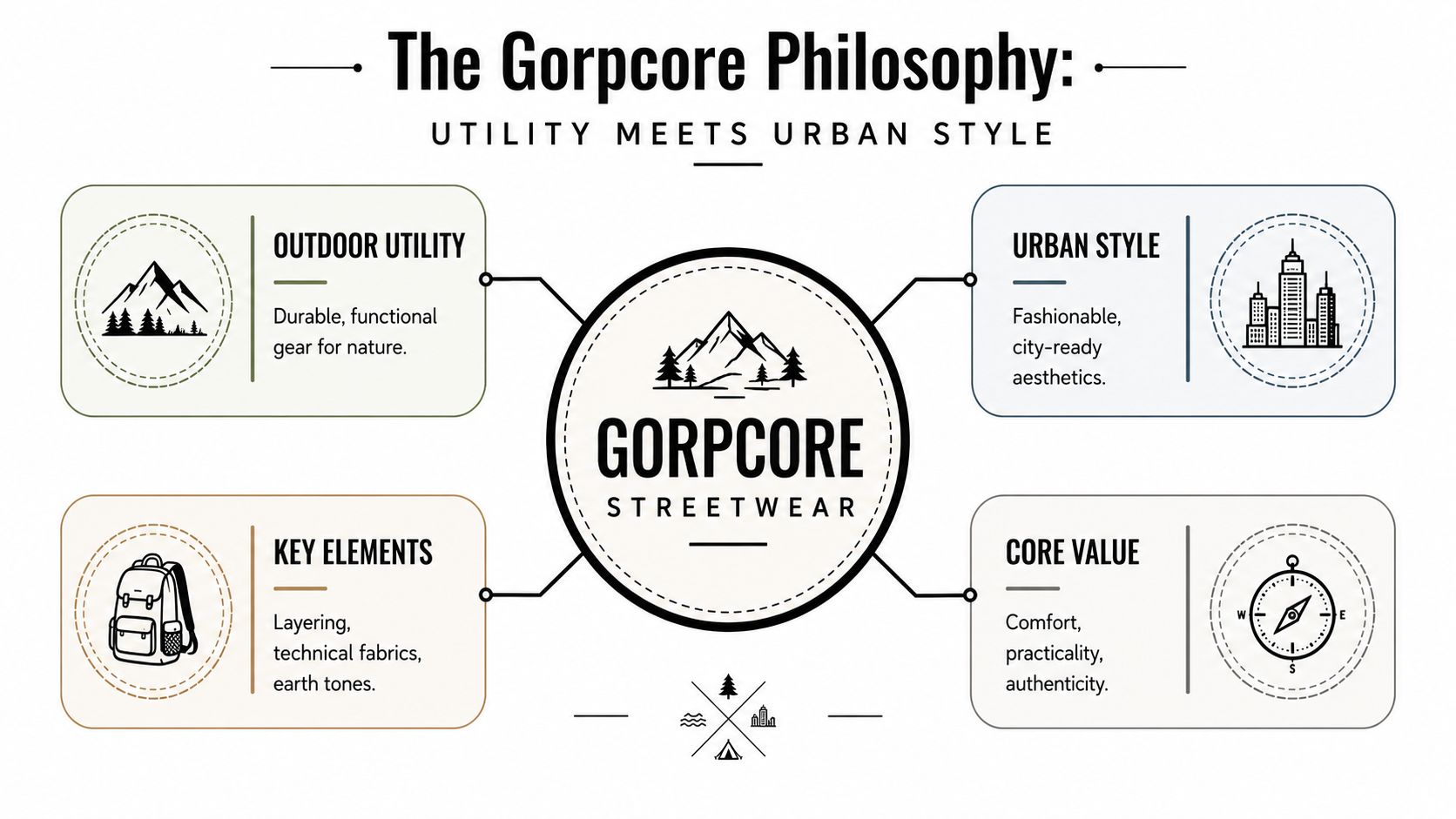
Gorpcore streetwear uses outdoor clothing logic in everyday outfits. The style borrows the shapes, materials, and details people associate with hiking and bad weather, then brings them into regular city life. The result is clothing that looks ready for movement, changing temperatures, and a day that does more than one thing.
A good shortcut is to see it as camping cosplay for the city, but in a flattering way. You are borrowing the visual language of outdoor gear. Layers, pockets, weather-ready silhouettes, muted tones, and sturdy shoes all send the same message. Even if your jacket cost under $40 and your pants are basic nylon cargos, the outfit still reads as capable.
The mindset matters more than the label
A lot of people get stuck on brands here. They assume gorpcore only counts if the jacket has a technical logo and the shoes look trail-tested straight out of a gear shop. That misses the point.
The core idea is utility. Clothes should be easy to move in, comfortable for long wear, and useful when the weather shifts. That is why gorpcore connects so well with streetwear. Streetwear already values relaxed shapes, repeat wear, and personal styling. Gorpcore adds a practical layer to that same instinct.
For budget shoppers, this matters even more. You do not need a premium shell or a famous outdoor label to get the look right. If a windbreaker blocks light rain, your cargos have room and structure, and your shoes look built for walking, you are already speaking the language.
Practical rule: If an outfit looks like it could handle a light hike, a rainy commute, and a casual dinner, you're in the right zone.
What people are actually responding to
What draws people in is not some secret fashion code. It is the mix of usefulness and ease. Gorpcore outfits look intentional without looking overdressed, which is why they work so well for everyday wear.
A few visual cues show up again and again:
- Layering that looks planned. A tee under a fleece, a quarter-zip over a base layer, or a lightweight vest over a hoodie.
- Colors that feel grounded. Olive, black, stone, grey, sand, navy, and faded orange all fit easily.
- Utility details. Pockets, zips, drawcords, ripstop textures, and roomy silhouettes do a lot of the work.
- Comfort-first proportions. Clothes should feel easy, not stiff, skin-tight, or overly polished.
The easiest way to understand the appeal is this. Gorpcore says you care about style, but you also want your clothes to keep up with real life. And on a budget, that can be a strength. Affordable basics often feel more natural here because gorpcore looks best when it seems lived-in, practical, and unfussy.
From Mountain Trails to City Streets
A lot of trends start in fashion and borrow a little from real life later. Gorpcore took the opposite route. It started with clothes made for cold air, wet sidewalks, long walks, and stuffed backpacks. Then people noticed those same pieces looked good in the city.
The shift had been building since the mid-2010s, as outdoor gear started showing up more often in everyday outfits and street style, according to this history of gorpcore.
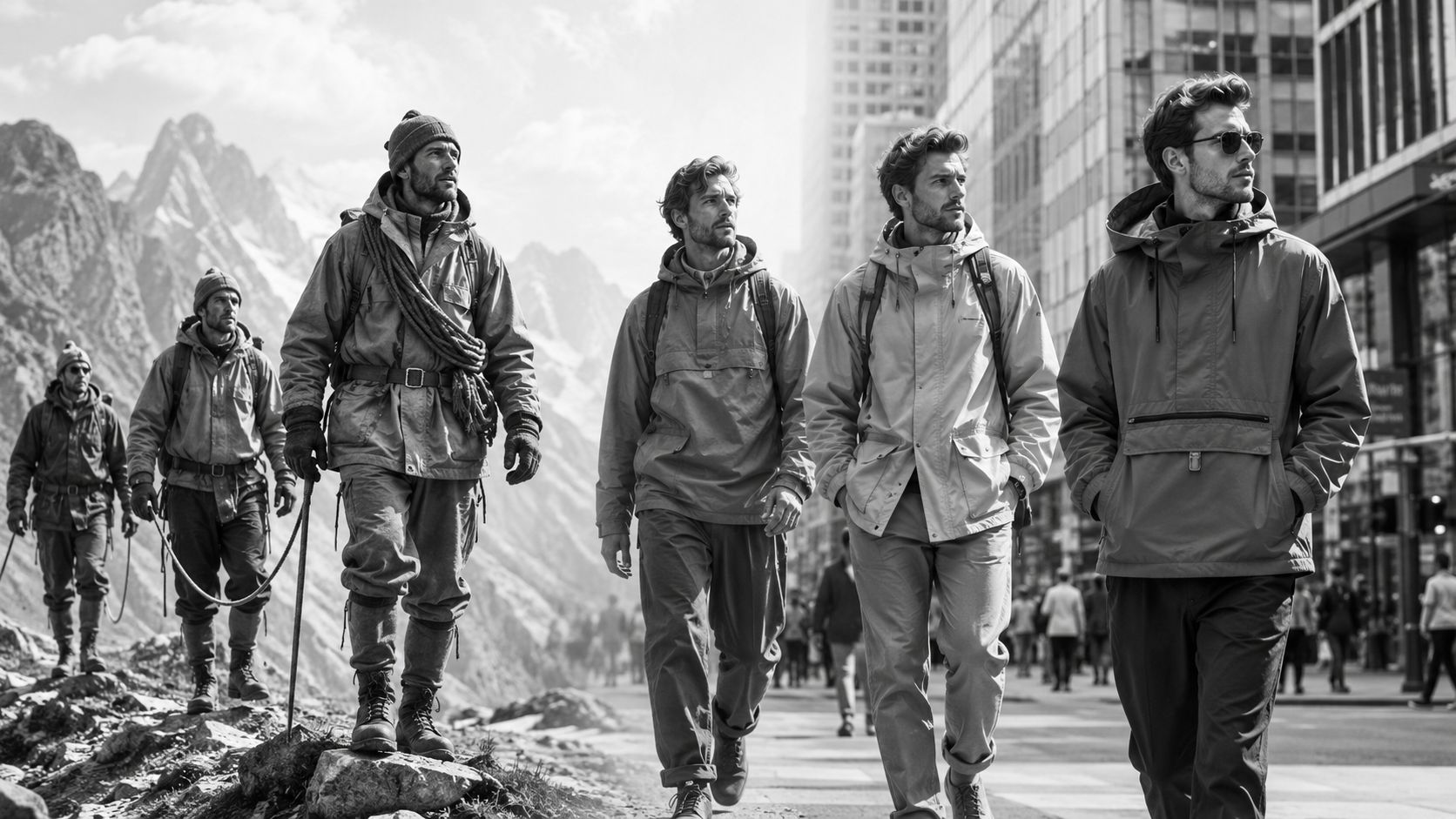
What changed was simple. City life started rewarding the same things hiking clothes were built for. People wanted layers that handled weird weather, shoes that could walk a few miles, and pants with enough room to move. Once that happened, outdoor gear stopped reading like niche equipment and started reading like smart casualwear with personality.
Where the name came from
The name helps explain the mood. Gorpcore was coined in 2017 by journalist Jason Chen for The Cut, and it comes from GORP, short for Good Old Raisins and Peanuts, the old trail-mix shorthand mentioned in the same source.
That odd little origin matters because it keeps the style grounded. Gorpcore is not supposed to feel precious. It has a little camp energy, a little practicality, and just enough awkwardness to feel real.
How it became fashion
The look spread faster once high-profile artists and designers wore outdoor brands in fashion settings. A widely cited example is Frank Ocean showing up to a Louis Vuitton show in an Arc'teryx beanie and Mammut outerwear, which made the connection between mountain gear and luxury style much more visible. A$AP Rocky helped push that crossover too, especially by treating technical pieces like part of a full outfit instead of a costume.
That public shift gave people permission to style utility gear as everyday fashion. A shell jacket could be the main piece, not just the backup plan in your bag. Trail shoes could finish an outfit the way chunky sneakers used to.
For budget shoppers, this is good news. The city version of gorpcore does not depend on expensive alpine brands. What people notice first is the shape, the layering, and the function-coded details. A $30 nylon windbreaker, relaxed cargos, and sturdy sneakers can communicate the same idea if the outfit looks ready for weather and movement.
That is why gorpcore works so well with affordable streetwear basics. It treats usefulness as part of the style, not something to hide.
The Essential Gorpcore Gear Checklist
If you want to recognize classic gorpcore streetwear, start with the gear that built the look. These pieces weren't originally designed for city outfits. They came from real outdoor use, and that's exactly why they feel convincing on the street.
The pieces that built the look
A fleece jacket is one of the easiest entry points. It adds texture, warmth, and that unmistakable outdoor association. A fleece makes even simple pants and sneakers look more trail-adjacent.
A light shell or windbreaker gives the silhouette its weather-ready edge, making the look feel more technical. Zips, high collars, and a slightly boxy fit do a lot of visual work.
Then come cargo pants or relaxed utility trousers. These matter because gorpcore streetwear usually avoids skinny or overly fitted shapes. You want movement, room, and a sense that the pants can handle actual activity.
Footwear changes the whole tone. Trail runners, hiking-inspired sneakers, and rugged boots all push the outfit away from plain casualwear. The outsole, shape, and lace system often do as much as the upper.
Materials matter too. Gorpcore streetwear often relies on recycled nylon, soft-shell polyester, waterproof membranes like PFA-free epe, and DWR coatings so garments stay wind- and rain-resistant while still moving comfortably in urban use, according to this technical materials breakdown.
Classic Gorpcore Pieces and Their Function
| Item | Original Use | Key Features/Materials |
|---|---|---|
| Fleece jacket | Mid-layer warmth outdoors | Soft pile texture, warmth, easy layering |
| Shell jacket | Rain and wind protection | Waterproof feel, high collar, zip closures |
| Puffer vest or jacket | Insulation in cold conditions | Lofted shape, warmth, lightweight bulk |
| Cargo pants | Utility and storage | Multiple pockets, relaxed fit, durable fabric |
| Trail shoes | Grip and movement on uneven ground | Rugged sole, performance shape, outdoor styling |
| Technical cap or beanie | Weather protection | Lightweight coverage, sporty outdoor feel |
| Utility bag or backpack | Carrying gear | Practical storage, rugged materials, hands-free use |
A few details are worth watching for when you shop:
- Surface texture matters. Ripstop, matte nylon, brushed fleece, and crinkled shells all read as more outdoors-focused.
- Functional trims help. Drawstrings, toggles, storm flaps, and visible zippers give basic pieces a technical feel.
- Layer compatibility is key. The best items don't stand alone. They stack well.
You don't need every piece in that table. You typically only need one or two anchor items to make the whole outfit read as gorpcore.
Get the Gorpcore Look Without the Price Tag
A lot of style guides make gorpcore streetwear sound like a shopping list for expensive outerwear. That's where people get turned off. They like the look, but they don't want to spend like they're outfitting an expedition.
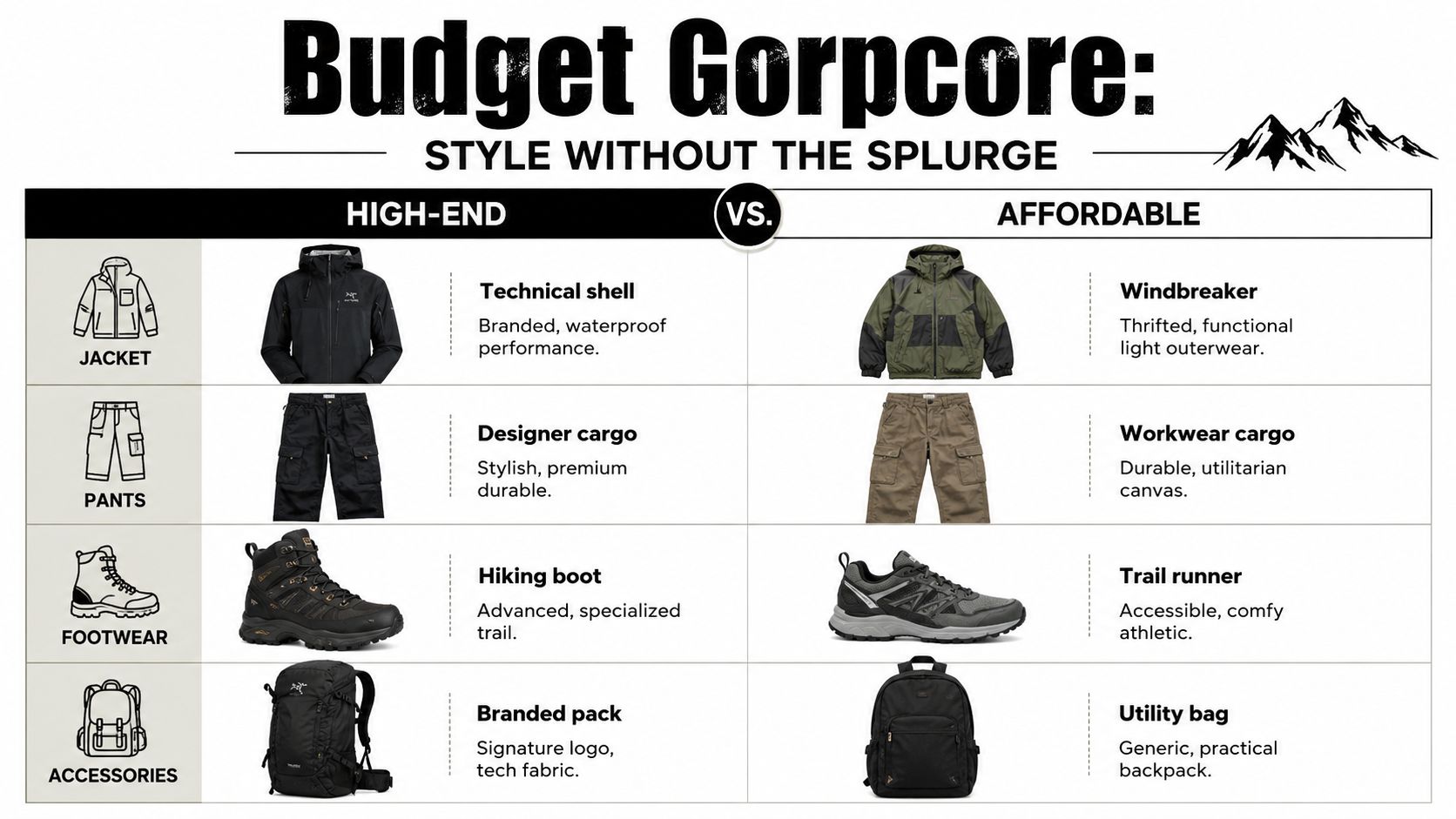
The good news is that the budget version is real, and it looks good. Most guides center premium labels, but they leave a budget gorpcore gap for people shopping under $50. The rise of soft gorpcore matters here because it puts the focus on silhouette and color palette instead of expensive performance fabric, as noted in this overview of budget gorpcore and soft gorpcore.
Why expensive gear isn't the whole story
If you strip gorpcore streetwear down to its core visual signals, most of them don't require premium labels. You can create the look through:
- Shape. Boxy tops, relaxed pants, and layers that sit away from the body.
- Color. Olive, charcoal, sand, black, faded navy, and forest shades.
- Texture. Canvas, fleece, washed cotton, nylon-feel fabrics, mesh accents.
- Utility cues. Pockets, caps, quarter-zips, overshirts, and practical shoes.
That means a regular zip-up can stand in for a technical fleece. A sturdy pair of workwear-style cargos can do the job of a pricey climbing pant. A trucker cap or simple crossbody can carry the same energy as a more expensive outdoor accessory.
The budget version looks best when you stop chasing exact brand replicas and start chasing the same attitude.
How to build soft gorpcore on a budget
Start with one anchor layer. That could be a quarter-zip, a lightweight jacket, or even a washed hoodie in a muted tone. You want something that feels functional instead of flashy.
Then build around it using basics that already lean rugged. Good examples include:
-
Graphic tee plus outer layer
A graphic tee works if the rest of the outfit pulls it back into utility territory. Add an open overshirt, a zip layer, or a vest. -
Relaxed bottoms with a workwear feel
Cargos, carpenter pants, nylon-look shorts, or loose joggers all fit. The shape matters more than the technical spec. -
Shoes that look ready to move
Athletic sneakers with trail-ish lines work better than ultra-clean court shoes. You want a shoe that feels active. -
One accessory that suggests function
Caps, practical bags, tall socks, or sunglasses with a sporty edge can shift a basic outfit in the right direction.
A useful test is to ask whether the outfit looks like it could handle a quick weather change. If the answer is yes, you're close. Gorpcore streetwear isn't about pretending every cotton tee is mountain gear. It's about styling ordinary basics so they borrow the confidence and practicality of outdoor clothing.
Three Gorpcore Outfits with Trending Market Basics
You're getting dressed for a normal day. Maybe it's class, a coffee run, a train ride across town, or a late walk when the weather could shift fast. Gorpcore works well in that exact kind of real-life setting because it makes basic clothes look ready for movement. You do not need a closet full of expensive technical gear to get there. A few well-picked pieces under $40 can carry the same mood if the outfit has the right shape, layers, and useful-looking details.
Outfit one the easy entry point
The GT‑R Skyline quarter‑zip is a smart starting piece because it gives the outfit structure right away. A quarter-zip works like the frame of a building. Once that top layer is in place, the rest can stay simple without looking flat.
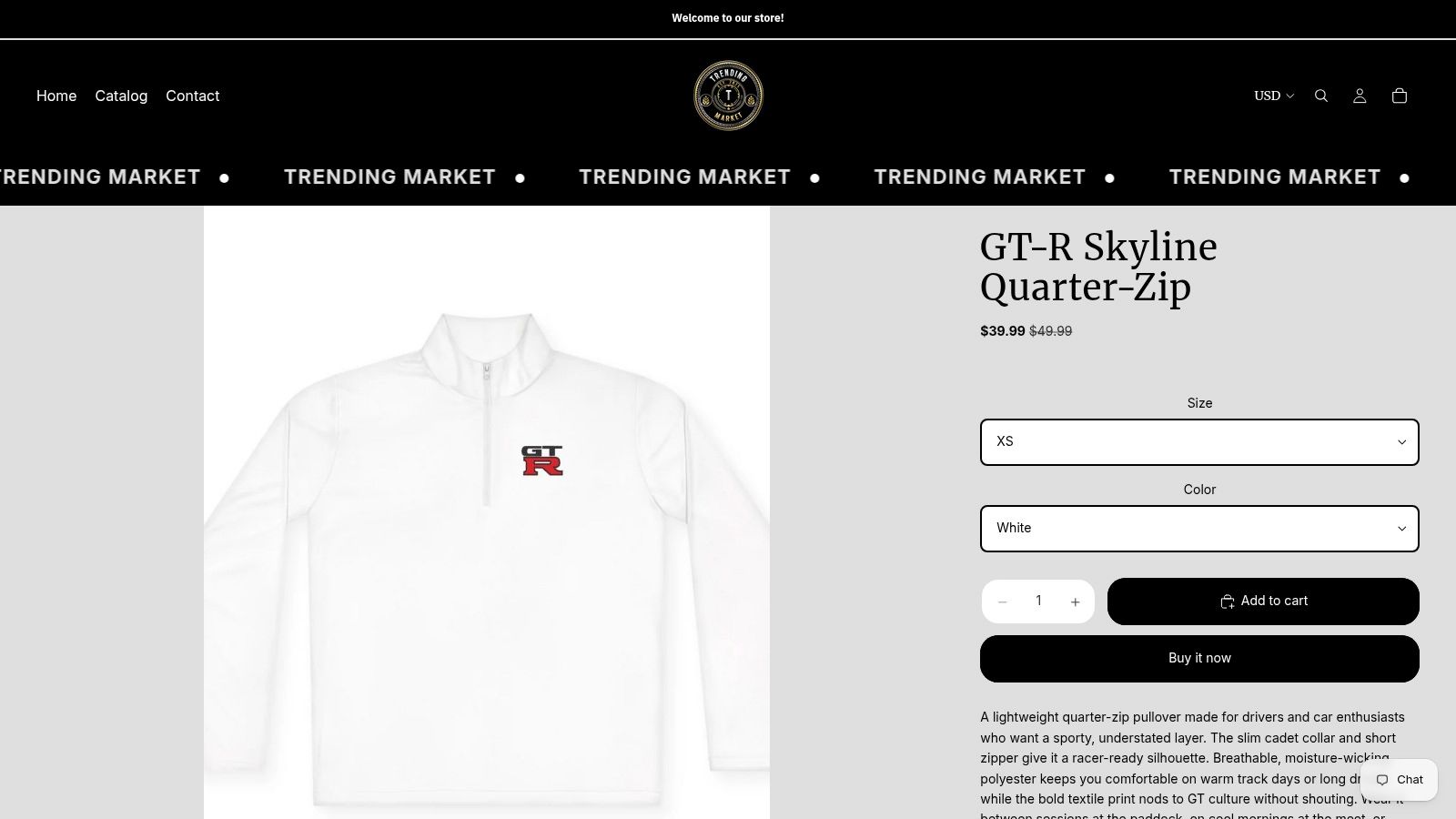
Pair it with loose cargo shorts or relaxed utility pants in black, olive, or stone. Add tall athletic socks and trail-style sneakers. Leave the zip slightly open so the outfit feels easy instead of stiff.
Why it works is simple. The quarter-zip brings the practical, prepared feeling people associate with gorpcore, while the roomy shorts or cargos create the outdoor silhouette. That combination gets you close to the look without needing special fabrics or logo-heavy gear.
Outfit two the layered graphic route
A Graphic Star T-Shirt can still fit the aesthetic if you style it as a base, not the headline. Put an open flannel, overshirt, or lightweight zip jacket over it. Then add fuller pants with visible pockets and sneakers that look built for walking, not just standing still.
This outfit usually makes sense for streetwear fans who want a softer version of gorpcore. The graphic tee keeps the outfit personal. The outer layer and looser bottom half shift it toward utility, which is the part many people miss.
A simple formula helps:
- Top layer with some shape, like an overshirt or zip jacket
- Graphic tee that adds character without taking over
- Loose pants with room through the leg
- Practical sneakers with an active look
A common point of confusion is the graphic tee itself. Graphics do not ruin the gorpcore feel. The problem starts when the rest of the outfit is too clean, too fitted, or too fashion-polished. Keep some ruggedness in the layers and shape, and the tee fits right in.
The video below is most useful if it shows how layering, looser silhouettes, and functional accessories change a basic streetwear outfit into something more gorpcore. Watch for those styling moves, not just the individual pieces.
Outfit three the cap-first formula
Start with the Brooklyn New York trucker cap and let it set the tone. A cap can do a surprising amount of work here. It adds that casual, out-the-door energy that makes an outfit feel active and outdoor-adjacent, even when the clothes themselves are simple and affordable.
Pair it with a plain hoodie or crewneck in a washed neutral tone. Add a utility vest or lightweight sleeveless layer if you have one. On the bottom, go with cargo pants or easy-fit shorts. Finish with shoes that look functional and uncomplicated.
A cap-first outfit works best when the rest of the clothes look comfortable outside for longer than a quick photo.
This is one of the easiest budget routes into gorpcore because the cap helps pull regular basics into the right style lane. If the rest of your outfit is plain, the cap makes it feel deliberate. If your layers already have some workwear or utility character, it ties the whole thing together.
All three outfits follow the same principle. Expensive technical branding is optional. What matters more is the mix of layering, relaxed shape, and details that suggest movement and function. That is good news if you are building the look with Trending Market basics instead of premium outdoor labels.
Shopping and Caring for Your Streetwear
A budget gorpcore wardrobe works best when you shop the way a practical hiker packs a day bag. Every piece should earn its spot. If an item only works with one outfit, feels fussy to wear, or looks tired after a few washes, it is probably not the one.
That matters even more when you are building the look with basics under $40. You are not paying for a famous outdoor logo to do the styling for you, so the fabric, shape, and small details have to carry more of the look.
How to shop with the right eye
Start by checking the surface of the garment, not just the label. Gorpcore often reads through texture before it reads through branding. Nylon looks crisp. Fleece looks warm and slightly rugged. Heavy cotton jersey gives tees and hoodies that sturdy, lived-in feel that works well with cargos, caps, and trail-style sneakers.
Then check the hardware. A simple zip pull, snap pocket, elastic cuff, drawcord hem, or taller collar can make an affordable basic feel more outdoor-minded. These details do the same job seasoning does in cooking. You do not need much, but a little changes the whole result.
Color still matters, but in a practical way. Choose shades that can rotate through multiple outfits without effort: black, stone, olive, charcoal, washed navy, muted orange. Bright technical colors can work too, though on a budget they usually look better as a small accent than the main event.
A quick store filter helps:
- Pick fabrics with texture or structure, not thin limp material
- Check whether the piece layers cleanly over a tee or under a jacket
- Look for utility details like pockets, zips, toggles, or paneling
- Skip anything that already looks stretched out on the rack
How to make affordable basics last
Affordable gorpcore pieces usually fail in predictable ways. Fleece pills. Nylon gets noisy-looking creases or loses its water-resistant finish. Printed tees crack. Caps lose their shape. If you know what usually goes wrong, you can stop most of it early.
For fleece and brushed quarter-zips, friction is the enemy. Wash them inside out with similar soft items, not with jeans, towels, or anything with rough Velcro and hard hardware. That cuts down on pilling. If small pills still show up, a fabric shaver or sweater comb cleans the surface fast and makes a cheap fleece look much newer.
Mixed-material pieces need a little more attention. If you have a hoodie or pullover that combines nylon panels with fleece or cotton, zip it closed before washing so the edges do not catch and twist. Use a short, cool cycle, then hang dry. High heat can make fleece feel flat while also making nylon look tired and slightly shiny.
Water resistance on budget outerwear fades faster than people expect. The jacket is not ruined. It usually just needs a reset. Start by cleaning it gently so dirt is not blocking the finish, then tumble dry on low if the care label allows it. Light heat can help reactivate the existing coating. If rain stops beading on the surface after that, a spray-on water repellent made for clothing is a smart low-cost fix.
Caps deserve their own routine. Gorpcore caps often do a lot of visual work in an outfit, so once the brim warps or the front panel gets soft, the whole look gets sloppier. Clean sweat marks with mild soap and a cloth, then let the cap dry over a bowl or rolled towel so the crown keeps its shape.
Graphic tees are simpler, but they still affect the overall outfit. Wash inside out in cold water and skip high dryer heat so the print stays cleaner and the tee keeps its shape. A gorpcore outfit often depends on relaxed proportions, and a tee that shrinks unevenly throws that off faster than people realize.
The goal is not precious clothing care. It is keeping low-cost pieces looking intentional for longer. That is how budget gorpcore works. You buy ordinary basics with the right shape and function cues, then take care of them well enough that they keep giving you that outdoors-meets-city feel.
If you want a simple place to test the look without spending technical-brand money, Trending Market is a solid starting point. Their tees, trucker caps, and quarter-zips make it easier to try color, layering, and texture first, then build your version of gorpcore from there.