

Most advice on best graphic tees Reddit starts in the wrong place. People act like the game is to memorize a few trusted brands, but the problem is avoiding the junk that looks fine in a thumbnail and feels cheap after one wash. Reddit threads keep circling the same complaint, low-effort art, obvious dropship vibes, and shirts that lose shape or crack fast, so the smarter move is to verify the shirt before you buy it.
If you want fewer regrets, stop shopping for “cool designs” and start shopping for fabric weight, print method, and vendor trust. That's the filter that separates a tee you'll wear all season from one that becomes a drawer orphan.
Table of Contents
- The Core Challenge of Finding Good Graphic Tees
- Fabric Weight and Material Quality
- Print Methods and Longevity
- Reddit Consensus on Brands and Styles
- How to Vet Reddit Threads and Reviews
- Your Complete Buying Checklist
- Care Instructions That Preserve Your Tees
The Core Challenge of Finding Good Graphic Tees
The loudest Reddit advice usually says to “just check the brand,” and that is lazy. Brand lists do not protect you from a bad blank, a weak print, or a seller who knows how to take one decent product photo and hide everything else. The core challenge on Reddit is not finding graphic tees, it is verification.
Why brand chasing keeps failing
A shirt can have a great-looking design and still be a bad buy if the fabric is flimsy or the print sits on top like a sticker. Reddit threads keep surfacing the same complaint, buyers want good graphic tees, decent graphic T-shirts, and tees that aren't AI art or obvious dropshipped trash. That points straight at the problem, trust and execution, not inspiration. The shopper who only hunts for labels ends up overpaying for merch that looks “creative” and wears like junk.
Treat every listing like evidence. Check whether the blank has enough body to hold shape, whether the print method fits the design, and whether the seller shows real production detail instead of hiding behind vibes.
Practical rule: if the product page will not tell you the fabric, the print method, or the construction, assume the shirt is built to hide weaknesses.
The three-part filter that actually works
The best graphic tees pass three tests at once. First, the fabric needs enough weight and structure to avoid sagging. Second, the print has to be applied in a way that survives wash cycles. Third, the vendor has to look like a real operator, not a random account pushing a generic mockup.
That is why Reddit-style shopping advice helps only when you turn it into a checklist. A brand name might point you in the right direction, but it will not tell you if the shirt is thin, printed badly, or sourced from the same low-effort pipeline as everything else. If you have been disappointed before, it is probably because you were evaluating the graphic first and the garment second.
Fabric Weight and Material Quality
A graphic tee can feel soft and still be a bad buy. If the blank has no body, it will twist, sag, and show every cheap shortcut in the design. Reddit advice keeps pointing back to midweight cotton for a reason, because it gives the shirt enough structure to support the print and keep its shape. For most graphic tees, the 5.5 to 6.5 oz range is the sweet spot. Below 5 oz, shirts are more likely to feel thin, go semi-translucent, and drape badly after a few wears. Heavier midweight blanks hold their shape better and handle larger centered graphics without warping.
What to read on the product page
Start with the ounce listing. If the seller will not state fabric weight, treat that as a warning sign. Then check the fiber content, because cotton is the baseline if you care about feel and how the shirt handles printing.
Ring-spun cotton deserves priority because the yarn is smoother and tighter. That usually lets ink sit more evenly on the surface, which helps both comfort and print retention. When a product page says ring-spun and gives a midweight spec, you are looking at a blank that is far more likely to handle a bold graphic without turning limp after a few wears.
Buy this way: midweight ring-spun cotton first, fashion details second.
The construction details that matter
Preshrunk cotton keeps the fit more predictable. If a tee is going to be a staple, you do not want it shrinking into a cropped mess after the first wash. Look for clean seam construction, a collar that looks stable in photos, and a body shape that does not seem overly boxy or flimsy.
Cheap merch gives itself away here. The shirt looks flat and fragile on the model, the graphic sits on it like a decal, and the whole thing reads disposable. A quality blank should look like it can hold the print, not like the print is carrying the entire garment.
Watch the body of the tee, not just the design. A midweight blank should hang with intent, not collapse. That is the difference between a shirt that looks intentional and one that feels like promo merch from a gas station table.
Print Methods and Longevity
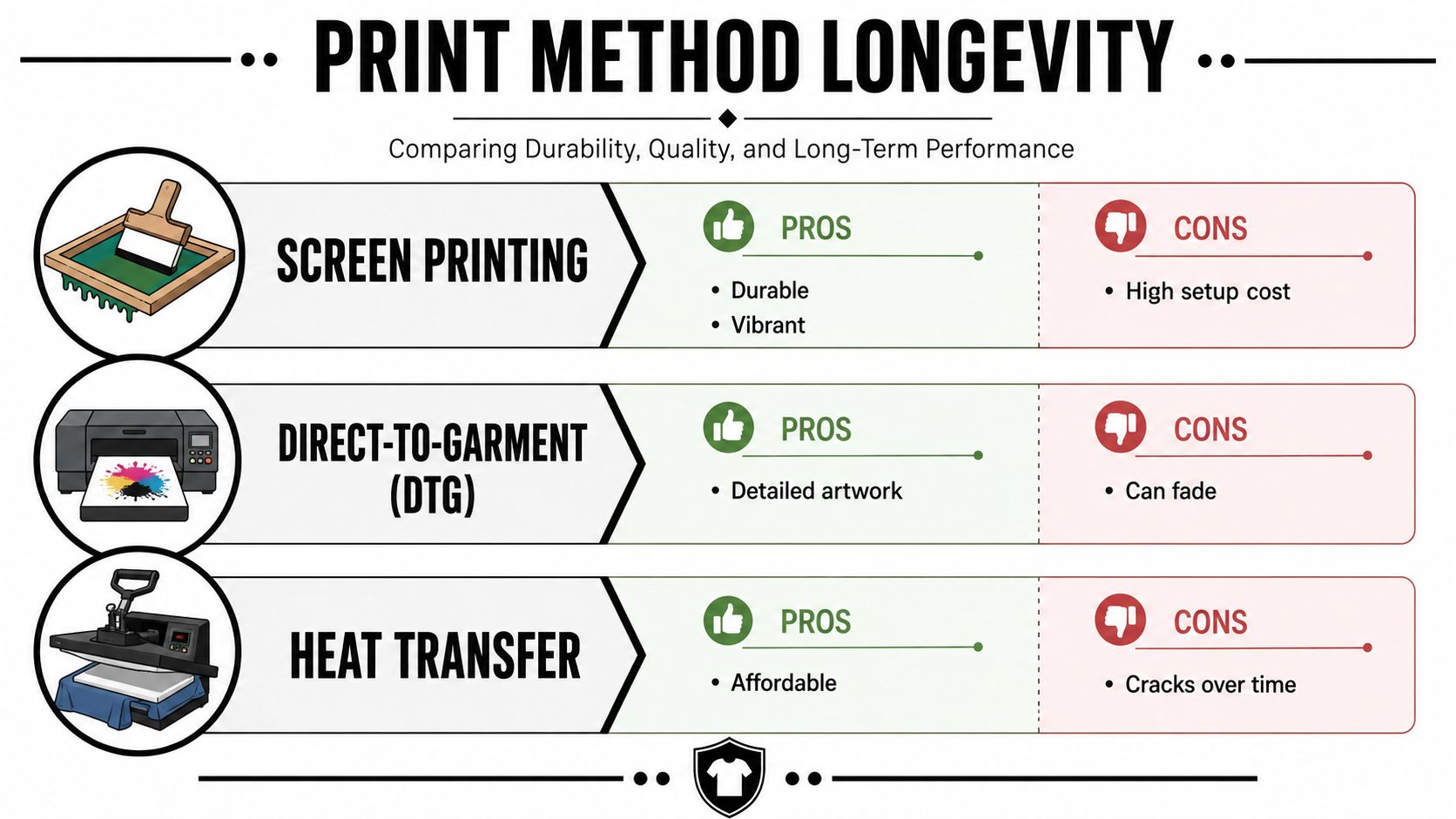
A strong graphic tee lives or dies by how the image gets onto the fabric. Community guidance keeps coming back to screen printing with proper curing because it's more durable than cheap DTG, and that lines up with the basic logic of wear. A well-cured screen print bonds better, resists cracking, and keeps its look longer than flimsy methods that sit on the shirt without really integrating with it. Some 2026 buying guides also note that ring-spun cotton tees around 5.3 to 6.1 oz can deliver 50+ washes when cared for properly, but the key phrase is properly cared for and the print still has to be done right. Good graphic tees Reddit
Screen printing beats lazy production
Screen printing is the method I trust when the graphic is bold, centered, or meant to be the whole point of the shirt. It lays down ink in a way that can look vibrant and feel solid, especially when the curing is done correctly. That's why quality screen prints keep showing up in the kinds of recommendations people remember.
DTG can work for detailed art, but cheap DTG is where a lot of tees go wrong. The image can fade, the surface can look too flat, and the print sometimes feels like it was applied without much concern for long-term wear. Heat transfer is the cheapest-looking shortcut of the bunch, and cracking tends to show up fast when the shirt gets regular use.
Here's the simplest test. If the design is big, centered, and visually important, you want the printing process to feel like part of the garment, not an afterthought. If the seller talks only about the artwork and says nothing about curing or process, assume they're selling aesthetics first and durability second.
Practical rule: for a graphic tee you plan to wear often, screen printing on a midweight ring-spun blank is the safest default.
What to ask before you buy
Ask whether the shirt is screen printed or DTG. Ask what the ink type is, and whether the print was cured properly. If the seller can't answer those questions, that's not a mystery, it's a warning.
Use product photos as evidence too. Crisp edges, consistent ink coverage, and a print that looks embedded rather than sitting on the surface usually point in the right direction. Blurry mockups, recycled vendor photos, and no close-up shots of the print are all reasons to walk away.
One useful example is Trending Market, which sells streetwear-style graphic tees and related accessories with product pages, pricing, and recognizable cultural references, so it's the kind of store where you can at least inspect the catalog structure before deciding if the merch matches your standards. That doesn't make every item a win, but it does give you a real storefront to evaluate instead of a random social media ad.
Reddit Consensus on Brands and Styles
Reddit doesn't reward tees that scream for attention in a cheap way. The styles that get respect usually feel intentional, not random, and they tend to avoid the obvious low-effort stuff people instantly tag as dropshipped or AI-generated. Across threads, the same pattern keeps showing up, buyers want originality, recognizable cultural references, and graphics that feel like someone had a point of view.
What people praise, and what they reject
Original artwork gets more respect than obvious template designs. So do references that feel lived-in, like music tours, automotive culture, and city motifs, because those themes have a real visual language and a built-in audience. A tee with a BMW E36 reference or a city name can work when the design is clean and specific, but the same concept falls flat if it looks assembled from random stock assets.
The main thing Reddit users push back on is try-hard merch. If the graphic looks like it was designed to go viral rather than to be worn, people notice. If it leans too hard on trends without any craft behind it, they also notice. That's why the better tees usually sit in a narrower lane, they're bold enough to read from a distance, but restrained enough to feel like they were made by someone with taste.
Build your taste around intent
A good graphic tee should feel like the design had a reason to exist. Maybe it references a tour, a car platform, a city, or a cultural moment. Maybe it's more minimal and uses negative space well. Either way, the shirt should look deliberate.
That's the filter Reddit keeps implying even when the thread turns into brand chatter. If the graphic feels generic, you'll forget it. If it feels too forced, you'll tire of it fast. The sweet spot is a shirt that looks specific enough to have identity and restrained enough to fit into your rotation.
My opinion: if the tee looks like it was made to win a thumbnail, pass on it.
Think of style here as proof, not decoration. The best graphic tees signal taste through restraint, material choice, and a design that matches the wearer's world. That's a lot rarer than a loud print and a confident caption.
How to Vet Reddit Threads and Reviews
Reddit can save you money, but only if you treat every thread like a source to interrogate, not a verdict to obey. The fastest way to get misled is to trust a thread because it has a lot of replies. Volume doesn't prove quality. It can just mean the same shallow opinion got copied around until it looked useful.
A simple vetting framework
Start with the poster. Look at whether the account talks about clothing, style, or shopping over time, or whether it only shows up to praise one brand. Then read the comments for substance, not cheerleading. A useful comment explains why the tee works, not just that it “hits.”
- Check the poster's history: look for repeated, genuine interest in the topic instead of one-off promotion.
- Read beyond the first layer: detailed comments matter more than quick brand drops.
- Watch for generic praise: brand-new accounts that sound too polished are a red flag.
The best Reddit threads are the ones where people explain fit, fabric feel, print behavior, and whether the tee held up after wear. If you only get brand names, you're still in the dark. If multiple users describe the same specific issue, like thin fabric or weak printing, that's more valuable than any hype post.
How to spot bad advice fast
Suspiciously similar language is a problem. So are replies that praise a shirt without naming one concrete reason. When every comment sounds like it was written from the same script, walk away.
Cross-check the date too. Graphic tee discussions age quickly because stock, vendors, and production quality change. A recommendation from an old thread can still point you somewhere useful, but don't treat it like current truth without checking whether the seller still offers the same construction and print method.
You'll also see thread drift, people arguing about taste instead of utility. Ignore that noise. You're not trying to win a style debate, you're trying to buy a shirt that looks good, feels solid, and doesn't fall apart.
Your Complete Buying Checklist
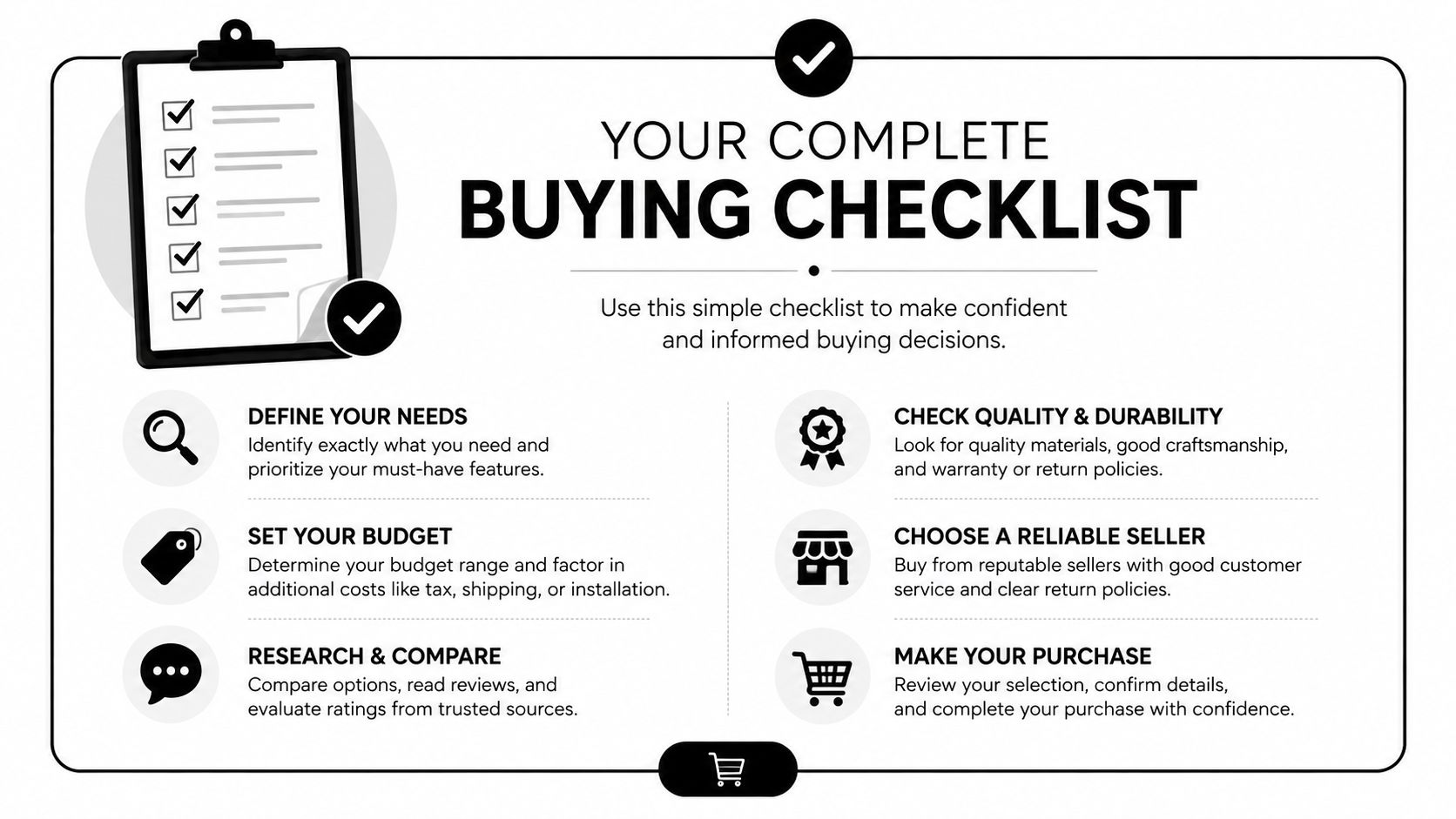
Good graphic tees get easier to find when you stop shopping emotionally. Use the same check every time, and bad merch starts to look obvious. If the seller fails two or three checks, pass immediately. There's always another tee.
The checklist I'd actually use
First, verify the fabric weight. If it's not in the 5.5 to 6.5 oz zone, or close to it, ask yourself whether you really want a lighter shirt that may stretch out and feel flimsy. Second, confirm the material is cotton, ideally ring-spun cotton, because that gives the print a better surface and usually a better hand feel.
Third, inspect the print method. For large, bold graphics, screen printing is the move. If the seller only says “premium print” or hides behind mockups, that's weak. Fourth, look for actual production details, not vague hype, because a real vendor doesn't need to act mysterious about how the shirt was made.
Walk-away signals
If the product photos are only on white backgrounds with no close-up of the print, be suspicious. If reviews never mention wash durability, that's another weak sign. If the seller can't explain what makes the shirt different from generic merch, you're probably buying generic merch.
- Fabric unknown: no ounce spec, no fiber detail, no reason to trust the blank.
- Print unclear: no mention of screen printing, DTG, or curing.
- Vendor vague: no process details, no real product photos, no meaningful reviews.
The shortlist gets small fast when you shop this way, and that's the point. A smaller list of verifiable shirts beats a big list of pretty disappointments.
Care Instructions That Preserve Your Tees
A good graphic tee still gets ruined fast if you treat it like gym laundry. Wash it in cold water, max 30C or 90F, and keep the cycle gentle so the fabric and print do not get beaten up. Skip harsh agitation, because that is how graphics start cracking and blanks start looking tired.
Dry them on low heat. High heat shortens the life of both the shirt and the print, and if the care label allows non-chlorine bleach, use it sparingly, not as a habit. Keep abrasive items like zippered jeans out of the same load, because they can scuff the print and rough up the surface.
Fold tees cleanly when you store them, so the graphic area does not get hard creases. If you iron or steam a shirt, keep the heat away from the print itself and work around it instead of pressing straight onto the artwork.
Rule of thumb: if you would not treat a printed poster with rough heat and abrasion, do not treat your tee that way either.
If you wear graphic tees often, these habits matter more than people admit. The shirt can start with a strong blank and a clean print, then still end up faded, warped, or cracked because the wash routine was sloppy. Keep the care simple, keep the heat low, and stop letting one bad laundry load destroy a shirt you wanted to keep.
Trending Market gives you a place to browse streetwear-style graphic tees, caps, and accessories with a clear product catalog, so you can judge the merch with real criteria instead of hype. Visit Trending Market and use the checklist above before you pull the trigger on your next tee.